








Medfly eradicated from Alameda County
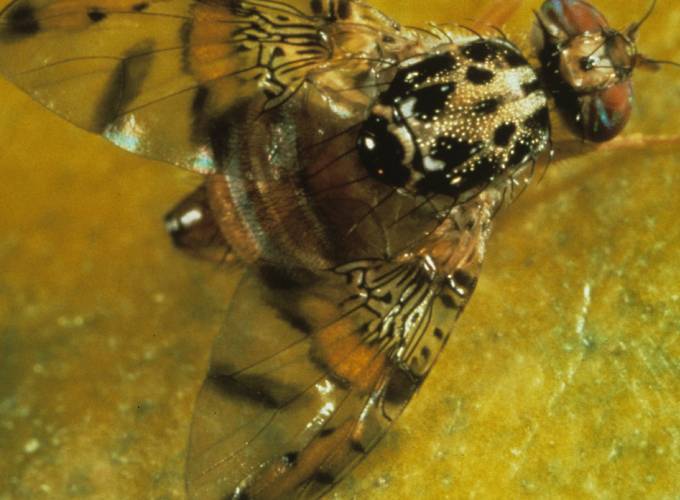



The California Department of Food and Agriculture (CDFA) announced that the Mediterranean fruit fly (Medfly) infestation in and around Fremont, California, has been eradicated. The joint efforts of the CDFA, the USDA, and the Alameda County Agricultural Commissioner’s office successfully ended a quarantine that spanned 213 square miles since September 6, 2024.


CDFA employed a sterile insect technique, releasing at least 250,000 sterile male Medflies per square mile per week across the affected area. Properties within 200 meters of detection sites were also treated with organic Spinosad, a soil-derived bacterial formulation, to target mated females and reduce the population.
The sterile male fly release program has a proven success record in California—the insects mate with wild females without producing offspring, causing population decline over time.
“Fruit flies are very destructive pests for crops as well as backyard gardens. I would like to thank the farmers and residents of Alameda County who helped us eradicate this infestation by cooperating with the quarantine,” said CDFA Secretary Karen Ross.
Alameda County Agricultural Commissioner Cathy Roache said the threat remains and asked for residents' help to protect commercial and backyard gardens: "Please, ‘Don’t Pack a Pest’ when traveling, or when mailing or receiving packages.”
The Medfly damages 250 types of fruits and vegetables by laying eggs inside fruit. Maggots then tunnel through the flesh, rendering affected produce unfit for sale or consumption.
While agricultural detection of invasive species, such as the Mediterranean fruit fly, often occurs in urban environments, the primary pathway into California is via “hitchhiking” in illegally brought fruits and vegetables. Authorities continue to urge travelers and residents to support pest prevention efforts through the “Don’t Pack a Pest” campaign.
Currently, there are no active fruit fly quarantines in California, but officials warn that the threat of new infestations persists, jeopardizing the state’s agriculture, natural resources, and homegrown produce.
*Featured photo courtesy of USDA.
Related articles:
Florida research aims to reduce pollinator exposure to pesticides










Subscribe to our newsletter