







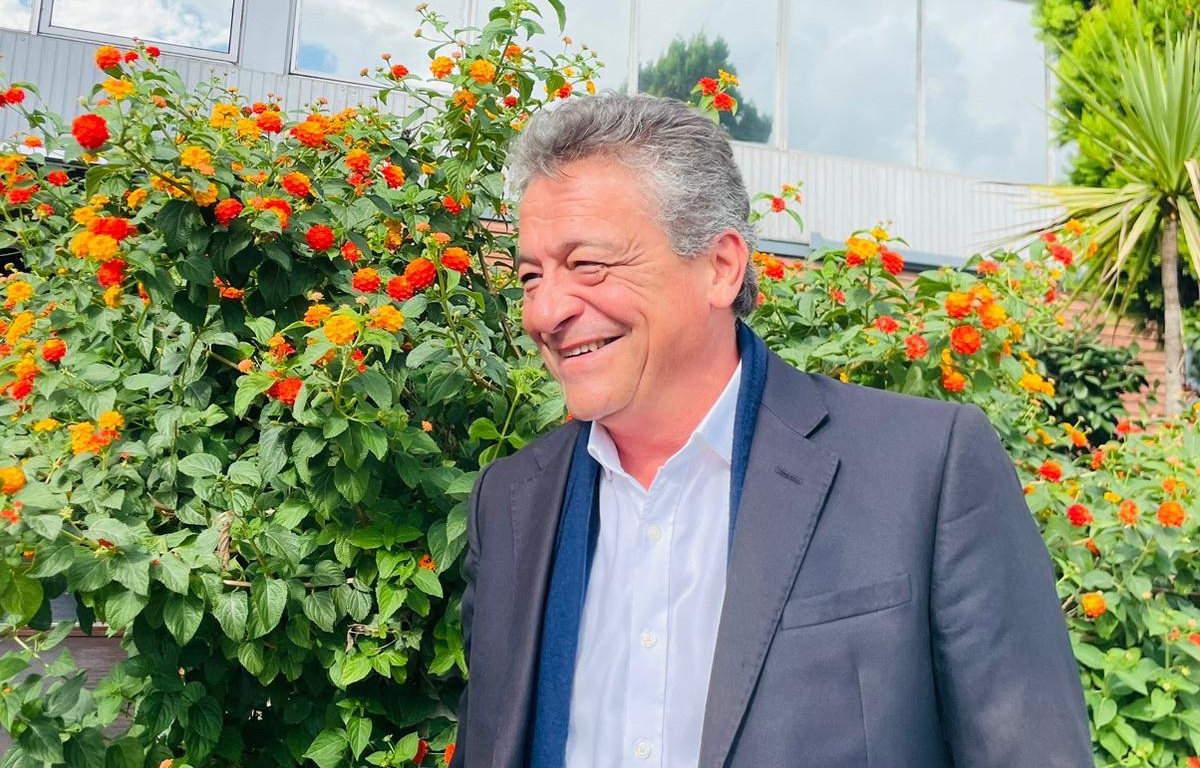
Peter Bentata, VP of production at Compagnie Fruitière, the driver of a deep digital transformation in banana production



Peter Bentata has over 25 years of experience evolving the tropical agricultural sector. Through his work in the Caribbean, Africa, and Europe, he’s been instrumental in a transformation that culminates in the creation of FARMS, an innovative digital solution born in the heart of banana plantations.


As agriculture opens up to AI and big data analysis, Bentata offers an inspiring outlook on the challenges and opportunities of this transition.
Currently the VP of production at the Compagnie Fruitière, Bentata graduated from AgroParisTech. He started his career at SICABAM, a group of banana producers, where he managed agricultural subsidies. That experience took him to the fields and put him in direct contact with early project management tools applied to agriculture.
In 1997, there was an early form of ERP that, although rudimentary, was remarkably forward-thinking.
How did the idea for FARMS emerge?
I was hired in 1998 by an agricultural company in Martinique, managing several hundred hectares of banana and sugarcane. I was put in charge of one of the farms, which faced complex social challenges. Operations were still very manual—everything was tracked on paper. With the help of a service provider, we developed a basic Access-based tool to manage employee time tracking and production data. It was rudimentary, but it opened up the question of how digital tools could support agricultural processes.
What did you learn about the trade of agricultural inputs?
I worked for four years at a company in the French West Indies. It was a very enriching time with many interactions with producers, which gave me a broader understanding of the value chain. What became clear was that most farms lacked suitable tools to effectively monitor their production. The available solutions were often too limited in scope or not tailored to the realities on the ground.
How was your arrival at La Compagnie Fruitière?
In 2008, I joined Compagnie Fruitière in a technical role. From 2010 to 2014, I served as Deputy General Manager of a large 4,000-hectare plantation in Cameroon. Our focus was on strengthening teams, improving product quality, and updating agricultural practices. When I returned to headquarters, I became Vice President of Production. At that time, production management still relied heavily on manual data input, mostly handwritten or Excel-based.
How was FARMS (formerly known SIPA) launched initially?
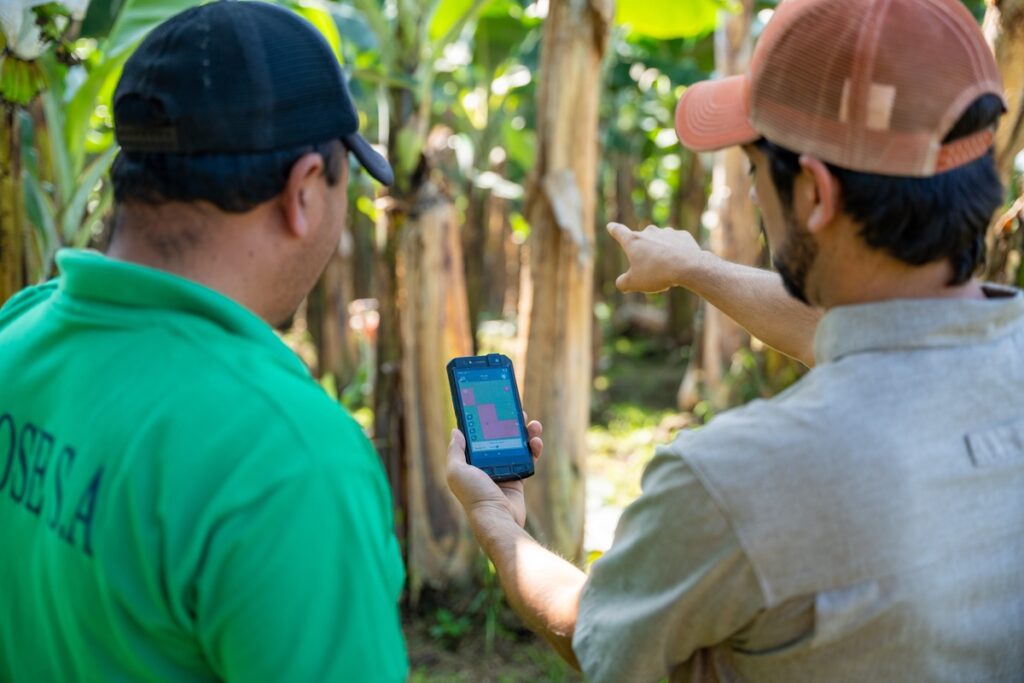
In 2015, with the support of the group’s leadership, we launched the project. The aim was clear: to automate data collection, ensure data reliability, and enable real-time production monitoring. The solution was built around geolocation, barcodes, and at one point even RFID chips, though the latter were too expensive at the time. The tool was shaped by feedback from the field and the involvement of many colleagues across functions.
What are the core features of the tool?
It covers plot management, geography, surface area, identification, and also tracks the banana bunch lifecycle, quality indicators, and yields. All in real-time. The goal was to offer a precise, reliable, and usable view of agricultural activity, with performance evaluation at sub plot level.
What challenges did you face?
Like with any transformation, there was some initial resistance. But overall, teams were highly engaged. One of the biggest strengths of the tool is that it empowers each manager to better monitor their operations and performance goals. It makes management more transparent and efficient, a real driver of professionalization.
Why didn’t you go for an already existing solution?
We conducted a thorough market review, including major players like SAP. But even the best systems required 50–60% of additional custom development. At a certain point, it made more sense to develop our own solution, working closely with our CIO, who played a key role in the project.
What about competitors in the banana sector?
As far as we know, no other banana producer currently has such an advanced tool. That said, there’s nothing stopping them, but it does require significant investment, both financially and in human resources. The key lies in a long-term vision and a multidisciplinary team effort.
What’s next for FARMS?
The next big challenge is data processing. Artificial intelligence will enable us to better anticipate risks, simulate scenarios, and detect technical issues. The goal isn’t to replace human expertise, but to support and enhance it. For example, image analysis could help detect diseases earlier or improve irrigation practices.
Would you call this an agricultural revolution?
It’s certainly a transformation. And to manage it, we need systems capable of handling large volumes of data. Those who are already equipped, as we are with FARMS, have a strong foundation to build on. But the transformation applies to the entire industry and must be supported by reliable, open, and scalable tools.
To wrap up, how would you summarize the vision behind FARMS?
It’s first and foremost FARMS is the result of collective ambition: to give growers the tools to better understand their production, make informed decisions, and act more effectively. By structuring and leveraging field data, we can increase forecasting accuracy and analysis capabilities. And in doing so, we bring people, once again, back to the center of performance.




Subscribe to our newsletter