








Groundbreaking cherry harvest in Argentina's Jujuy Valley creates new market opportunity



by Macarena Bravo | Lee esta noticia en Español


Spring has arrived in the Southern Hemisphere. While some trees are already starting to bloom, others are beginning to show their first fruits, marking the end of the dormancy stage.
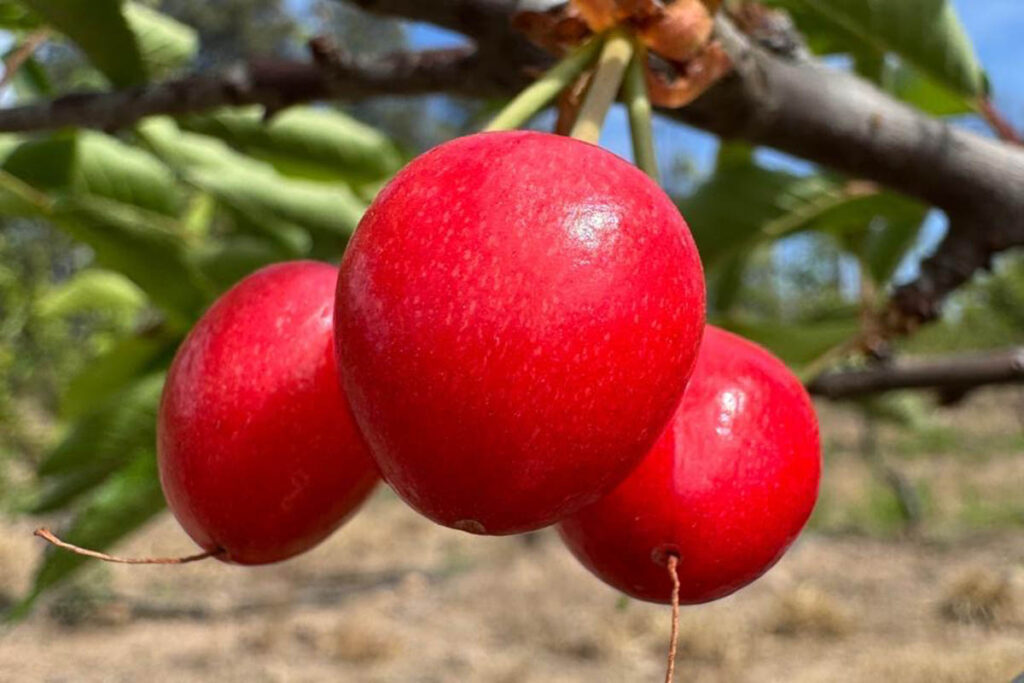
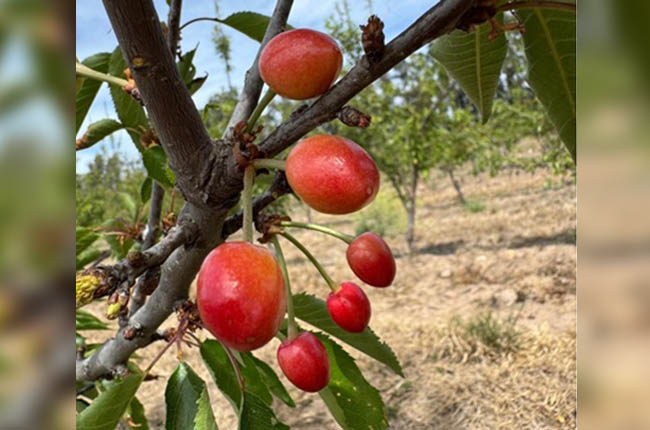
This is the case with the cherry trees lining the temperate valley of Jujuy, in northwestern Argentina, where an experimental block of Minia Royal and Royal Lee cherry varieties was harvested on September 30 (week 40). This harvest was two weeks early compared to production in Chile and Mendoza, Argentina.
Composed of 2,000 plants and six cultivars planted between 2022 and 2023, the trial combined genetic innovation with precision agronomic management that takes advantage of the unique conditions of the area's microclimate.
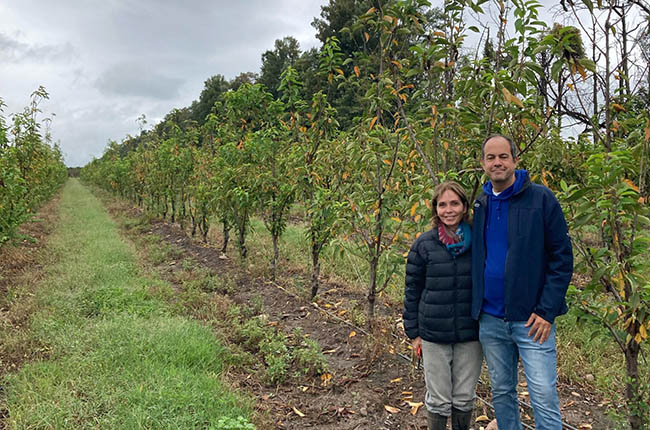
This significant step for Argentine fruit growing is led by Güizzo Frutas Frescas S.A., in alliance with producer Oscar Machuca (Finca Machuca, Monterrico, Jujuy), and Viviana Curzel, professor and researcher at the Faculty of Agricultural Sciences at Jujuy’s National University (FCA-UNJu).
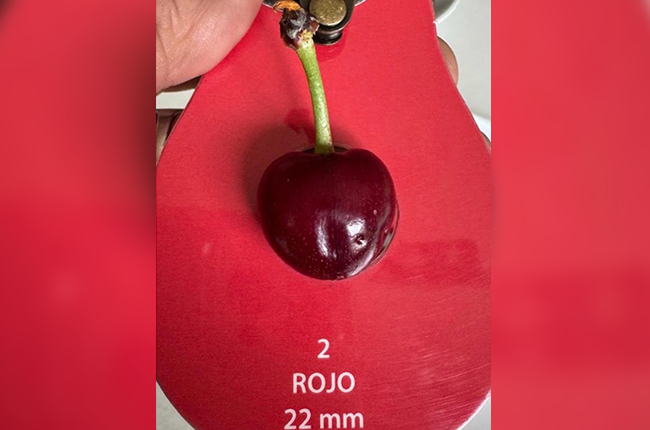
FreshFruitPortal.com spoke with Curzel, who detailed that the harvested fruit reached between 25 and 29 Brix degrees, and featured an intense and uniform color, as well as a firm and crunchy texture and consistency. In addition, the average caliber was between 22 and 24 millimeters, in line with the characteristics of both varieties.
Science at the service of cherry (and economic) development
The Jujuy trial involved precision agronomic management, including summer defoliation, incisions with promalin application, and branch arching, along with the use of growth regulators and dormancy breakers at various doses and dates. These practices allowed for a good fruit set for the current plant structure.
“The cherry tree is not easy to adapt, but with intensive management, we showed that it is possible to produce in this unique window,” Curzel said.
The researcher also explained that the edaphoclimatic conditions of the valley—short winters, low relative humidity, and high solar radiation—have been strategic allies.
“Low humidity from flowering to harvest enhances flavor and color. It is an ideal microclimate for high-quality fruit,” she detailed.
Cruzel emphasized that the trial is a significant achievement, as it allows Argentina to supply cherries starting at the end of September.
This timeline captures an exclusive niche in the global cherry market, as no other country can offer the fruit at that time of year.
“This generates opportunities for both the domestic market and early export,” she said. “That two-week difference is strategic, and the potential economic impact is huge.”
While the trial focuses on varieties from the Zaiger Genetics program, the team plans to include new low-chill varieties from the Zaiger and Bloom Fresh programs.
Jujuy, pioneer in extra-early stone fruit
The professor highlighted that the province of Jujuy has extensive experience in early fruit, featuring peaches, nectarines, and plums. Cherry cultivation appears as a new productive frontier.
“Jujuy is already positioned as a national leader in early stone fruit,” Cruzel explains. “Now we also seek to consolidate the cherry, with consistent and scalable production.”
The area has productive infrastructure, experience, packing plants, cold storage, and logistics adapted for fresh fruits.
However, breaking into this new market is not exempt from challenges. The main one? To "achieve consistency in yields and expand the varietal range."
In the medium term, the team seeks to convert this experience into a replicable model for other areas with similar conditions.
“We showed that it is possible to produce very high-quality cherries in week 40. This puts Jujuy at a new level within the Argentine fruit map,” Cruzel concluded.
*Photographs courtesy of Güizzo Frutas Frescas S.A.
Related stories
Global fresh cherry production expected to drop over 10 percent in 2025-26
Chilean agricultural industry assesses frost damage in cherry-growing regions
Northwest cherries overcome early-season challenges for a bountiful 2025 harvest



Subscribe to our newsletter