








Strong quality and a smaller crop mark the California kiwi season
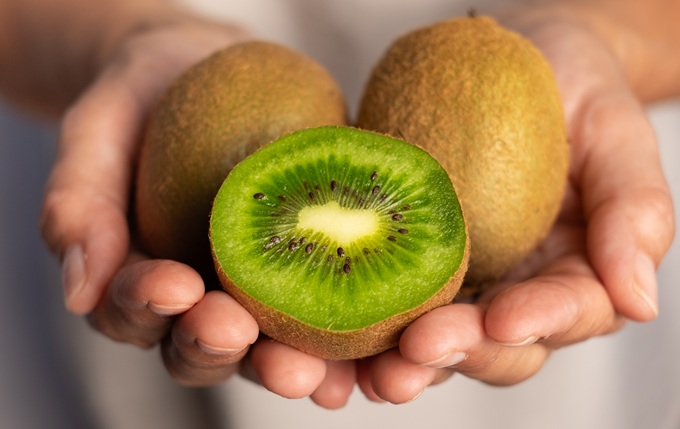



California grower, packer, and shipper Sunrise Kiwi reports that while the quality of the 2025 kiwi harvest is expected to be outstanding, overall production will be down.


To thrive, kiwifruit requires chill hours, adequate summer irrigation, and wind protection. The company’s manager, Jatinder Kullar, said growing weather was favorable this year, thanks to fewer days over 100 degrees this summer.
“We think, and we hope that it translates to a nice quality piece of fruit this season,” Kullar says. “The fruit’s color, the skin, the fuzz—it all looks absolutely phenomenal.”
Although the fruit’s quality benefited from the great weather, the kiwifruit expert said California’s northern and central growers project a harvest decrease of around 10 percent this season compared with last year.
“It could be related to the excessive heat we had last year during growing season,” Kullar explains. “That might have had an impact on bud development, but nobody has really an exact reason why—mother nature is hard to predict.”
America’s voracious appetite for kiwifruit
Sunrise Kiwi is one of the first kiwifruit growers in California, which was introduced to the state in the 1960s. The crop is relatively to the Golden State, but that hasn’t hindered its success— 98 percent of the kiwifruit consumed in the US comes from California growers.
And US demand is increasing, Kullar said, which might mean this season’s supply will not meet demand.
“There is much more awareness about how good kiwis are for you, and that’s leading to increasing consumption. It's a fast-growing item in the US produce category,” Kullar explained.
The executive added that the crop’s climb in the American market is also related to having a consistent year-round supply. This is possible thanks to domestic production, but also imports from countries in the Southern Hemisphere, such as Chile and New Zealand.
Just like quality, prices this season are also strong, he added, mainly because of a shorter kiwifruit in the Southern Hemisphere, including Chile, and a smaller California crop.
”Pricing is up around 20% from last year, to start we estimate a cost of around $1.75 to $2 a pound, and last year it was around $1.50 a pound, even less,” he said. “This is probably one of the best price years we've seen thus far. Time will tell if it holds.”
Related stories:
Mangoes and kiwis see sales surge as US shoppers embrace tropical fruit
Zespri's SunGold kiwifruit is Good Housekeeping’s Best Snack of 2025






Subscribe to our newsletter