







Plant-based edible film coatings: a sustainable solution to cut food waste and plastic use


Edible film coatings have played a significant role in mitigating postharvest losses caused by diseases for centuries. Today, these techniques extend beyond food waste and also aim to minimize plastic use, making the supply chain more sustainable.


This is partly due to an increasing awareness of plastic’s polluting environmental effects, but also because major fruit-importing markets, including the European Union, are adopting regulations to reduce plastic usage.
The edible film coating landscape
The range of edible film options has expanded, resulting in a big pool of products to choose from.
However, not all coatings are created equal, and producers must consider major crop pre- and postharvest needs before choosing a protective film.
Additionally, fruit edible film coating regulations can vary widely from market to market. Paraffin wax– and petrolatum-coated fruit may trigger a stricter review process in Canada, and coatings with titanium dioxide are highly restricted in the EU.
Edible film coating company Akorn Technology is working to make that decision more accessible and less costly by offering only plant-based films. Their products, says CEO Anthony Zografos, protect fruit “as well as any other chemically based products,” and don’t require heavy machinery for their application.
Akorn Technology’s postharvest coatings are made up of three ingredients: a vegetable protein to slow down ripening, a natural wax to reduce moisture loss, and a vegetable oil to maintain a fresh-from-the-farm color.
The first element, also known as corn zein, is the company’s core technology, and it’s present in all its products. Before Akorn modified it to make it soluble in water, the vegetable protein required alcohol and other solvents for application, making it unfit its use in produce.
The product started as an edible film coating, but now it serves as the delivery medium for Akorn Technology’s products, including essential oils and plant-based fungicides.
A market gap in the fruit film coating market
Zografos says the company was born out of the gap in the edible film market, which primarily caters to commodities such as apples and oranges, but leaves other popular categories unprotected.
“How often do you see an avocado or a peach rot? All the time,” he explains. ”We targeted our products toward this class of fruits and vegetables, which have been underserved and, frankly, have the highest losses.”
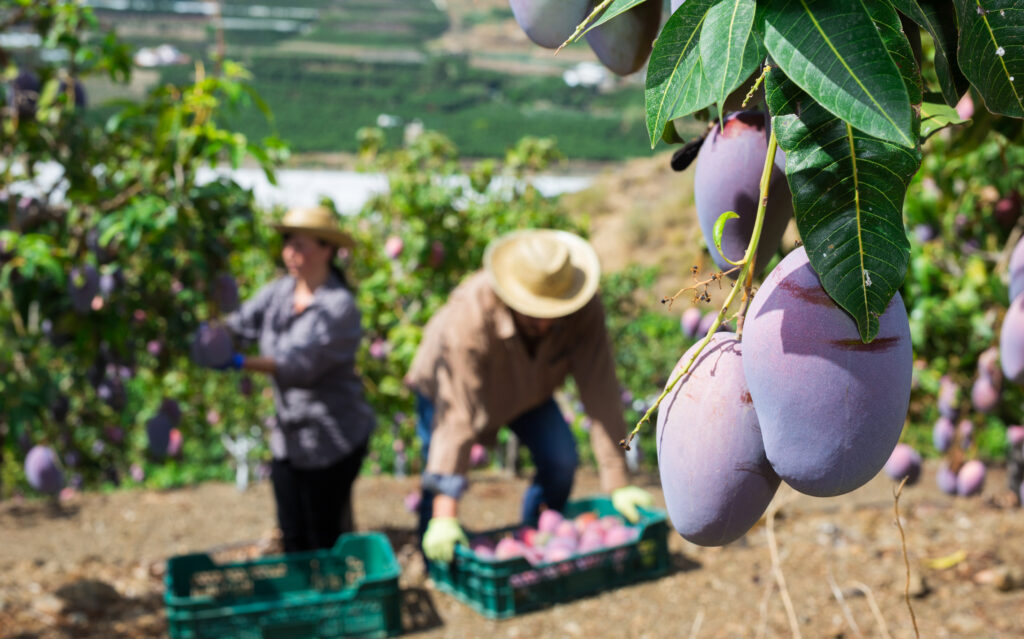
The company claims its films can double the shelf life of highly perishable products such as mangos, which can go from a 10-day lifespan to a post-harvest survival of 20 days.
The executive explained that existing coatings address dehydration, but he says fruits don’t go bad because of a lack of moisture, but because they overripe.
“Existing solutions did not do anything to address that,” Zografos said. “So we set out to develop a solution to slow down the ripening of these fruits and vegetables and allow them to remain fresh longer.”
Easy edible film coating application
As for application, Zografos said edible film coating can be applied both manually while the product is still on the plantation, or by a conveyor in a packinghouse.
In places without conveyors or a cold chain, producers can spray it post-harvest. In cases where the grower or packer wants to automate the process, the CEO said they also offer equipment and installation.
“Our focus is to continue reducing fresh produce losses in the supply chain and to offer consumers a superior experience in terms of flavor quality, regardless of where you are or your conditions,” he explained.
The company launched its natural films in 2022, and since then, its products have made it to South America, Africa, and Australia, and are being tested in Southeast Asia and on pears in the US.
Related stories:
Fresh Del Monte launches reusable plastic containers for banana shipments
True sustainability comes from functional, high-performing fresh produce packaging, report says









Subscribe to our newsletter