Pistachio predicament: How Iranian farmers are fighting water scarcity and aflatoxin
 Add Fresh Fruit Portal to Google
This story was originally published by the Food and Agriculture Organization of the United Nations.
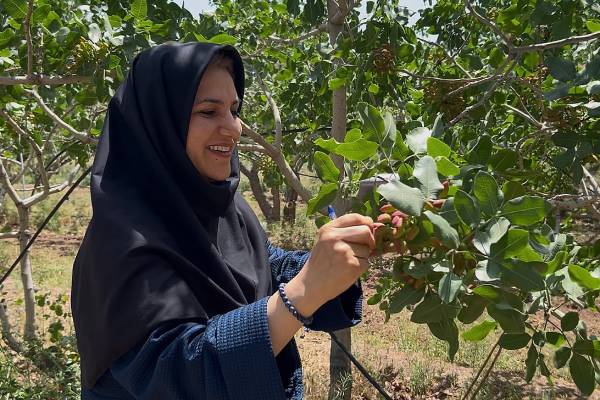
At first light, Maryam Gholam Alizadeh, 42, moves among the rows of pistachios. The grove is low and spreading; its leaves catch what little moisture the morning holds.
On 2.5 acres of increasingly dry land, more than 700 trees require close attention. Maryam pauses, studies a leaf, then the soil beneath it, reading signs that guide decisions with little room for error. Heat, water scarcity, and contamination can undo a season’s work. As a farmer, and especially as a woman farmer, she knows that access to reliable, technical knowledge and training, not a given for women in many countries, is as critical as water itself.
Maryam has cultivated pistachios for more than six years. Trained in agricultural research, she returned to farming out of personal interest and a strong connection to local tradition, learning first from experienced growers in her community and refining her approach through observation and practice in her own fields.
© FAO /Faranak Bakhtiari
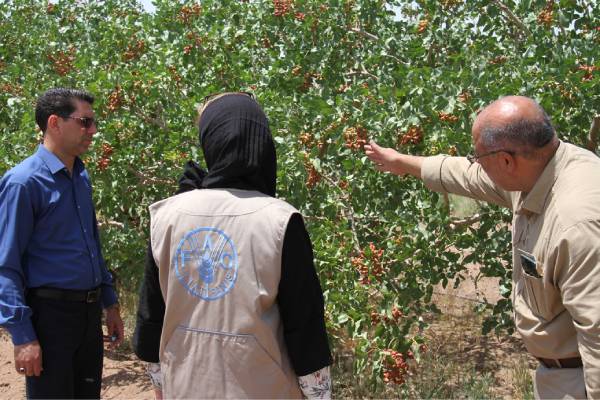
That combination of formal knowledge and field experience shaped how she approached the training sessions organized by the Food and Agriculture Organization of the United Nations (FAO) in collaboration with the Islamic Republic of Iran’s Ministry of Agriculture - Jahad.
These training sessions, delivered in collaboration with the country's Pistachio Research Institute, were a part of a project to improve pistachio production and export through practical, research-based techniques designed for direct use in the orchards. The training was also focused on facing the crop's specific challenges, which in this area of Rafsanjan, the heart of Iran’s pistachio industry, are primarily water shortages and climate variability
With her experience in orchard management, Maryam was already very familiar with these hurdles, but needed tools that could be applied immediately.
“In recent years, we had many problems,” she says. “Low water-use efficiency reduced productivity, and extreme weather affected the trees.”
That immediacy mattered because during the growing season, her days are measured and deliberate. She manages pests, prunes damaged branches, and prepares the orchard for harvest, adjusting constantly to the stresses the trees face.
© FAO /Faranak Bakhtiari
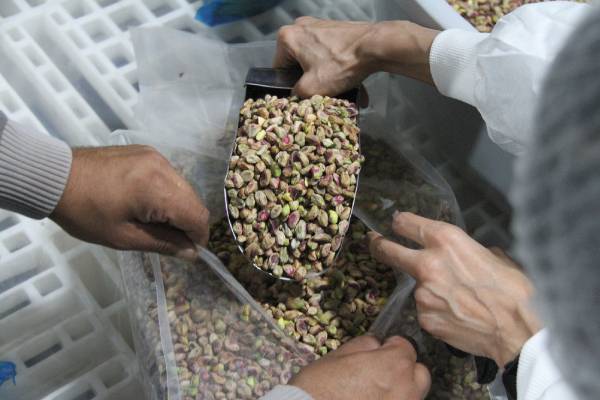
Another serious threat facing pistachio growers is aflatoxin contamination. Aflatoxin is a toxic substance produced by certain fungi that can develop when pistachios are exposed to high humidity, pest damage, or poor handling. Once present, it can lead to entire harvests being rejected by export markets, undermining farmer incomes and threatening the competitiveness of one of the country’s most important crops.
Addressing this, FAO experts visited specialized laboratories to assess sampling procedures and analytical methods for detecting aflatoxin contamination in pistachios. The results were then shared with technicians, researchers, and technical institutions, strengthening quality control along the pistachio value chain.
After applying the new techniques learned in the training, Maryam began to see obvious changes. Managing her orchard became more predictable, tree health stabilized, and yields improved gradually. “Many problems became easier to solve once we understood the causes,” she says.
The experience also strengthened Maryam’s recognition within the farming community. She shares what she has learned with other growers, contributing to broader resilience across the region.
© FAO /Faranak Bakhtiari
Maryam’s focus extends beyond her own grove. She has three children and hopes to pass on both the tradition and the skills she has developed. “Pistachios are more than a crop,” she says, brushing a leaf between her fingers. “They are our heritage, our family’s income, and our future.”
At the national level, FAO’s pistachio program has strengthened the technical capacities of more than 700 growers, processors, traders, extension officers, and laboratory experts across Iran’s main pistachio-producing provinces, supporting improved productivity, aflatoxin control, and resilience in a sector that covers over 178,000 acres and represents more than 21 percent of the country’s bearing orchards.
Related stories
4 ways healthy soils build better cities: From food to climate resilience