Solar radiation and refrigerated containers: An invisible problem in mango exports

 Add Fresh Fruit Portal to Google
By Francisco Seva Rivadulla, International Agrifood Journalist.
Technology and on-site data capture are changing the way we understand logistical risk. For decades, the fruit export industry has perfected nearly every link in the cold chain: varietal selection, post-harvest handling, temperature protocols, controlled atmosphere treatments, and logistical improvements.
However, there is a physical factor that remains mostly unmeasured and understudied within daily operations: the impact of solar radiation on refrigerated containers.
In highly demanding markets such as mangos, where shelf life is closely tied to small thermal variations, this phenomenon can be the difference between a successful arrival and a complex commercial claim.
Experts say there’s a generalized perception that refrigerated containers work as a completely controlled system, capable of maintaining constant internal conditions regardless of the external environment. But reality is different.
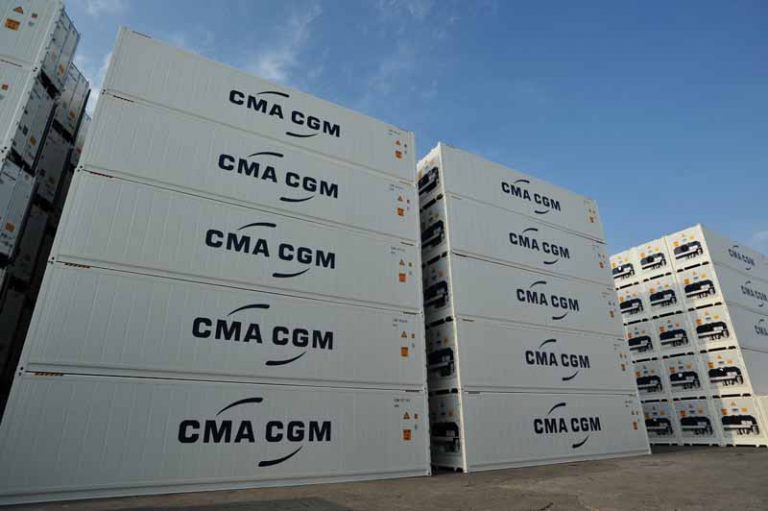
“When a container remains exposed to the sun, especially on deck or in open terminals, it can receive levels of solar radiation that easily exceed 800–1,000 W/m²,” Claudio Aguilar, CEO of RSK Group. “That energy impacts directly on the metallic roof and sides, raising the surface temperature far above the ambient air.”
Aguilar adds that even if the refrigeration unit is operating correctly, some of that heat is transmitted inward through thermal conduction. In the case of older, less efficient containers, the loss of insulating capabilities may lead to localized hot spots, increased effort by the refrigeration system, thermal variability near the cargo, and cumulative physiological stress on the fruit.
“The problem exists, but it often does not leave an evident footprint in traditional records,” he adds.
The executive explains that this situation can be particularly critical when dealing with crops like mango, which present a complex physiological behavior and are highly sensitive to thermal conditions during transit. In this case, even small deviations can generate cumulative effects leading to accelerated ripening, loss of firmness, uneven color development, increased incidence of physiological disorders, and reduction of the commercial window at destination.
Paul Maxwell, Commercial Manager for Chile and Peru at RSK Group, says this difficult scenario poses a problem for exporters and receivers, as fruit may leave in excellent condition and still disappoint upon arrival.
"The explanation is usually sought in multiple factors: loading, ventilation, handling, or simply 'natural variability,'” he explains. “However, the actual impact of accumulated solar exposure during the trip is rarely considered.”
A huge leap in digitalization
In the last decade, the export industry has advanced enormously in digitalization, but many processes are still based on partial information, such as internal temperatures, set points, and, in some cases, gases.
"External variables are almost never documented, as well as environmental conditions during loading and closing,” Maxwell explains.
The expert says this leaves a significant gap when it comes to file claims or post-trip analyses. Without objective evidence of the environment, it is almost impossible to evaluate whether the cargo was exposed to external thermal stress.
“And it is precisely there that an opportunity appears,” he adds.
Instuffing: Capturing the environmental context at the key moment
The initiative behind the Instuffing mobile app, created in collaboration with RSK Group—an international company specializing in cargo claims against responsible carriers—arises from the need for greater technical investigation into the thermal behavior of refrigerated containers under solar radiation.
As Maxwell says, the goal is not to replace existing systems, but to complement missing information. The platform is able to record variables such as instant solar radiation, ambient temperature, wind speed, structured photographic evidence, and operating conditions on-site at the time of consolidation (stuffing) and closing of the container
The record transforms a traditionally 'documentary' moment into a technically measurable event, says Maxwell. The emerging historical database is then capable of identifying the environmental conditions in which the container was loaded, the critical exposure to solar radiation during port operations, and finally, the correlation that may exist between high radiation, certain types of cargo claims, and the age of the container,” he adds.
"For the first time, the industry will be able to start connecting the final condition of the fruit with the real context to which it was exposed,” Maxwell states.
From reaction to prevention
Historically, quality management in exports has focused on analyzing what happened after the journey. This is to change.

The future points toward predictive and preventive models, Maxwell explains, capable of registering environmental variables from the origin, allowing new tools to be built, such as pre-shipment risk analysis, cumulative solar exposure models, fairer evaluations in claim cases, and logistical decisions based on real data.
“In an environment where margins are increasingly tight, anticipating risk can mean the difference between profitability and loss,” he states.
Related stories
Agronometrics in Charts: Peru rains tighten United States mango market, driving prices up