


Blueberry scorch virus confirmed in central Washington
 Add Fresh Fruit Portal to Google
Blueberry scorch virus has been confirmed in central Washington for the first time, prompting industry officials to urge growers to test plants and tighten aphid management ahead of the 2026 growing season.
The aphid-vectored virus, known as BlScV, was identified in two separate blueberry fields in Benton County, according to information released by the Washington Blueberry Commission. Researchers continue to investigate the source of the infection and how widely the virus may have spread in the region.
The commission is offering free virus testing this spring for growers who pay industry assessments, covering both blueberry scorch virus and blueberry shock virus.
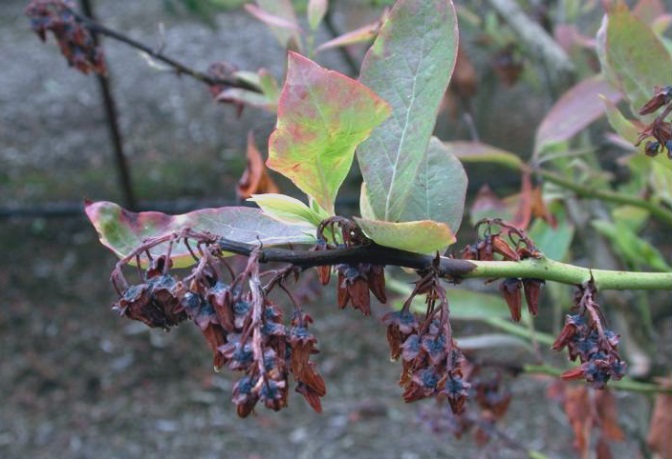
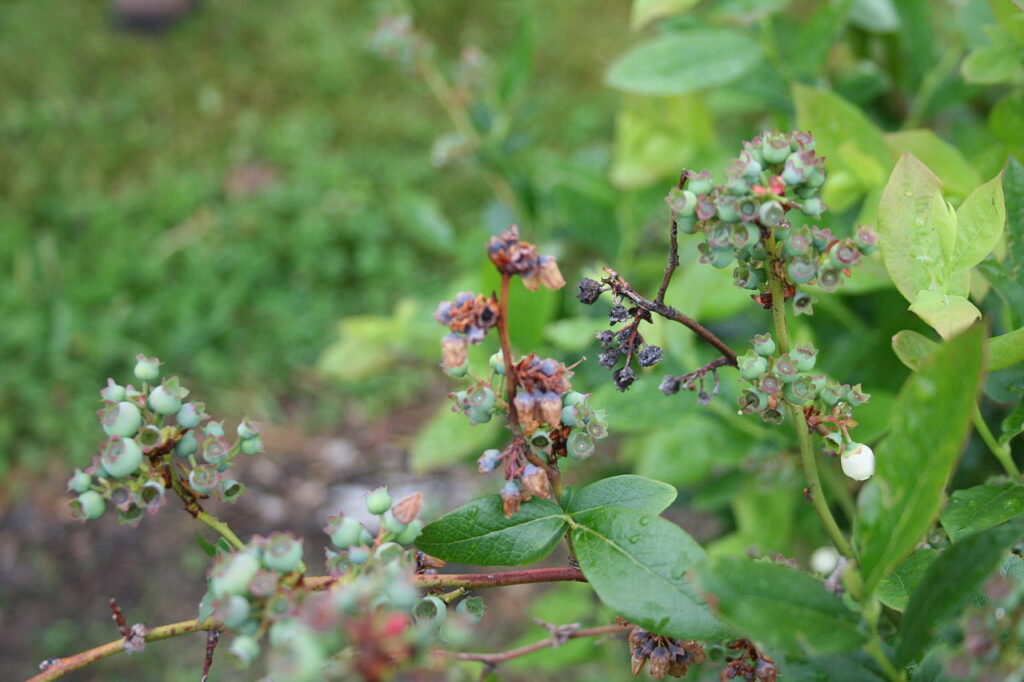
Image: Bob Martin
Early detection critical as scorch virus spreads through the Northwest
Blueberry scorch virus can weaken plants and eventually kill bushes. The disease already occurs widely in British Columbia and northwestern Washington and has been detected in most blueberry-growing regions west of the Cascade Range in Washington and Oregon.
The virus spreads through infected nursery stock or through several aphid species. Because no treatment exists once plants become infected, the commission recommends growers plant certified nursery stock tested for viruses and closely monitor fields for symptoms.
Symptoms typically appear one to two years after infection. Early signs often include shoot tip dieback on isolated branches and blossom blight during early to mid-bloom. Those symptoms can resemble other problems, including blueberry shock virus or frost injury, complicating early detection.
As the infection progresses, the disease can spread through an entire bush within one to three years. Infected plants usually repeat the same symptom cycle each spring, while fruit production and shoot growth may decline gradually or sharply, depending on the cultivar. Some tolerant varieties may show only mild leaf yellowing without flower blight.
Free testing available this spring
The Washington Blueberry Commission said virus testing remains the most effective way to identify and contain the disease.
The commission will provide up to 30 free samples per participating farm this spring. Phyto Diagnostics, a laboratory based in British Columbia that regularly works with growers in the region, will conduct the testing. According to the commission, results remain confidential between the grower and the lab.
Growers should collect samples once symptoms appear and test both symptomatic plants and nearby plants without visible symptoms because blueberry scorch virus and blueberry shock virus cannot be reliably distinguished visually.
The commission recommends collecting five live leaves per plant for each sample and keeping them dry, fresh, and cool before shipping them overnight to the laboratory in North Saanich, British Columbia. The lab typically reports results about two weeks after receiving samples.
Plants that test positive for blueberry scorch virus should be removed promptly. Growers should also monitor affected areas of fields for at least three years, particularly near sites where infected plants were removed.
*Main photo by John Gottula, Kerik Cox, Juliet Carroll and Marc F. Fuchs
Related stories
Florida blueberry crop losses near 50 percent following Winter Storm Fern, expect price spike
Berry growers in North and Central Florida face the devastating effects of the latest cold snap
“Our red bet came up”: Florida blueberry industry faces major losses after historic frost