Lower northern supplies boost Argentine lemon exports
 Add Fresh Fruit Portal to Google
Writing and reporting by Macarena Bravo | Lee esta noticia en Español
Argentine citrus exports experienced significant growth in the first quarter of 2026, according to the country’s Secretariat of Agriculture, Livestock, and Fisheries. Lemons spearheaded the surge, with volumes rising 76 percent and export value soaring 129 percent to $26 million.
Data from Argentina’s Undersecretariats of Agri-Food Markets and Regional Economies shows that total citrus shipments reached 50,085 tons—a 50 percent increase in volume. Total export value hit $108 million, marking a 36 percent year-on-year rise.
José Carbonell, president of local industry body Federcitrus, told FreshFruitPortal.com that winter crops, particularly citrus, have faced delays.
“Lemons are currently in peak season, whereas the orange harvest is not expected to start until late July,” he said.
The executive added that despite adverse weather, the season is benefiting from robust demand in the Northern Hemisphere.
“The drop in production in Spain and Türkiye has led to increased demand for lemons from the Southern Hemisphere,” he explained.
Carbonell noted that in Russia prices remain at levels similar to last season’s, while they’ve risen in the European Union.
Europe is the main destination for Argentine sweet citrus, although there are also significant markets for mandarins in the Philippines, Indonesia, and Canada, the executive added. Paraguay also represents a major destination for Argentine oranges.
For lemons, key export destinations included the United States, Ireland, the Netherlands, Russia, and Italy. The industry reported notable growth was seen in China (921 percent), Spain (729 percent), France (640 percent), Japan (217 percent), and Greece (176 percent).
Beyond fresh fruit, the main business for Argentine lemons is processing. About 70 percent of production is used to make derivatives, a segment in which Argentina supplies nearly two-thirds of the global supply.
Among these byproducts, concentrated lemon juice trade was up 23.6 percent in volume. Value increased as well, reaching $32.4 million—$13 million more than in the first four months of 2025.
Sales of lemon essential oil reached a record $48.2 million, up six percent from 2025. The price per ton was $24,477, nine percent higher year-on-year.
Lessons learned by the Argentine lemon hub
The Federcitrus representative noted that one of the main lessons from the previous season was the need to adjust the commercial strategy.
Following negative experiences resulting from shipments exceeding demand in 2024, the industry has opted to prioritize operations involving fruit already sold, with most exports carried out under contracts finalized before shipment.
The executive noted that the season began with some processed products practically out of stock, especially lemon juice, which contributed to higher international prices. Lower production in the Northern Hemisphere reduced the volume destined for the industry and coincided with an increase in global juice consumption.
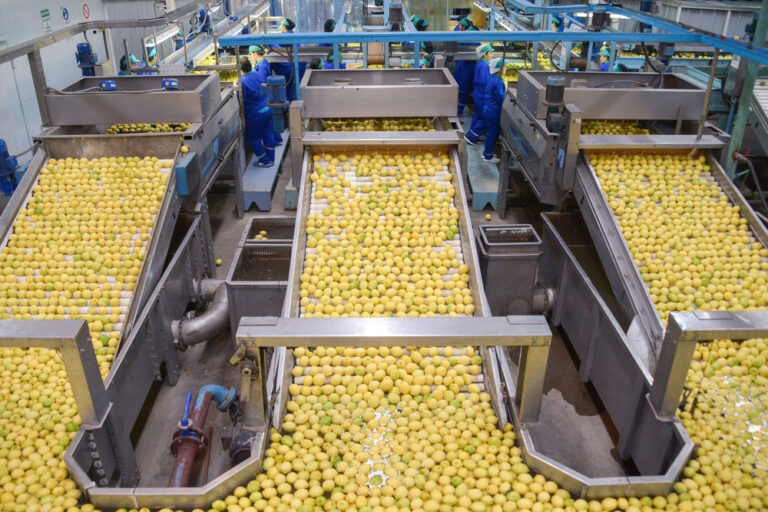
In contrast, the essential oil market shows slight improvement, while dehydrated peel prices remain stable. However, production of the latter could fall by around 20 percent this season.
The decline is due to changes in the energy supply mix in northern Argentina. Following the cessation of gas supplies from Bolivia, the region began sourcing gas from the province of Neuquén. However, temporary limitations in transportation and distribution infrastructure have raised costs and partially restricted gas availability for industrial processes such as peel drying.
Outlook for Argentine citrus
Looking ahead to the coming months, Carbonell said the season is shaping up to be strong, with at least another two and a half months of intense activity. He also highlighted the high level of technology in the Argentine lemon industry and the sector’s ability to fully meet international demand.
However, he warned of a growing trend in European markets: stricter requirements regarding chemical residues in imported fruit.
As he explained, some exporting countries are already facing rejections due to banned substances, which could present an opportunity for suppliers in the Southern Hemisphere that meet stricter quality and safety standards.
*All images courtesy of the Secretariat of Agriculture, Livestock, and Fisheries; main photo is referential.
Related stories
Argentine lemon outlook: Climate challenges meet strong market demand