








Opinion | Arabian Gulf demand for African produce: a new trade corridor



 By Eric Potgieter, Marketing Division, Mashamba FFP (U) Ltd


For most of the past 50 years, the story of African fresh produce exports has been a European story. Beans to London, avocados to Rotterdam, flowers to Amsterdam.
That story is not over, but a second one has started alongside it, and it is moving faster than most of the industry has noticed: Arabian Gulf buyers are also turning to African origins, and the policy signals, the market data, and the movement of perishables all point the same way.
Start with the fact that drives everything else: According to the World Economic Forum, the six Gulf Cooperation Council (GCC) states (Bahrain, Kuwait, Oman, Qatar, Saudi Arabia, and the United Arab Emirates) import up to 85 percent of their food. The region is investing heavily in greenhouses, vertical farms, and desalination to raise domestic output, but that will not eliminate its structural dependence on imported food, which is written into its climate and water table.
The money follows. Mordor Intelligence puts the GCC fruit and vegetable market at $22.43 billion in 2026, rising to $27.41 billion by 2031. Saudi Arabia alone holds 41.6 percent of that market, and the UAE is the fastest-growing corner of it, expanding at five percent a year. The market's growth is structural, not cyclical.
What Gulf buyers are importing
The region’s demand profile is set by demographics rather than novelty. In much of the Gulf, the kitchens are Indian, Pakistani, East African, and Yemeni as much as they are Arab.
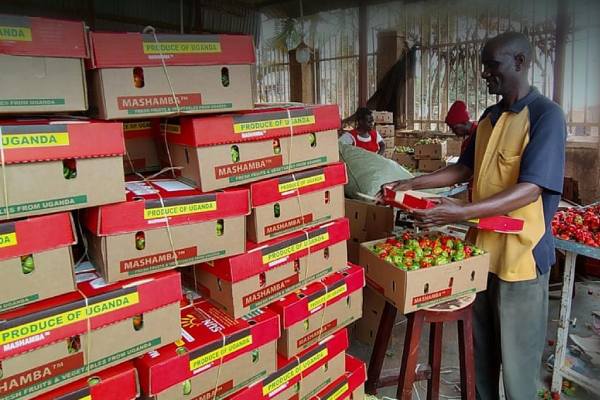
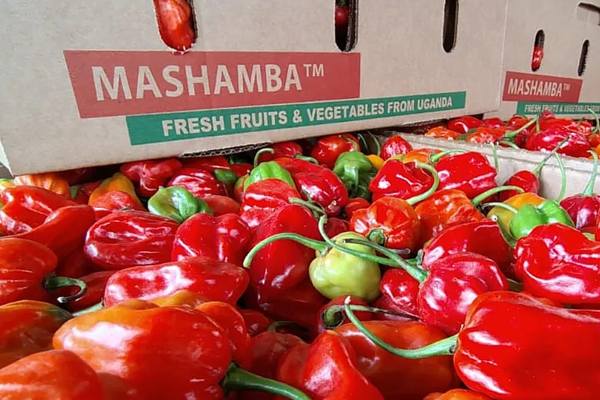
That means steady demand for fresh heat and aromatics, chilies, Scotch bonnet, ginger, alongside everyday staples such as cooking bananas, sweet potato, and eggplant that resident communities cook with daily. Layered on top sits a fast-growing hospitality sector buying specialty lines for hotel and restaurant kitchens, with Ramadan a reliable seasonal peak.
This profile plays directly to African strengths. The crops the Gulf's resident communities want are the crops East and West African growers already produce, in varieties that established bulk origins often do not carry.
None of this hands Africa the market by default. Egypt next door, Türkiye, India, and Latin America are established suppliers, and the Gulf grows more of its own food each year.
However, African origins win where four forces line up.
The first is supply that never stops. Equatorial origins such as Uganda and Kenya harvest year-round, allowing Gulf buyers to run a 52-week program from East Africa without the seasonal gaps that interrupt supply from Mediterranean and other temperate origins.
The second is policy. The UAE's National Food Security Strategy 2051 explicitly targets three to five supply sources for each major food category, which is a standing invitation to new origins. The Gulf is not waiting for Africa to knock: the UAE signed a Comprehensive Economic Partnership Agreement with Kenya in 2025, which in 2023 was already exporting $40.2 million worth of fruit to the Arab country, largely pineapples, avocados, and mangoes.
The third is the duty position. Fresh fruit and vegetables are exempt from customs duty in the UAE under the GCC Common Customs Tariff, and most fresh produce lines enter Saudi Arabia at around five percent. For exporters used to more complex tariff landscapes, the Gulf's front door is remarkably open.
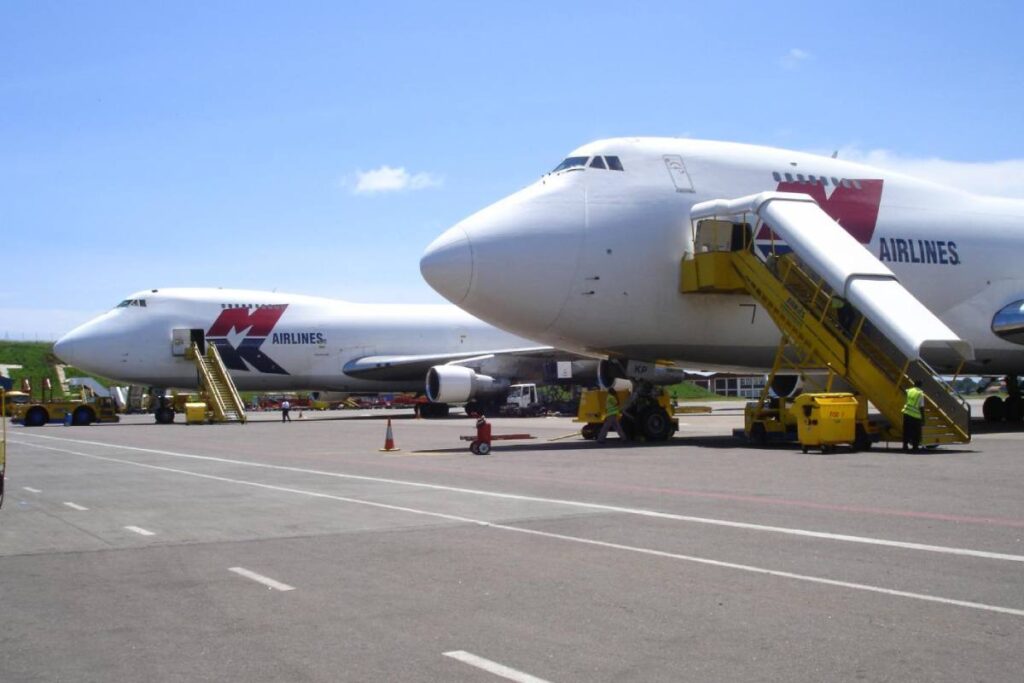
The fourth is freshness economics. East African hubs such as Entebbe, in Uganda, and Nairobi, in Kenya, sit a short overnight airfreight run from Dubai, hours in the air against the weeks at sea that some traditional supply routes still require. In a category where shelf life is the product, that time difference is decisive.
The view from Entebbe
The scale of African perishable airfreight is already visible in Emirates SkyCargo's network. The carrier reported moving more than 91,930 tonnes of perishables out of Africa in 2024, including bananas from Uganda, strawberries from Egypt, and fresh fruit from Ghana.
Dubai sits at the center of that network, not just as a destination but as the hub the whole region buys through, with produce landed there re-exported to Saudi Arabia, Qatar, and Oman.
From Entebbe, a well-run Gulf shipment looks like this.
Produce is harvested at export maturity and field heat is removed within hours. The product is then graded, cold-packed, and documented the next day, then dispatched through cold-chain-certified handling on a Gulf-bound flight, clearing the border against a phytosanitary certificate prepared before departure.
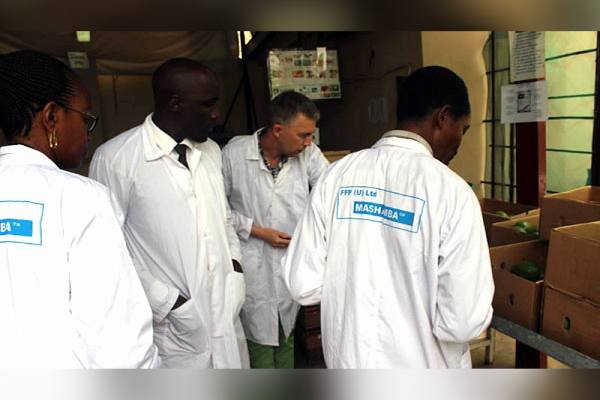
On that timetable, the trip from field to a Gulf warehouse in roughly four days is a working reality, not an aspiration. At Mashamba FFP (U) Ltd in Uganda, we see the shift first-hand: Gulf inquiries, once a sideline, are now a regular part of our export conversations, in a trade we have been in for 25 years.
What could still slow the African corridor
Constraints in the African corridor are real, and there’s a lot of room for growth.
Cold-chain gaps at origin can destroy the economics of a shipment long before any tariff becomes an issue. Documentation discipline matters more in the Gulf than newcomers expect, since phytosanitary, customs, and import requirements in the UAE and Saudi Arabia need to be aligned before a shipment reaches the border, not after it lands.
Air cargo capacity out of East Africa is contested, with flowers, fish, and vegetables competing for the same freighter space, so capacity is as much a program-planning problem as a freight problem.
And Gulf buyers grade hard: exporters who ship and hope will not get a second order.
European demand took African horticulture half a century to build. The Gulf corridor is compressing that curve into a decade, pulled by food-security policy, demographics, and airfreight economics all pointing the same way.
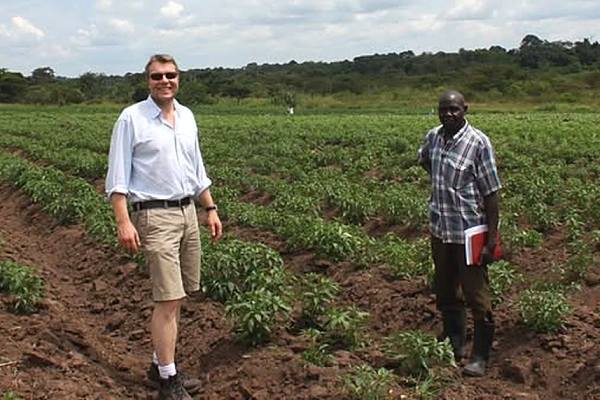
The winners on both sides will be those who treat it as a program rather than a spot trade: buyers who commit to regular volumes, and exporters who invest in grading, cold chain, and paperwork worthy of those volumes.
The demand is not in question. The discipline is.
Eric Potgieter runs the marketing division at Mashamba FFP (U) Ltd, a Ugandan fresh produce exporter with export operations since 2001 and more than 23 million kilos airfreighted to buyers across the UK, Europe, and the Gulf.
*All images courtesy of Mashamba FFP (U) Ltd
Related stories
Middle East invests in indoor ag as import dependence drives CEA growth
South African citrus shipments challenge geopolitical disruptions in the Middle East





Subscribe to our newsletter