








Strikes cripple Rotterdam and Antwerp-Bruges ports, causing major shipping delays in Europe



LATEST UPDATES (10/13/2025, 10:31 EST)

- The Port of Rotterdam workers' strike has been halted for 5 days starting Monday, October 13. The stoppage may resume on Friday if negotiations between the Netherlands Trade Union Confederation (FNV) and lashing companies Matrans and International Lashing Services fail.
- Antwerp Port reported at 07:00 (local time) on October 13 that there were 93 vessels without a known schedule and 19 vessels that are experiencing delays. In Zeebrugge, 12 vessels are experiencing delays.
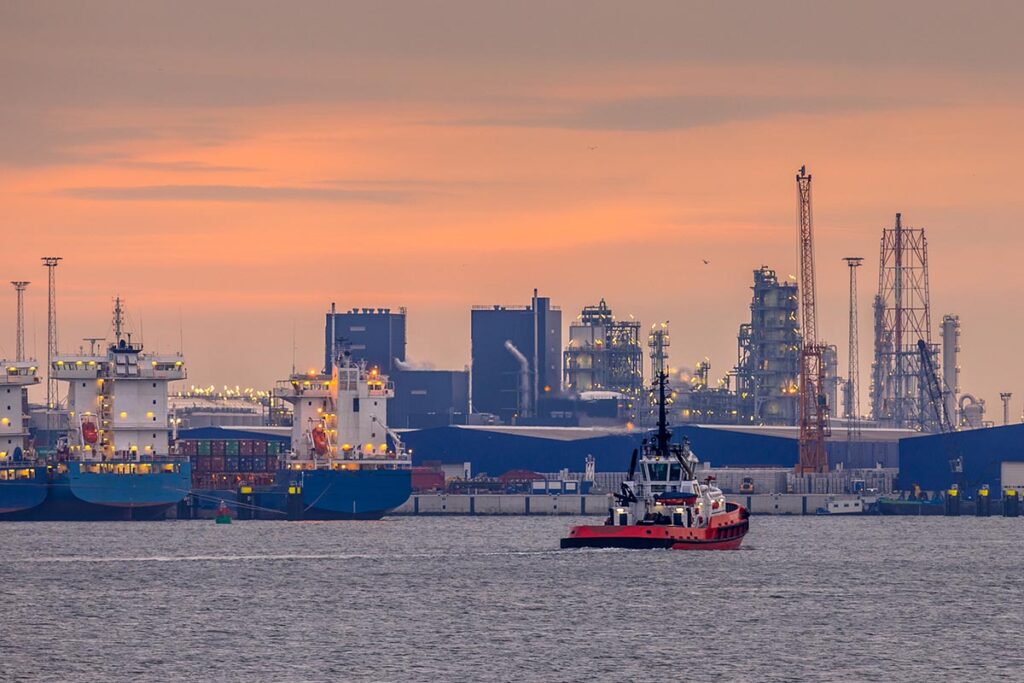
A lasher strike has caused major disruptions at the Port of Rotterdam, resulting in delays and a growing ship backlog that, according to Reuters, is already double the usual—and it's bound to get worse.
What was initially a 48-hour strike has officially taken a turn after the Netherlands Trade Union Confederation (FNV) announced that a group of around 650 lashers voted unanimously to continue the strike indefinitely, further complicating delays and congestion.
"This means that Rotterdam could get congested very quickly, considering the disruption it’s been dealing with since last weekend," says Darron Wadey, a consultant and shipping industry analyst at Dynamar, referring to the disruptions caused by Storm Amy that were already in place by the beginning of the strike.
Lashers are essential workers at shipping ports, as they’re in charge of securing and releasing cargo on vessels, ensuring safety for everyone at the point of entry.
"What we see is a clear demonstration of how every link in the supply chain has to work for it to run smoothly," Wadey adds. "One grain of sand in the machinery can cause it to grate."
Failed negotiations
Industry news outlet Port Technology International reported that the 48-hour strike, involving two independent lasher companies, was scheduled to end on Friday at 15:15 Central European Time.
At that time, the FNV would sit down with employers Matrans and International Lashing Services for negotiations, and workers would vote to continue the stoppage depending on the results.
The long ongoing dispute between the two parties concerns a seven percent wage increase baseline, raises based on inflation, and working conditions, which the employers have labeled as excessive. The employers have deemed workers' demands excessive and offered a wage rise ranging between four and six percent, which was rejected.
On their part, in a statement released late Wednesday, Matrans and International Lashing Services labeled the strike as "unjustified and very harmful.”
“The logistics process is being massively disrupted,” said Matrans CEO Erik Bouwens, according to Dutch news site NLTimes. “If you can’t handle the containers, you can’t load or unload. New ships can no longer be processed.”
The ship queue keeps growing at the port
In a statement, the Port of Rotterdam informed that container ships cannot be handled, and that "seaside operations of the container terminals are currently at a standstill". However, all landward operations continue as usual.
"The only realistic alternative for container shipping lines would be to divert to other ports such as Le Havre, but more likely any of the German trio of Wilhelmshaven, Hamburg, and Bremerhaven," says Wadey. "In turn, they may well end up getting congested because of the sudden upturn in business."
As of Thursday, 13 container ships (deep-sea, short-sea, and feeder ships) were waiting in the Rotterdam anchorage area, port representatives said. Under normal circumstances, there would be 6 to 7.
Even though all other port processes remain operational, A.P. Moller-Maersk informed its client base that there would be significant delays beyond the company’s control, given that all terminals are currently affected by the strike.
There are no official calculations as to the financial impact the strike has had so far.
No plan B for Rotterdam
Normally, any disruptions at the Port of Rotterdam could be handled totally or partially by redirecting marine traffic to the Port of Antwerp-Bruges. Unfortunately, in this case, that is not an option.
The Belgian point of entry is currently dealing with severe disruptions due to the industrial action of Flemish harbor pilots. According to reports by Reuters, workers have been protesting since Sunday against federal pension reform announced by the Belgian government at the beginning of the year.
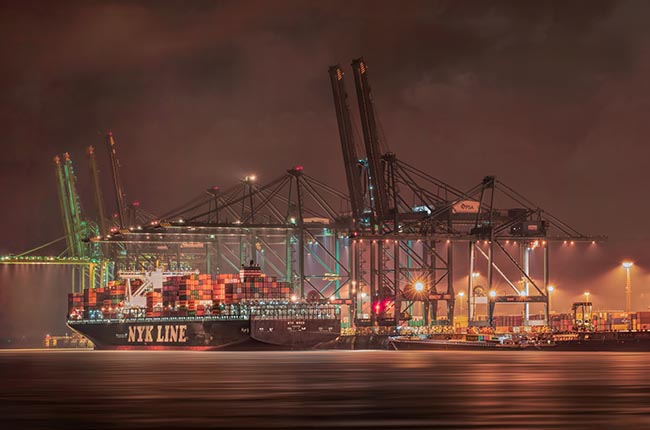
According to reports by The Maritime Executive, the strike notice announced a work-to-rule action. This means pilots are strictly limiting their duties to their working hours (between 8:00 and 5:00 pm), while maximizing rest periods and office work. The industry news outlet reports that, in reality, this means harbor pilots are only available starting at 10:00 am.
The shift is effectively cutting port productivity in half, according to the Port of Antwerp-Bruges, as the daily processing ability has been reduced from between 60 and 80 ships to 31 on Tuesday.
This is not the first time harbor pilots have disrupted operations at the point of entry, says The Brussels Times. Back in March, they also protested government pension reform as part of a national strike.
On October 10, at 7 am local time, the Port of Antwerp informed that there are 90 ships with no known schedule and 22 others experiencing delays. In Zeebrugge, eight vessels have unknown schedules, and another eight are experiencing delays.
*This is a developing story...
Related stories
Three-day strike left hundreds of containers halted in Guatemala







Subscribe to our newsletter