








Peruvian blueberry exports double as the US and China lead demand



Lee esta noticia en Español.

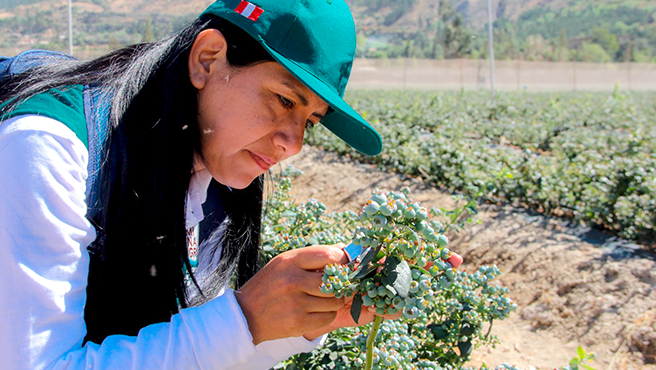
Peruvian blueberry exports surged to over 297 million pounds between May and September 2025, according to Peru’s National Agriculture Health Service (SENASA). The uptick represents a 93 percent increase year-on-year.
If current trends continue, the Andean country could exceed 882 million pounds in shipments by the end of the 2025-26 season, which finishes in March.
The US, the Netherlands, and China dominate market share
SENASA reports that 83 percent of Peruvian blueberry exports during the current season were shipped to the United States, the Netherlands, and China. The Asian giant remains a key growth market, with rising demand for premium and larger-sized berries.
As of October, Peruvian blueberries have reached 38 international markets. Bolivia and Indonesia joined the list of destinations this year, while access negotiations are ongoing with Vietnam, New Zealand, and Japan.
“We will continue to strengthen phytosanitary measures to open up more markets, diversify destinations, and consolidate the prestige of Peruvian blueberries as a product of excellence, reflecting the best of the countryside and the efforts of our regions,” says Vilma Gutarra, head of SENASA.
Industry expansion and certification
Since the season began, SENASA has authorized 83 packing plants and certified more than 54,000 acres of blueberry production. The main growing regions include La Libertad, accounting for 45 percent of total output, Lambayeque (27 percent), and Ica (15 percent). Lima, Áncash, Piura, Moquegua, and Arequipa account for the remaining 13 percent.
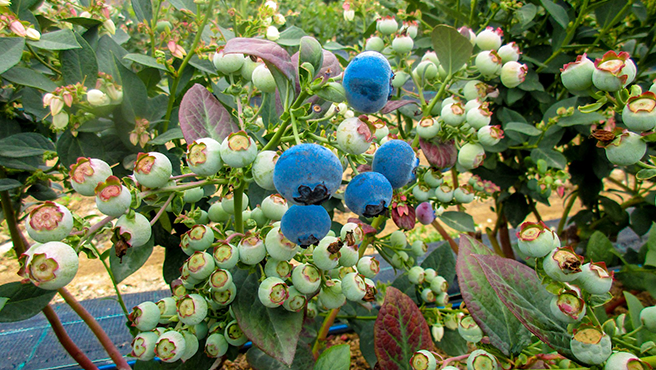
Peru cultivates around 65 blueberry varieties, but production is concentrated in nine, including Ventura, Biloxi, Sekoya Pop, Rocío, Mágica, Emerald, Rosita, and Sekoya Beauty.
In the previous season, Peru retained its position as the world’s top blueberry exporter, holding a 31 percent share of the global market. Chile, Spain, and Morocco each held eight percent, while the US followed with seven percent.
*All photography by SENASA.
Related stories
Fresh Peruvian blueberries unlock the Indonesian market






Subscribe to our newsletter