








The fight over glyphosate: 3 keys to understand why Bayer's stock shot up



Bayer made headlines this week after its stock went up 14.9 percent on Monday, reaching a near two-year high on the Frankfurt market, Reuters reported.

The surge was the direct result of the Trump Administration’s backing of the German pharmaceutical’s bid to curb lawsuits involving Bayer’s weedkiller Roundup, which the company acquired from Monsanto in 2018.
But the story behind these latest developments goes back years, and it can be a bit complicated if you haven’t been keeping up with the pharmaceutical company.
To better understand what’s going on, we’ve rounded up and answered three critical questions.
Why did the Trump Administration endorse Bayer?
The United States government didn’t endorse the German company per se, but issued a brief at the request of the US Supreme Court. The petition was made back in June.
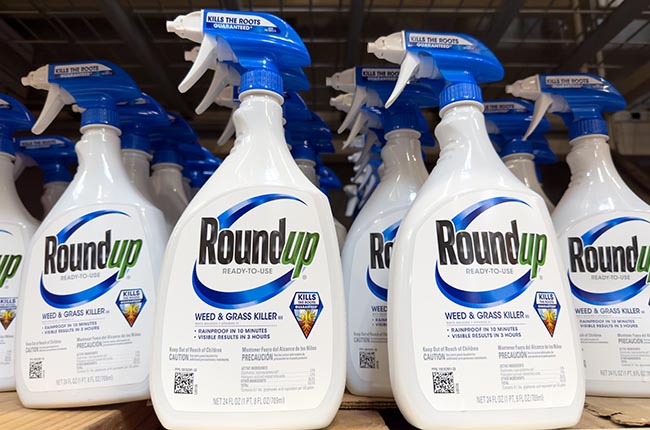
US Solicitor General D. John Sauer said that federal law backs Bayer in the face of lawsuits claiming glyphosate (the active ingredient in Roundup) is responsible for cancer diagnoses in users who manipulated the product both at home and on the job.
Upholding lower court decisions against the company, Sauer explained, would undermine the authority of the US Environmental Protection Agency (EPA).
"The EPA has repeatedly determined that glyphosate is not likely to be carcinogenic in humans," Sauer said.

Regarding the claim accusing Bayer of failing to provide clear and concise warnings about the product’s cancer risks, the solicitor once again defended the EPA’s authority.
He clarified that manufacturers shouldn’t adhere to state labeling requirements when a government agency, such as the EPA, has already assessed and approved the health warnings on a product’s label.
In a press release, Bayer CEO Bill Anderson celebrated the US government statement, calling it an important step and good news for US farmers.
“The stakes could not be higher as the misapplication of federal law jeopardizes the availability of innovative tools for farmers and investments in the broader US economy”, he added.
Why is the Supreme Court involved?
Bayer went to the US Supreme Court after a Missouri state court upheld a $1.25 million case against the company. The plaintiff, John Durnell, was diagnosed with non-Hodgkin's lymphoma, which he attributes to his exposure to Roundup.
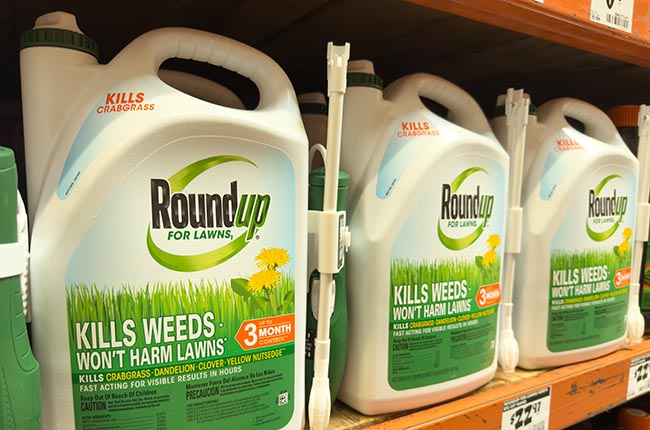
However, Durnell’s is not the only suit the company is facing in the US. Bayer is currently dealing with over 67,000 legal proceedings involving its weed-killing product in state and federal courts.
According to Reuters, these litigations had cost the company over $7.6 billion by the end of September. This adds up to the $10 billion the company paid to settle pending cases involving the home use of Roundup dating back to the Monsanto years, Euronews reports.
The Supreme Court is expected to issue a final decision on Bayer’s appeal case by January.
What is glyphosate, and is it actually dangerous?
Glyphosate is a popular active ingredient in several herbicides, including Bayer’s best-selling weed-killer, Roundup.
That’s the only part of the question that’s easy to answer, as whether the compound is carcinogenic seems to continue to be a debated subject among scientists.
In 2015, the World Health Organization’s International Institute for Research on Cancer (IARC) stated that glyphosate is “probably carcinogenic to humans.” The entity warns that the evidence is “limited” and based on around 1,000 studies containing data “from real-world exposures.”
Meanwhile, the EPA says it doesn’t agree with the IARC. In this matter, the US agency questions the data on which the WHO based its stand, saying that the EPA considered a “significantly more extensive and relevant dataset,” and that the IARC “only considered eight animal carcinogenicity studies while EPA used 15.”
The EPA is not alone—the Australian Pesticides and Veterinary Medicines Authority also claims glyphosate is safe to use as long as users follow label directions carefully. On their website, they address the IARC report, and while they don’t overtly disagree with it, the agency reminds the public that “many other everyday substances are also classified as probably carcinogenic,” such as “high-temperature frying, some shift work, drinking very hot beverages, and consumption of red meat.”
There even seems to be a lack of consensus within the IARC, as Reuters reported in 2017 that several changes were made to the entity’s report during its editing process, including the deletion of “non-carcinogenic.”
Related stories
EPA ordered to reassess glyphosate's impact









Subscribe to our newsletter