

Corbana fights climate and cost pressures to steer Costa Rican banana production to recovery in 2026
January 05 , 2026

Costa Rica’s banana industry is performing below historical levels due to adverse climate conditions, exchange rates, and rising costs, Business Intelligence Director of the National Banana Corporation of Costa Rica, Corbana, Omar Sánchez, said.
To address the Costa Rican banana output crisis, Corbana has made different financing mechanisms available to prevent farm neglect and possibly break a negative cycle of lower productivity and reduced exports.
By the end of 2025, the institution estimated production to be between 110 and 112 million boxes. But 2026 projections point to a recovery that could place production between 118 and 120 million boxes, still below the historical average of 125 to 126 million, but with a positive trend.
Several key factors would sustain this recovery. The executive noted that an eventual improvement in climatic conditions during the first months of 2026 is among them.
A decrease in precipitation levels might reduce the incidence of diseases like Sigatoka, thereby improving stability in the productive area and strengthening agronomic management.
The executive said Corbana will continue to provide direct technical assistance to producers to optimize farm productivity during good weather, but climate remains the primary source of uncertainty.
“It is an unpredictable and determining factor,” said Sánchez, who added that current estimates are based on favorable climatic models and subject to constant monitoring.
Circana’s banana field reviving project
This coming year, Sánchez said Corbana is advancing a technical study to identify new areas with suitable agro-climatic conditions for banana cultivation.
The research, led by an interdisciplinary team at the institution, seeks to reactivate historically banana-producing areas and explore new productive regions, including southern Costa Rica.
Currently, nearly 98% of the banana surface is concentrated on Costa Rica’s Caribbean slope, but the institution does not rule out developing projects in the South Pacific, especially given the port improvements projected for the medium- and long-term.
This planning process will take approximately two years and will include securing financing and buyers to ensure long-term stability for the producers.
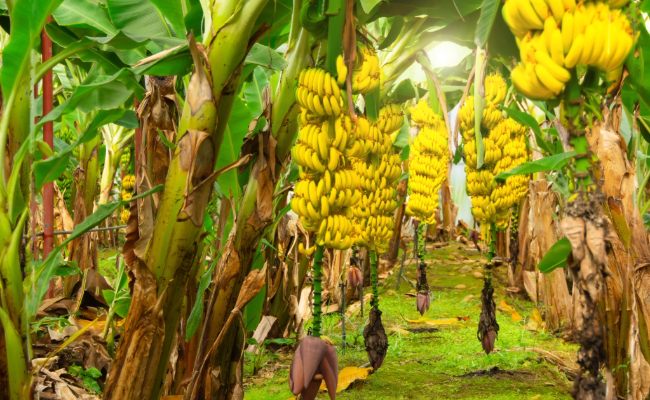
Costa Rica banana projections for 2026
On the commercial front, Corbana will continue to strengthen international promotion of Costa Rican bananas, with an emphasis on their high environmental and social standards.
In that vein, the institution plans to maintain its participation in key fairs, including Fruit Logistica in Berlin and Fruit Attraction in Spain, where it participated for the first time with its own stand in 2025, an experience it will seek to replicate in 2026.
Sánchez warned that the sustained increase in production costs is another major challenge for the sector.
In response, Corbana is promoting dialogue with buyers and supermarkets to ensure these increases are passed along the supply chain, fostering shared responsibility and helping guarantee the sustainability of banana production in Costa Rica.
With these actions, Sánchez explained, Corbana expects to consolidate recovery in 2026 and lay the foundations for Costa Rica's bananas to return to the characteristic production volumes of favorable climate periods by 2027.








Subscribe to our newsletter