

A return to basics: New US dietary guidelines prioritize protein, fresh produce, and full-fat dairy
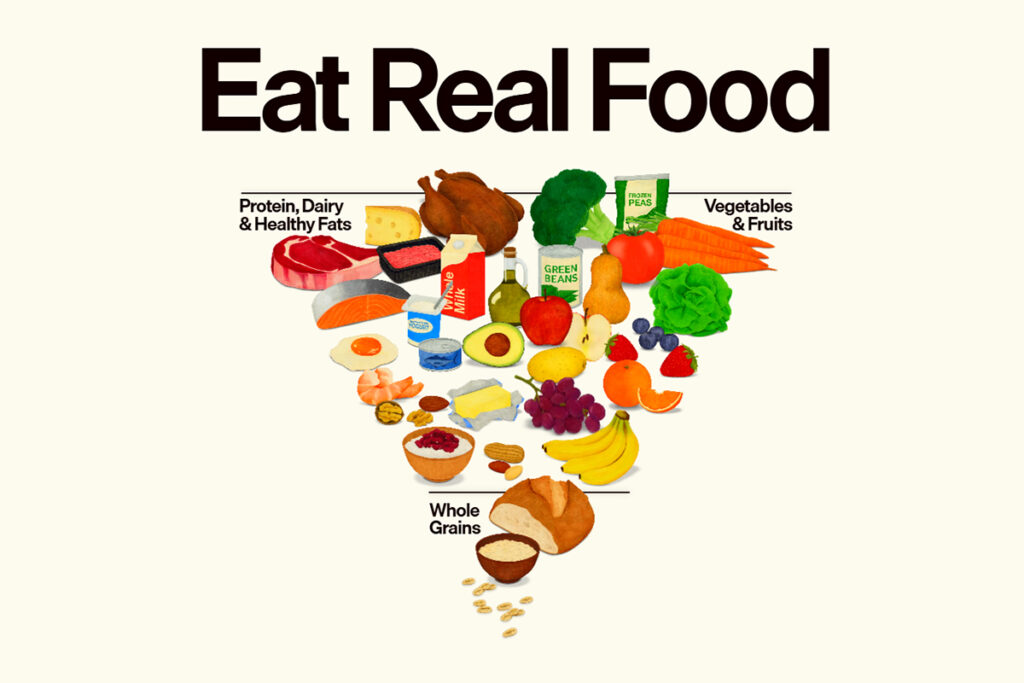

The Trump Administration presented its new Dietary Guidelines for Americans. The program was presented by US Department of Health and Human Services Secretary Robert F. Kennedy, Jr. and US Department of Agriculture Secretary Brooke Rollins, and it’s intended to stay in place until 2030.

In a press release announcing the document, the government called the guidelines “the most significant reset of federal nutrition policy in decades,” and emphasized its “clear, common-sense message” to eat real food.
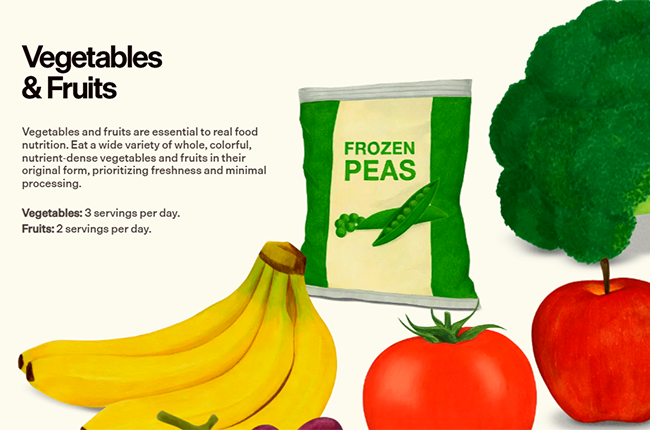
Among the most important takeaways, the new dietary guidelines advise Americans to limit highly processed foods, added sugars, refined carbohydrates, and artificial additives, and to prioritize protein at every meal. Recommendations include consuming full-fat dairy without added sugars and eating vegetables and fruits throughout the day. It also emphasizes eating appropriate portions based on age, sex, size, and activity level.
The dietary guidelines consider the dietary needs of multiple populations, including infants, pregnant and lactating women, and older adults, adapting as well to the restrictions of vegetarians and vegans.
Dietary guidelines go back to basics
The White House underscored simplicity and basic ingredients as the underlying values behind the new guidelines.
In the press release, the USDA highlighted the reestablishment of food over pharmaceuticals “as the foundation of health,” and celebrated the comeback of the food pyramid as a “tool for nourishment and education.”
Secretary Rollins celebrated the announcement as it realigns the US food system to support the local growers and producers.

“Farmers and ranchers are at the forefront of the solution, and that means more protein, dairy, vegetables, fruits, healthy fats, and whole grains on American dinner tables,” Rollins said.
The US government is releasing the new Dietary Guidelines for Americans amid what it calls a “national health emergency.”
“Nearly 90 percent of health care spending goes toward treating chronic disease, much of it linked to diet and lifestyle,” reads the announcement. “More than 70 percent of American adults are overweight or obese, and nearly 1 in 3 adolescents has prediabetes.”
The administration also expressed its concern over diet-driven chronic diseases, which they say now disqualify many young Americans from military service, “threatening national readiness and limiting opportunity.”
Industry reactions
As soon as the government released the new dietary guidelines, reactions from the fresh produce industry started trickling in.
In a statement, USApple President and CEO Jim Bair said his organization is pleased to see a simple core message emphasizing fresh produce consumption. He explained that only about 10 percent of Americans currently meet the guidelines' recommendation of eating two servings of fruit and three servings of vegetables a day, underscoring how apples can be a practical solution.
"The Dietary Guidelines may evolve, but they continue to reaffirm a simple truth: Americans need to eat more fruits and vegetables. We look forward to seeing that message shared widely," he added.
The International Fresh Produce Association (IFPA) also celebrated the latest government announcement, especially the star role given to fruits and vegetables.
“Scientific evidence consistently shows that fruits and vegetables should make up the majority of what people eat. The Administration’s focus on whole foods is an opportunity to increase fruit and vegetable intake, as they are the most nutrient-dense foods available,” IFPA Vice President of Nutrition and Health Mollie Van Lieu said.
IFPA added that the organization was actively involved throughout the development of the dietary guidelines, submitting multiple rounds of written comments, providing oral testimony, and nominating members to serve on the advisory committee.
US-diertary-guidelines-USDA-HHS
*All images courtesy of USDA
Related stories










Subscribe to our newsletter