

US becomes top partner as Port of Antwerp container traffic holds stable in 2025
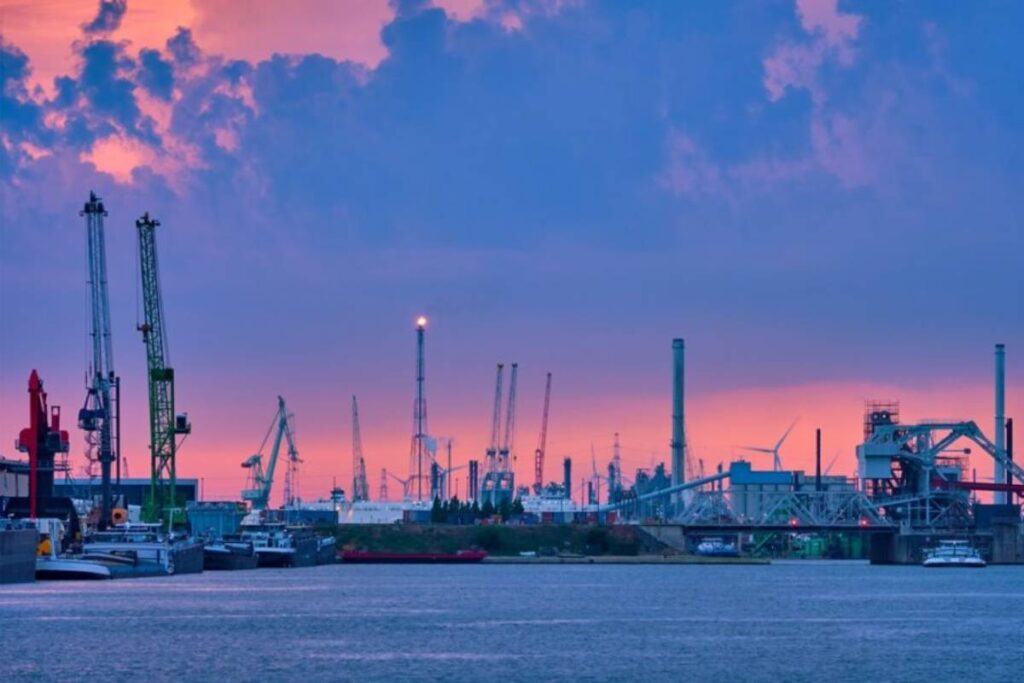

In a global context marked by geopolitical tensions, trade conflicts, and operational pressure, the Port of Antwerp closed 2025 with only a moderate decrease in its total traffic. These results confirm the point of entry’s resilience as one of Europe's main logistics hubs.

In a press release published on the port’s website, the CEO of the Port of Antwerp, Jacques Vandermeiren, noted that 2025 evidenced the strong impact of geopolitical and economic factors on global port activity. He emphasized the stability of container traffic and the need for close collaboration between port companies, authorities, and other ports to continue growing competitively and sustainably.
Throughout the year, activity at the terminal was heavily affected by the war in Ukraine and trade conflicts among the United States, Europe, and China.
Industry-wise, the port was hit by prolonged congestion at other container terminals and unprecedented levels of labor disputes, a situation compounded by disruptions in logistics chains resulting from changes in shipping alliances and cargo diversions.
The US leads trade at the Port of Antwerp
Surprisingly, the United States was the Port of Antwerp’s main commercial partner in 2025, accounting for 31.3 million tons of mostly liquefied natural gas (LNG) imports. However, traffic showed sharp fluctuations throughout the year, influenced by the anticipation of import tariffs and a general slowdown that began in Q2.
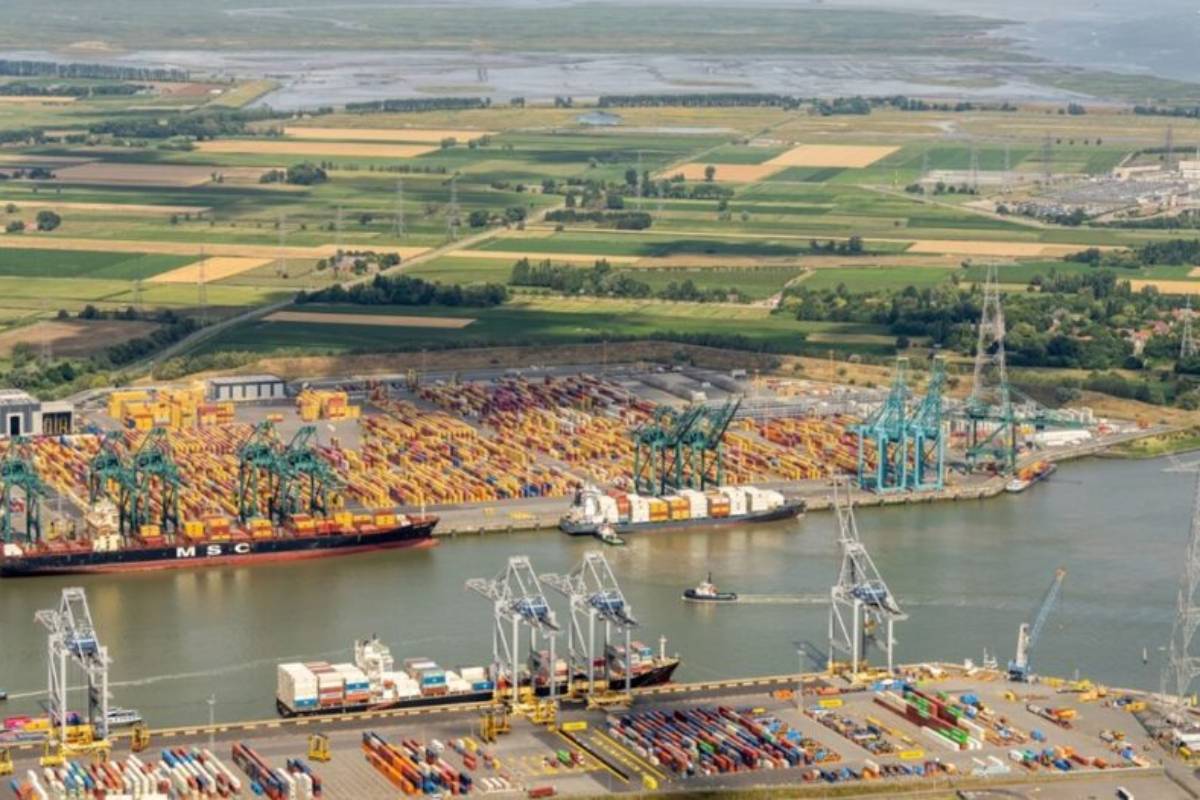
Higher US tariffs negatively impacted European exports of products such as iron, steel, and cars. In parallel, container imports from China grew by 3.8 percent, widening the trade imbalance with the Far East. China also consolidated its position as the main source of cars entering the port in 2025.
In Zeebrugge, the European Union's ban on the transshipment of Russian LNG to destinations outside the bloc reduced energy volumes, although the expansion of LNG production in the United States and the Middle East could sustain future growth.
Lower total volume, stable containers
The Port of Antwerp closed 2025 with total traffic of 266.5 million tons, which is aligned with historical averages, but still a 4.1 percent drop from 2024. The port maintained its role as an import and export platform, with imports accounting for a greater relative share.
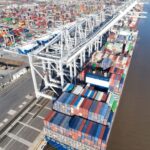
Container traffic remained practically stable, with a growth of 0.4 percent in tons and 0.7 percent in TEU. However, the market share in the Hamburg–Le Havre range fell to 29.3 percent, a decline driven by persistent congestion, which port administrators say reinforces the need to advance projects such as Extra Container Capacity Antwerp (ECA).
Liquid bulk registered a sharp decline (-19 percent), mainly due to lower gasoline exports to West Africa and reduced diesel imports. Pressure on the European chemical industry also continued throughout the year.
Conventional general cargo grew by 1.6 percent, supported by a solid performance in the fourth quarter, while iron and steel traffic decreased by 1.7 percent. The RoRo segment increased by three percent, driven by trucks, heavy machinery, and used vehicles. In contrast, dry bulk volumes retreated by 12.1 percent, due to lower volumes of fertilizers, coal, and sand.
In total, the port received 20,236 seagoing vessels (+0.2 percent), while the number of cruise ships decreased to 166, with 466,089 passengers.
Priorities for 2026
Looking ahead to the next 12 months, the Port of Antwerp says it will maintain its focus on security, energy transition, and infrastructure, amid high pressure resulting from higher energy costs and investment uncertainty.
The port authority says it will continue to reinforce physical and digital security, cyber resilience, and the fight against organized crime, while advancing its role as a transition hub. The administration also emphasized its advances in sustainability, including circular-economy projects, low-carbon molecules, and collective CO₂ infrastructure, especially in the NextGen District.
This year will be key for the development of major infrastructure works, such as ECA and the New Zeebrugge Lock, with confirmed investments by the Flemish Government.
*Main image courtesy of Port of Antwerp-Bruges.
Related stories
Congestion clears at Antwerp-Bruges as post-strike operations resume





Subscribe to our newsletter