

Opinion | Beyond supply and demand: The new geopolitical reality of agriculture


 Giorgio Peirano Figueroa, is an International Agribusiness Consultant

Shipping fruit export from the Southern Hemisphere has always required some strategy. Navigating the long distances to the main markets needs planning and understanding that, between harvest and arrival, 20 to 40 days can pass during which many things can change.
It is worth saying it up front: despite all the efforts to differentiate, segment, and make offerings more sophisticated, fruit export remains, at its core, a commodities business. Supply and demand, that old logic that some consider outdated, continue to be what drives prices.
Club varieties, exclusive programs, and premium niches exist and work, but they still represent only a small fraction of total volumes, and when equilibrium volumes are surpassed, reality quickly returns to what it once was.
That model worked reasonably well for decades in a relatively stable world. The problem is that it no longer exists. While geopolitical conflicts, wars, devaluations, energy shocks, and trade tensions have always existed, 2020 brought with it an increased level of complexity.
This is not just a perception. Indicators such as the Geopolitical Risk Index by Caldara and Iacoviello, the Geopolitical Risk Historical Index, the BBVA Research Geopolitical Risk Index, and the Economic Policy Uncertainty Index show a sustained upward trend, with levels superior to almost the entire 2000–2020 period, excluding specific events like the September 11 attacks.
Friction in the agribusiness world
It is true that, faced with this diagnosis, someone might say: "People still have to eat." And that's true. But that argument omits a key element: Today, geopolitical friction is much greater, and it’s not evenly distributed across the chain.
Recent examples of geopolitical disruptions help illustrate this. In recent weeks, Iran has faced episodes of internal instability. The Middle Eastern country is a major player in global kiwifruit production, with nearly 300 thousand tons annually—double Chile's exports. Even under a sanctions regime, Iran’s role as a supplier to markets such as Russia and India is strategic.
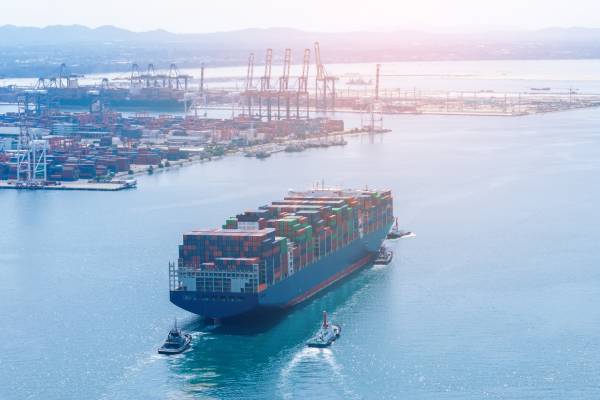
Any internal disruption affecting its logistics or export capacity alters flows, prices, and other markets, even some that have no direct relationship with that conflict.
Something similar occurred after the start of the war between Russia and Ukraine in 2022. The geopolitical impact on grain production in Europe is widely documented, but there were other collateral effects that were not as prominent. Many traditional potato and onion farmers in continental Europe migrated to crops such as sunflower, corn, and wheat, incentivized by extraordinarily high prices.
The result was products as basic as potatoes and onions reaching historical prices in early 2023, not due directly to a global supply problem, but to decisions driven by geopolitical shock.
Additionally, there were extraordinarily high shipping tariffs in 2021 and 2022, along with a brutal increase in agricultural input costs. All of this strained not only the production cost structure but also the relationship among producers, exporters, service providers, and consumers.
However, the most impactful example is the United States' tariffs imposed in April 2025. Despite being a prominent element of President Trump’s political campaign, the levies were an abrupt change that cost producers and exporters worldwide billions of dollars. It is a clear reminder that political decisions, often unrelated to agriculture, can redefine the profitability of projects planned for decades in a matter of weeks.
And here the great question arises: Who absorbs the risk of all this?
On occasion, some supermarkets or buyers have collaborated, adjusting programs or sharing part of the impact, although it is difficult to sustain this support long-term.
Structurally, the risk continues to fall mostly on producers and exporters. Fruit projects have horizons of 20 years or more, with capital-intensive investments and limited short-term adaptation capacity. Even in crops with shorter cycles, modern agriculture—highly specialized and mechanized—does not allow for rapid changes once capital has been committed.
We continue to sell fruit as if the world were stable, but the world is no longer stable. And that gap between geopolitical reality and the commercial model has a cost that is being paid at the source today.
How to face this geopolitical scenario?
First, going back to basics and focusing on what we can control: the field, specifically production and cost management.
Managing costs is not simply spending less, but spending better. Producing fruit in marketable calibers, with consistent standards, without losing volume or efficiency. It seems obvious, but in a volatile environment, what’s evident becomes critical.
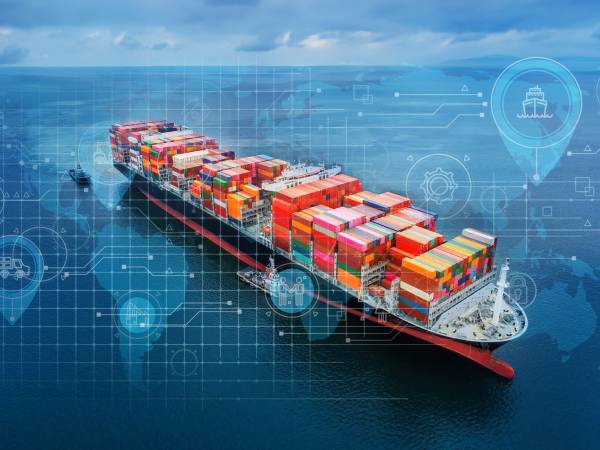
Second, embracing market development not as a slogan but as a strategic necessity. The United States and Europe will remain key for high returns in most categories, with the exception of cherries. But depending exclusively on these markets implies concentrating risk.
Opening and building alternative markets doesn’t happen overnight: it requires time, relationships, and trust. Indicators such as Purchasing Power Parity (PPP) show that economies like China, India, and several Latin American countries will continue to gain relevance in global consumption, albeit with different dynamics and demands.
Finally, from a more collaborative perspective, it is essential that sectoral associations work actively with governments to preserve the most neutral position possible in an increasingly polarized world.
The agricultural sector needs all markets. This implies continuing to push for openings, improving existing agreements, and refining protocols to expedite fruit movement. It also requires identifying specific problems and generating applied research to solve them. In terms of promotion, joint efforts, such as the incipient collaborative grape campaigns among Chile, Peru, and Mexico, show a possible path, albeit still insufficient.
In financial markets, a simple idea is repeated: cycles do not forgive those who ignore them.
The same thing happens in agriculture, although at a different pace. For years, we operated under the implicit assumption of stability, selling fruit as if the global context were almost constant. Today, that assumption is no longer valid. Geopolitics is not an extraordinary event but part of the base scenario. And when structural risk increases, someone absorbs it.
If we are not capable of recognizing where that risk is accumulating, and if we do not begin to demand that it be shared or remunerated correctly, we will continue to finance global uncertainty from the source.
It is not an ideological or conjunctural issue—it is a matter of economic survival in a world that has changed, even if we still find it hard to accept.
Related stories
Opinion | When denial costs millions: The true HLB risk to Latin American citrus
Opinion | The loss of control over fruit: The invisible risk of exporting
Opinion | What they don’t tell you about big agricultural trade shows (but we all secretly know)





Subscribe to our newsletter