








Opinion | Escalating conflict in the Middle East puts the global fertilizer market on alert once again



This opinion piece was originally published by the Center of Advanced Applied Economic Studies of Brazil on March 13, 2026

By Ana Maria Piccino, Agricultural Costs Market Analyst; Mauro Osaki, Researcher in the area of Agricultural Costs, and Renato Garcia Ribeiro, Researcher in the area of Agricultural Costs.
As if the war between Russia and Ukraine since 2022—both major suppliers of fertilizers—wasn't enough, the escalation of tensions in the Middle East has once again put the global fertilizer market on alert, especially in the nitrogen segment, including urea and ammonium sulfate.
In recent months, the prices of these inputs have already been on an upward trajectory, driven by structural factors such as restrictions on Chinese exports (regarding phosphates), the ongoing war in Ukraine, and strong demand from importing countries like India. The deterioration of the regional geopolitical landscape now adds a new layer of uncertainty, increasing volatility in both pricing and purchasing decisions.
The Middle East plays a strategic role in this market. The region accounts for approximately 40 percent of global maritime urea trade, in addition to a significant share in the supply of ammonia and phosphate fertilizers. Part of the product associated with Iran reaches the international market through a commercial triangulation via Oman, making monitoring shipping routes even more sensitive.
Attention is especially focused on the Strait of Hormuz, through which around 1/5 of the world's traded oil passes. Any increase in tensions involving actors such as Iran, Israel, and the United States could put pressure not only on energy costs but also on maritime freight and cargo insurance, elements that ultimately affect the final cost of fertilizers.
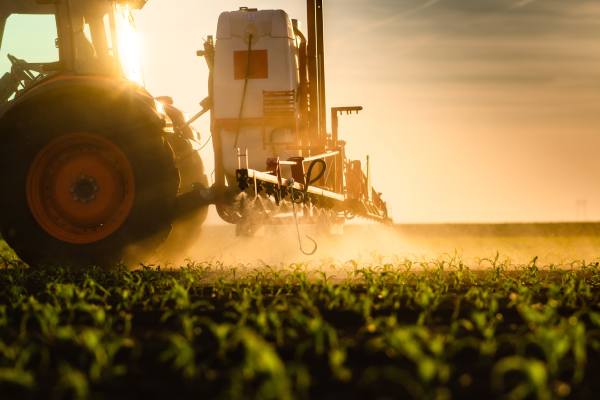
The impact of natural gas and oil on fertilizer prices
The relationship between energy and fertilizers is direct.
Nitrogen production depends heavily on natural gas, which is used to manufacture anhydrous ammonia, the basis for a large part of the fertilizers applied to crops. Gas also plays a significant role in different stages of the food chain, from production to food preservation. Interruptions or price increases of this input tend to have a rapid impact on the global agricultural market.
In the short term, the market is already reacting to the possibility of logistical restrictions, increased freight costs, and higher maritime insurance premiums. Industry agents are reporting a rush to secure fertilizer imports, driven by fears that heightened tensions in the Strait of Hormuz will disrupt shipments in the coming weeks or months.
This movement has led companies to reorganize their logistics operations, mobilizing warehouses and freeing up factory space that would normally be used for annual maintenance during the off-season. The priority has been to make room for new shipments to guarantee supply before potential bottlenecks in international trade.
At the same time, the market is also monitoring signs of pressure on petroleum derivatives, which could increase energy, transportation, and maritime insurance costs. In a sector highly dependent on international logistics, these factors have the potential to quickly permeate the prices of agricultural inputs.
Impacts for Brazil
In Brazil, the immediate impact tends to be moderate, as the country is not currently experiencing its highest level of nitrogen fertilizer purchases. Even so, the scenario raises concerns for the coming months, especially after the soybean harvest, when producers begin negotiating fertilizers for the next crop, mostly phosphate and potassium-based.
External dependence remains high: Brazil imports up to 85 of the fertilizers it consumes, according to the National Association for the Diffusion of Fertilizers, making the agricultural sector particularly sensitive to geopolitical and logistical shocks.

The vast majority of Brazilian soil is characterized by low fertility and acidity, so producers use fertilizers to compensate for the soil's chemical limitations and meet crop nutritional requirements to sustain high productivity. This makes fertilizers a significant share of the Effective Operating Cost (EOC).
Brazil is highly dependent on imports of important intermediate fertilizers consumed domestically (urea, ammonium sulfate, and potassium chloride). Regarding phosphate sources, domestic production is insufficient to meet the entire annual demand.
According to data from the Secretariat of Foreign Trade (Secex), in 2025, Brazil imported 7.7 million tons of urea, originating from Nigeria (23 percent), Russia (17 percent), Oman (16 percent), Qatar (13 percent), Algeria (9 percent), and other countries (23 percent). It is noteworthy that 33 percent of imported urea originates in the Middle East. In the case of ammonium sulfate, imports totaled 7.78 million tons, almost all of which came from China.
The amount of potassium chloride imported was 13.7 million tons, brought from Russia (45 percent) and Canada (38 percent). The volume of MAP imported in 2025 totaled 3.1 million tons, with Russia (46 percent), Saudi Arabia (25 percent), and Morocco (23 percent) being the largest suppliers. Superphosphate totaled 4 million tons, originating from Egypt (42 percent), China (36 percent), and Israel (10 percent).
A context of potential shortages, supply uncertainty, and increased costs reinforces the debate about the need to expand domestic fertilizer production. The resumption of industrial units in the country and the initiatives foreseen in the National Fertilizer Plan seek to reduce external dependence.
In a stable global environment, producing fertilizers domestically may seem less competitive. However, in a scenario marked by recurring conflicts and logistical uncertainties, the capacity to produce strategic inputs domestically becomes increasingly important for the stability of agricultural production.
Another point of concern for producers relates to the price and availability of diesel in the domestic market. Brazil is not self-sufficient in diesel production, so it relies on imports to meet domestic demand. With the soaring price of a barrel of oil in the international market and the intended political strategy of maintaining fuel prices in the domestic market, importers may avoid losses by ceasing to supply distributors, which, in turn, could lead to shortages. If the adjustment does not occur, the consequence of rising fuel prices is that the increase is passed on to final products, causing inflationary pressure and the need to maintain and/or raise interest rates.
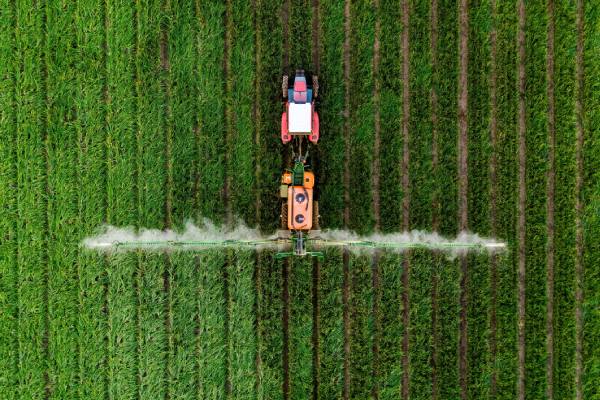
The direct effect on the field is the increased cost of mechanical operations (diesel and preventive maintenance), which averages 12 percent of production costs for soybeans and second-crop corn. For rice and beans, the impact is even greater: 17 percent and 16 percent, respectively (average of the last 5 harvests, from 2021/22 to 2024/25, of the Campo Futuro Project).
Downstream in the production chain, road freight costs are expected to rise and put pressure on domestic pricing. The harvesting and transportation of soybeans from the 2025/26 crop is in full operation, as is the completion of the second-crop planting. The current diesel shortage is causing concern among producers about completing these activities.
Finally, the increases in fuel and fertilizer prices should directly impact producer profitability, since, unlike the industrial and service sectors, the agricultural sector is a price taker and cannot proportionally pass on these increases in production and freight costs to its sales prices. Even so, the effects of price increases on the consumer will be felt, despite the drop in producer profitability.
Related stories
Opinion | The ebb and flow of tariffs and Brazil's new trade map
Opinion | Beyond supply and demand: The new geopolitical reality of agriculture


Subscribe to our newsletter