

Chilean blueberry exports exceed projections amid a transformative varietal renewal process

Written and reported by Macarena Bravo | Lee esta noticia en español

The Chilean blueberry industry finished its 2025/26 season in week 10, a campaign marked by recovery and profound structural changes, driven by export growth and an accelerated varietal renewal.
The sector faced several years of decline, with shipments dropping from close to 120,000 tons to a low of 86,000. However, local growers managed to reverse the trend and close the 2025/26 season with better-than-expected results.
According to the Blueberry Committee of the industry body Frutas de Chile, exports reached 92,900 tons, representing a nearly three percent year-on-year increase. Although this is considered moderate, it confirms an inflection point for the industry, which had already shown signs of a bounce-back in the previous season.
Andrés Armstrong, the Committee’s executive director, explained to FreshFruitPortal.com that growth was mostly driven by advanced genetics, which have progressively replaced traditional varieties.
New blueberry varieties registered a 14 percent increase, while traditional ones fell by one percent, on trend with the previous campaign. As a result, new cultivars now represent 24 percent of exports, up three percent from the 2024/25 cycle.
This transformation is not only a response to a production strategy but also a necessity. The industry has had to adapt to a more competitive global landscape, marked by strong new players, such as Peru, Mexico, and Morocco, and more demanding consumers in terms of quality, condition, and consumption experience.
A structural change in the blueberry industry
Varietal reconversion is taking place across the entire country—from the Coquimbo Region in the north to Los Lagos in the south, with different realities in each area.
According to Julia Pinto, the committee’s technical manager, the process is evident in the northern and central regions of the country, particularly in Coquimbo, Valparaíso, and O’Higgins, with varieties requiring few chilling hours.
In regions like Maule, Ñuble, and Biobío—which account for a large share of the productive acreage—new plantings coexist with traditional varieties like Legacy and Duke. However, there’s significant dynamism in new projects and more modern genetics.
In the south—La Araucanía, Los Ríos, and Los Lagos—varietal renewal is progressing more unevenly. While in Los Ríos the adoption of new varieties is more widespread, in Los Lagos, growers are still recovering from a decrease in fresh production, and reactivation is beginning to be seen through new genetics.
“There are new variety projects in all productive zones, from those with low chilling hour requirements to others with high requirements. This will allow us to improve the offer throughout the season,” Pinto explained.
Additionally, producers are increasingly more willing to replace traditional varieties with new alternatives, driven by their high quality, better travel performance, and larger market acceptance.
Europe takes the lead
Armstrong said that Europe consolidated its position as the main recipient of Chilean blueberries, accounting for half of all shipments, totaling 46,768 tons. This represents a 20 percent growth compared to the previous year.
Within the continent, the Netherlands and England led imports, with increases of 25 percent and five percent, respectively.
In contrast, the United States, which had historically been the main destination for Chilean blueberries, dropped to second place, with a 37 percent share and a 13 percent fall in volumes compared to last season.
According to Armstrong, this decline was driven by tariffs and other commercial factors affecting the fruit’s competitiveness.
“Last season, Europe and the United States had similar shares, close to 43 percent. This year, Europe grew, and the United States shrank significantly,” he said.
In Asia, shipments decreased by seven percent, mainly due to a drop in China, where growing local production and strong competition from Peru have reduced Chile’s market share. However, other countries in the continent have offset China’s decreased demand, notably Taiwan and South Korea, which grew 84 percent and 11 percent, respectively.
Finally, Latin America remains an emerging market, accounting for about two percent of Chilean blueberry exports. However, the region grew 11.7 percent year on year, with Argentina and Brazil accounting for 88 percent of regional shipments.
Quality, logistics, and challenges
The weather also marked the season, allowing it to finish earlier than usual, in week 10.
Likewise, problems in other producing countries created “space” in the market for traditional varieties that would not normally have found a place in the fresh segment.
Unfortunately, this situation also had negative effects on the country’s exporting reputation, as some of that fruit, Armstrong explained, arrived in poor condition.
“It is not what we are promoting as an industry or what we project for the future,” he said.
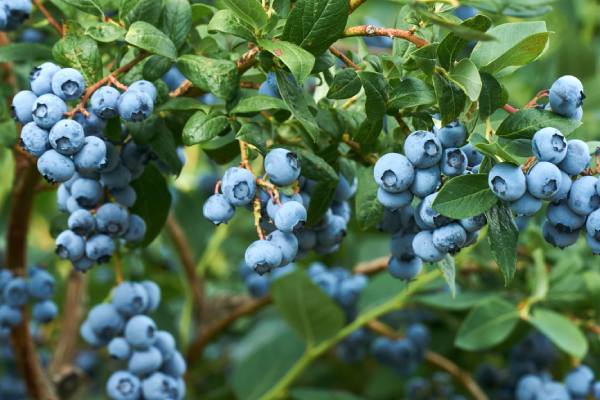
As a result, the sector has reinforced its logistics strategy, prioritizing faster, safer services to reduce transit times and ensure better arrival conditions—even at elevated costs.
At the same time, Chile resumed its promotional efforts. This time, the goal is to boost demand in Latin American markets with high growth potential, such as Argentina, Brazil, and the domestic market.
New genetics have also played an important role in the growth in demand, driven in part by better quality fruit. According to Armstrong, a small group of shoppers has historically accounted for the bulk of consumption, but the tide is shifting. The combination of higher demand and a better product is positively affecting prices, the expert said, resulting in demand from new segments.
Improved demand has also boosted the premium organic segment, which is also showing significant progress. During the 2025-26 season, organic blueberry exports grew by about 10 percent, increasing their share from 18 percent to 20 percent of the total.
Medium-term projection
The Chilean blueberry industry has made significant strides, but the transformation is still underway—and the outlook is nothing if not positive.
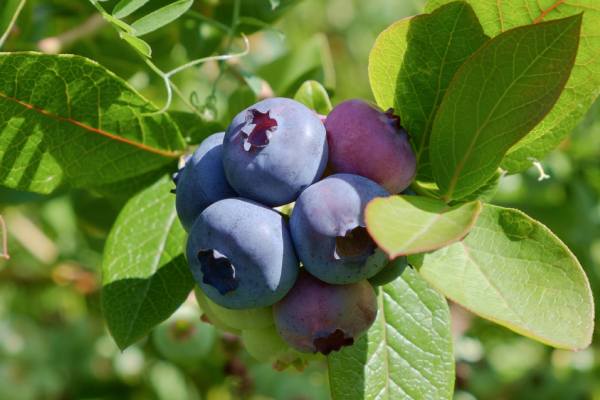
“The effect of this change is starting to be seen, but the most relevant part is still to come. There are many new hectares that are not yet producing, so this process will continue to deepen,” Armstrong noted.
The executive emphasized that other producing countries facing similar competitive and varietal challenges are closely watching the Andean country’s experience in search of a path to follow.
“The future of the Chilean blueberry will not be in volume, but in the capacity to offer a competitive, consistent product adapted to the new demands of the global market,” Armstrong concluded.
*All images are referential
Related stories
Chilean blueberry export forecast up 2.7 percent as new varieties drive supply shift
Chilean blueberry sector focuses on quality, post-harvest life, and genetic renewal







Subscribe to our newsletter