
The sustainability hurdles shaping the European fresh produce industry


For Europe’s fresh produce sector, sustainability in 2026 is no longer mainly a matter of positioning in the environmental, social, and governance spheres, but a question of operational economics.

The debate is shifting away from broad reputational narratives and toward measurable business variables, such as yield stability, batch quality, packaging costs, market access, and the ability to back environmental claims with verifiable data.
And in the fruit and vegetable business, these elements are converging faster than in many other agrifood segments.
This is one of the key issues the industry will tackle at FoodRevolution 2026, to be held in Mestre, near Venice, from 11 to 13 May.
The sustainability challenges facing the continent’s ag sector
The European Commission states that 95 percent of food in the EU depends on soil. Unfortunately, according to the same entity, 60 to 70 percent of soils are in an unhealthy condition, and soil degradation-associated losses amount to nearly $58 billion a year.
For the business, this is not just a sustainability backdrop, but a direct production issue.
“[Soil] is a matter of crop control: how the crop performs under heat, moisture deficit, and stress, and how consistently the grower can deliver the required product quality,” says Maurizio Paleologo, a specialist in biochemistry and food diagnostics and organizer of FoodRevolution 2026.
Likewise, climate risks are increasingly jeopardizing quality. According to the European Environment Agency, the region remains the fastest-warming continent, while yearly direct losses from extreme weather in 2021 to 2024 were estimated to be up to $58 billion.
The fresh produce sector is not exempt from this multi-million dollar sustainability challenge, as changing weather patterns affect size, batch uniformity, harvest windows, storability, and export quality.
“What [growers] need are concrete solutions that help preserve yields, reduce crop vulnerability to stress, cut chemical load, and at the same time maintain product quality,” says Paleologo.
Fortunately, new techniques, including innovative genomic agricultural and viticultural technologies and the use of biopesticides, can improve sustainability, as well as crop resilience and productivity, says the expert.
Packaging and food waste are margin issues
According to Eurostat, the EU generated 79.7 million tonnes of packaging waste in 2023, or 177.8 kg per person. This covers all packaging waste, not only plastic.
Plastic packaging alone accounted for 35.3 kg per person. At the same time, the new sustainability-centered Packaging and Packaging Waste Regulation has already entered into force and will generally start applying from 12 August 2026.
For the fresh produce sector, this means packaging has firmly moved from a secondary issue to a strategic one. It affects shelf life, food safety, logistics efficiency, losses, and compliance with market rules.
For Paleologo, packaging is no longer a design issue—it’s a factor in shelf life, food safety, losses, and, ultimately, margin.
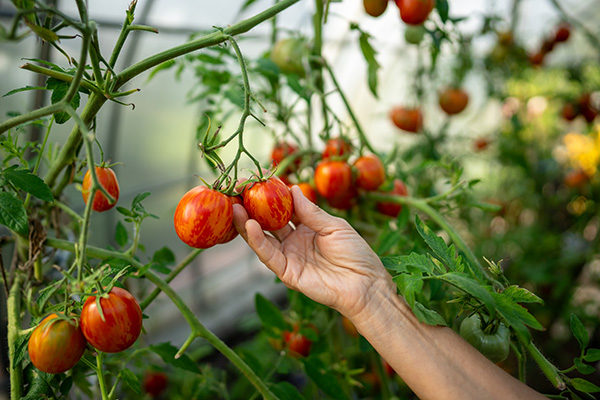
“That is exactly why it cannot be discussed separately from food waste,” he said.
Furthermore, agrifood producers have had to start caring about the carbon agenda, as it’s increasingly becoming part of market expectations and sustainability-minded consumers.
In February 2026, the European Commission adopted the first set of methodologies under the EU Carbon Removals and Carbon Farming regulation, but these apply specifically to permanent carbon removals. The commission has also made clear that carbon farming protocols are still being finalized and are expected later in 2026.
In other words, carbon farming has practical and economic relevance, but interest in it is rising faster than the development of clear, unified rules for assessing it.
*All images are referential.
Related stories
True sustainability comes from functional, high-performing fresh produce packaging, report says








Subscribe to our newsletter