

Chile promotes research to improve the quality of Hass avocados and reduce black spots

Writing and reporting by Macarena Bravo | Lee esta historia en español.

Chile is definitely an avocado-loving country. In 2025, per capita consumption of the green fruit reached nearly 20 pounds, 10 pounds higher than the year before, and according to the Chilean Avocado Committee, the trend is not slowing any time soon.
Given the Andean country’s devotion to avocados, it’s no surprise that local researchers are working to address one of the main diseases threatening the industry: black spot.
Chile’s quest to reduce black spots
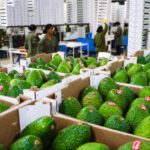
The physiological disorder appears as dark patches on the fruit’s skin after prolonged storage under refrigeration and in the open air. It strictly affects the product’s appearance, but can still result in significant economic losses.
According to data collected during critical seasons, the problem has affected between 10 percent and 20 percent of exported fruit, highlighting the scale of the challenge for the sector.
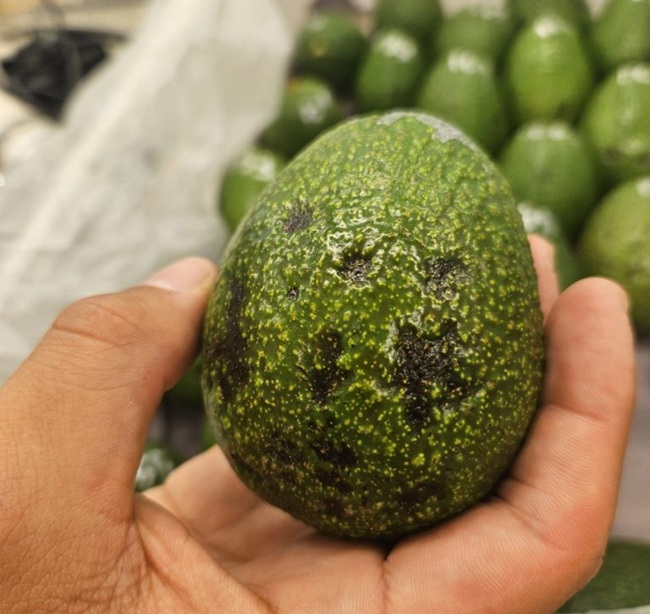
Romina Pedreschi, professor at the faculty of Agronomy and Agri-Food Sciences at the Pontifical Catholic University of Valparaíso (PUCV), told Freshfruitportal.com that her team has made significant advances, including identifying the positive effects of a controlled atmosphere to reduce black spot.
The expert explained that despite this being a purely cosmetic issue, the pulp is not affected in either its nutritional or sensory quality.
“Its commercial impact is significant, as consumers associate these spots with spoiled fruit, leading to rejection and losses for exporters and retailers,” she said.
Visible black spots on avocados also lead to high rejection rates, she noted, even if the fruit is in perfect condition internally.
The key role of controlled atmosphere
Pedreschi’s team is investigating the positive effects of controlled atmosphere technology on black spot incidence.
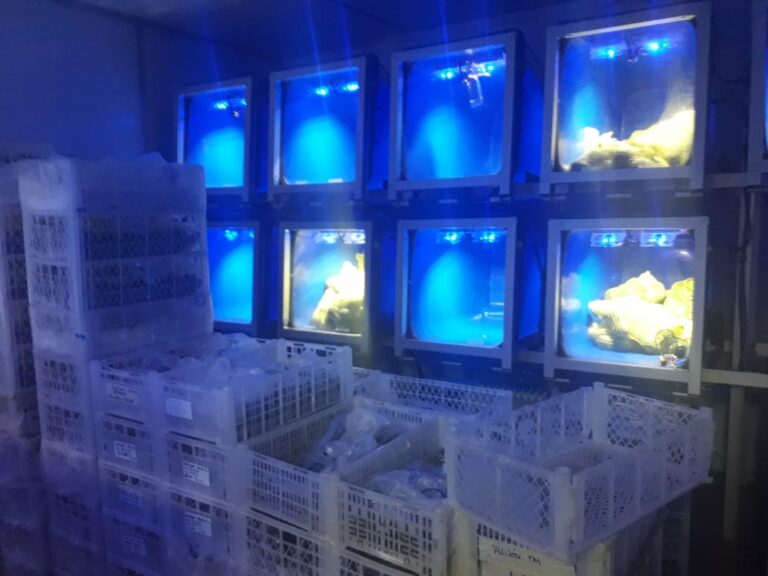
The technique, used in long-distance fruit transportation, entails modifying an environment’s gas composition, she explains, reducing oxygen and increasing carbon dioxide to slow the fruit’s metabolism.
However, despite its proven effectiveness, questions remain about how it works at the physiological and molecular levels.
“We know that a controlled atmosphere reduces metabolic activity and the generation of reactive oxygen species, which protects cells. We have also observed that it influences the fruit’s hormonal regulation, but we need to understand these processes more precisely,” she noted.
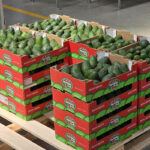
There’s also a critical aspect observed by the team: In practice, fruit doesn’t remain under these conditions at all times. During export transit, but specifically before loading and upon arrival at the destination, there are periods when avocados are kept exposed to regular air, increasing their susceptibility to the disorder.
Research serving the industry
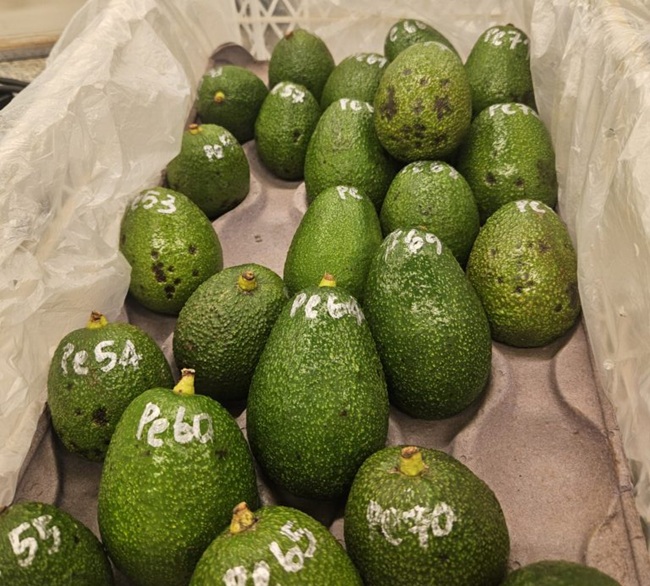
The investigation will run for four years and aims to identify early biomarkers that, at harvest, predict which fruit batches are more likely to develop black spot.
To do so, the team will analyze the peel’s “lipidome,” or the full set of lipids present, along with other metabolites that could act as indicators of the fruit’s physiological condition.
“If we can develop early black spot predictors, the industry will be able to make informed decisions, such as determining which markets to send fruit to or adjusting storage times and conditions,” the academic explained.
The study includes the analysis of thousands of fruits from different agroclimatic zones across the country to accurately represent Chile’s production diversity. It will also evaluate different storage combinations that simulate real export conditions.
Additionally, the team will explore complementary strategies to treat black spot, such as the application of compounds or hormonal regulators, to help mitigate the development of the disorder at critical stages of the logistics chain.
As well as improving the country’s exporting competitiveness, the research aims to contribute to the sustainability of the food system by reducing losses and food waste along the supply chain.
“Our commitment is to ensure that the results do not remain only in scientific publications, but are translated into practical tools for the sector,” Pedreschi concluded.
*Images courtesy of Romina Pedreschi.
The second edition of the Global Avocado Summit will be held on November 11, 2026, at the Monticello Casino Events Center in Santiago, Chile. Organized by the Chilean Avocado Committee and Yentzen Group, the meeting seeks to bring together the main players in a growing industry.
The event has established itself as a key space for addressing commercial and sustainability issues in the industry, bringing together producers, exporters, buyers, certifiers, and innovators to analyze the sector’s challenges and opportunities.
For more info, contact
events@yentzengroup.com
Related stories:
West Pak Avocado’s roadmap to retailer success for California season
Colombian Hass avocado closes 2025 with positive numbers and strong demand from Europe








Subscribe to our newsletter