








U.S. apple season 2025 is coming in big—both in crops and challenges
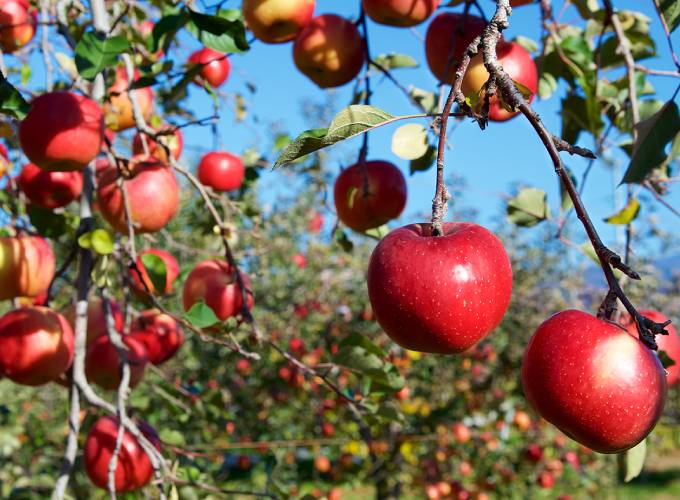



There’s still summer left, but growers, producers, and distributors already have their eyes on the 2025 apple season. Early varieties will hit the market in mid-to-late August, while fan favorites like Pink Lady and Honeycrisp will take their usual time and pop up in grocery stores at the beginning of October, right on time for cozy season.


This year promises to continue a trend that has kept shelves well-stocked. Maybe too well stocked. In 2023, the U.S. Apple industry experienced a larger-than-average crop, with 250 million bushels in total at the end of the season. This number increased by 10% in 2024 to a whopping 260 million bushels. Unfortunately, this is not good news for growers.
“My understanding is that they're expecting perhaps another four million boxes on top of what they had last year, which is probably a little too much for the industry to handle,” says Kevin Brandt, Vice President and COO at Property Variety Management, the company representing brands like Pink Lady and Cosmic Crisp in the U.S.

This is making people nervous, says Michael Schadler, President at the Washington Apple Commission. In short, larger crops mean lower prices, which in turn prevent growers from getting the return they need to be sustainable moving forward.
Good apple growing weather has helped increase volume, but Brandt says the incursion of new actors in the industry has also resulted in more apples hitting the market as the temperature drops. An investment influx led by big players, such as the Canadian Teachers Pension Fund, Goldman Sachs, and Hancock, has purchased several vertically integrated companies that are now growing a number of products—apples, chief among them.
“All of those plantings are now coming into production,” Brandt says. “And those plants are high density and buy access, so that's gonna cause quite an increase in what we're seeing.”
A dense market has a direct and negative impact on prices, which Brandt says can drop “anywhere from just a few cents per pound to a number of dollars per box,” depending on the variety. However, Schadler remains positive and says he expects prices to stabilize and slightly increase by the end of the season—again, it all depends on the variety.
This large apple crop poses a big challenge with a clear—albeit complicated—solution: market expansion.
Reminding people of that crunch
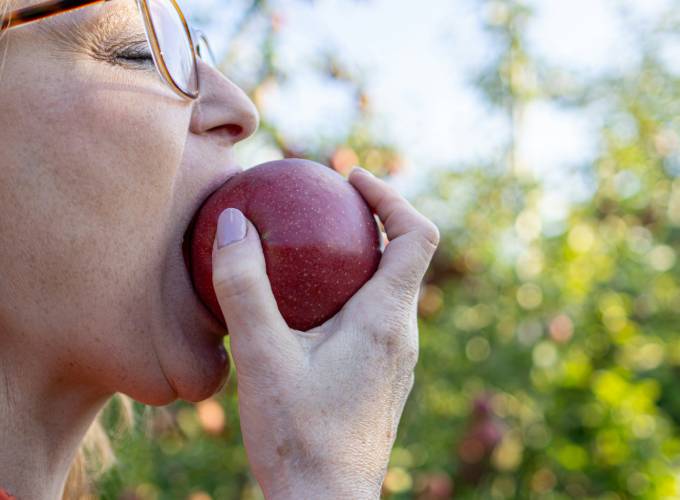
For years, Americans’ demand for fresh apples has dropped. Back in 2020, the market was talking about shifts in consumer behavior that resulted in a nearly 23 percent market share loss since 1985. And the trend has not stopped.
According to Brandt and Schadler, the decline is a multifactorial equation, but strong competition from other products in the produce aisle is one of the primary reasons behind it. To Schadler, apples are a “very mature product,” and consumers may be getting a bit distracted: “Sometimes it's just about reminding people—why they eat them in the first place, and why they're good. And the positive thing about apples is we're growing the best apples we've ever grown.”
The large number of varieties is not helping either. Brandt says the influx of new types of apples at the grocery store has created confusion and sometimes even frustration in the consumer: “You may have a variety that's there on the shelf for only two months out of the year, which the consumer enjoys, and then they're not able to find.”
Both experts agree that there are significant marketing efforts, such as the NGO Eat More Apples, aimed at reinvigorating demand in the domestic market. But these initiatives—plus other direct measures to manage supply, like the reduction of planted acreage—don’t seem to yield fruit fast enough to get U.S. apple growers some reprieve.
It's apple season beyond the border, too
While Americans get reminded of all the benefits of eating apples, some growers are looking across the sea.
“Definitely exports are becoming more and more important,” says Brandt.
His family business, PVM, has partners worldwide and has recently joined forces with APAL’s Twenty Degrees to expand the company’s brands in the Asian market. In conjunction with Pink Lady America, PVM’s new partner now handles all import and export licenses outside the U.S., according to Brandt, and will focus on expanding the brand in several key markets, including Thailand, Taiwan, Vietnam, and Japan.
But the current economic climate doesn’t make things easy when it comes to diversifying your market. Tariffs imposed by the U.S. against foreign imports are constantly changing, which has added volatility to international trade.
“It's definitely unknown territory,” says Brandt. “But the sad fact of the matter is that if we can't get something to change, if we can't get prices up, if we can't find new markets, individuals are going to go out of business. It's just not sustainable otherwise.”
Meanwhile, Schadler remains calm and hopeful. He says the current instability is just part of the negotiations taking place between the U.S. and its trade partners, and is satisfied with the deals the White House has made so far.
“We've been pleasantly surprised by these preliminary deals that have been announced with Indonesia, Japan, and the UK,” he says. “It's unforeseen whether or not this deal might allow us to get a foothold in Japan to start shipping some Washington apples there, but it looks like that could be an opportunity, so we're excited about it.”
Related stories
U.S. apple producers appease South Korean farmers over potential market expansion
Chilean apples arrive in U.S. retail stores
USDA buys $60 million worth of apples and cranberries from U.S. producers









Subscribe to our newsletter