








How a mysterious ecoterrorism attack helped reshape California's medfly response
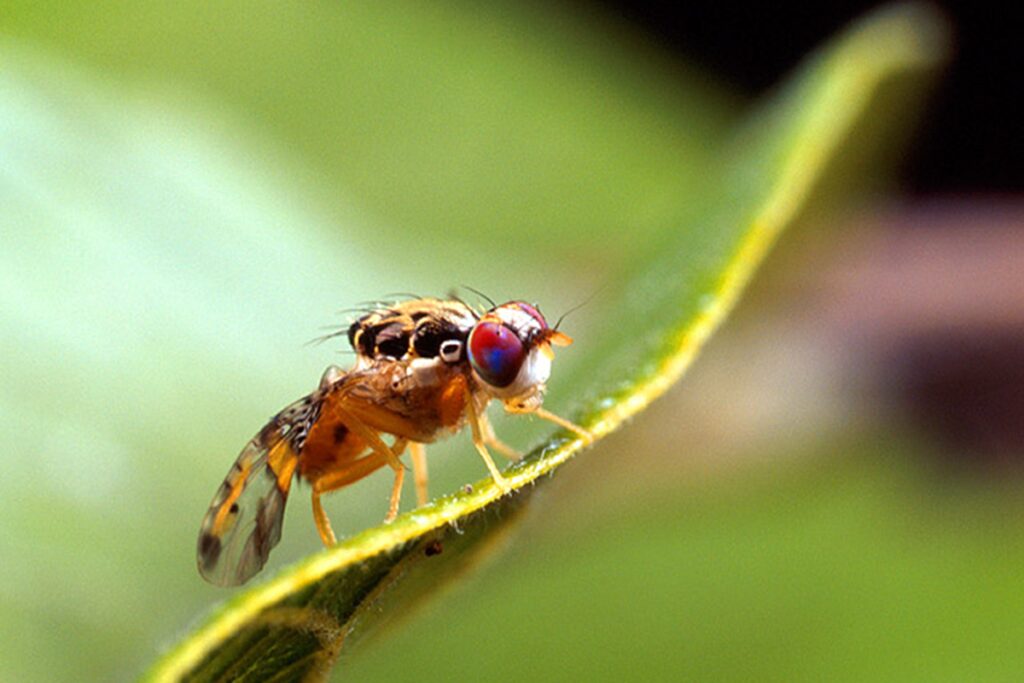



In December of 1989, after a nine-month battle against a particularly abnormal medfly infestation, a letter sent to the LA Times claimed responsibility for a series of challenging outbreaks.


The missive was signed by an ecoterrorist group calling itself The Breeders. The document explained that the action was a direct response to California’s agricultural policies, which, at the time, used the aerial spraying of an insecticide called malathion to contain pests.
Authorities were never able to identify who The Breeders were (they were never heard from again), but the episode marked a before and after in the way the state fights medfly outbreaks.
A $60 million (more than $150 million, adjusted for inflation) unsuccessful attempt to eradicate the 1989 infestation, combined with the ability to support an alternative method, prompted the California Department of Food and Agriculture (CDFA) to abandon the use of aerial chemical pesticides.
Instead, it adopted a more efficient and sustainable technique—sterile insect technology, also known as SIT.
Medfly, a pesky problem for California
Medfly is one of the most damaging agricultural pests in the world, according to the US Department of Agriculture’s Animal and Plant Health Inspection Service.
The insect, also known by its scientific name, Ceratitis capitata, has been a prevalent presence in California since its first outbreak in 1975, directly affecting over 250 crops, particularly mango, citrus, grapes, and stone fruits such as apples, pears, and cherries.
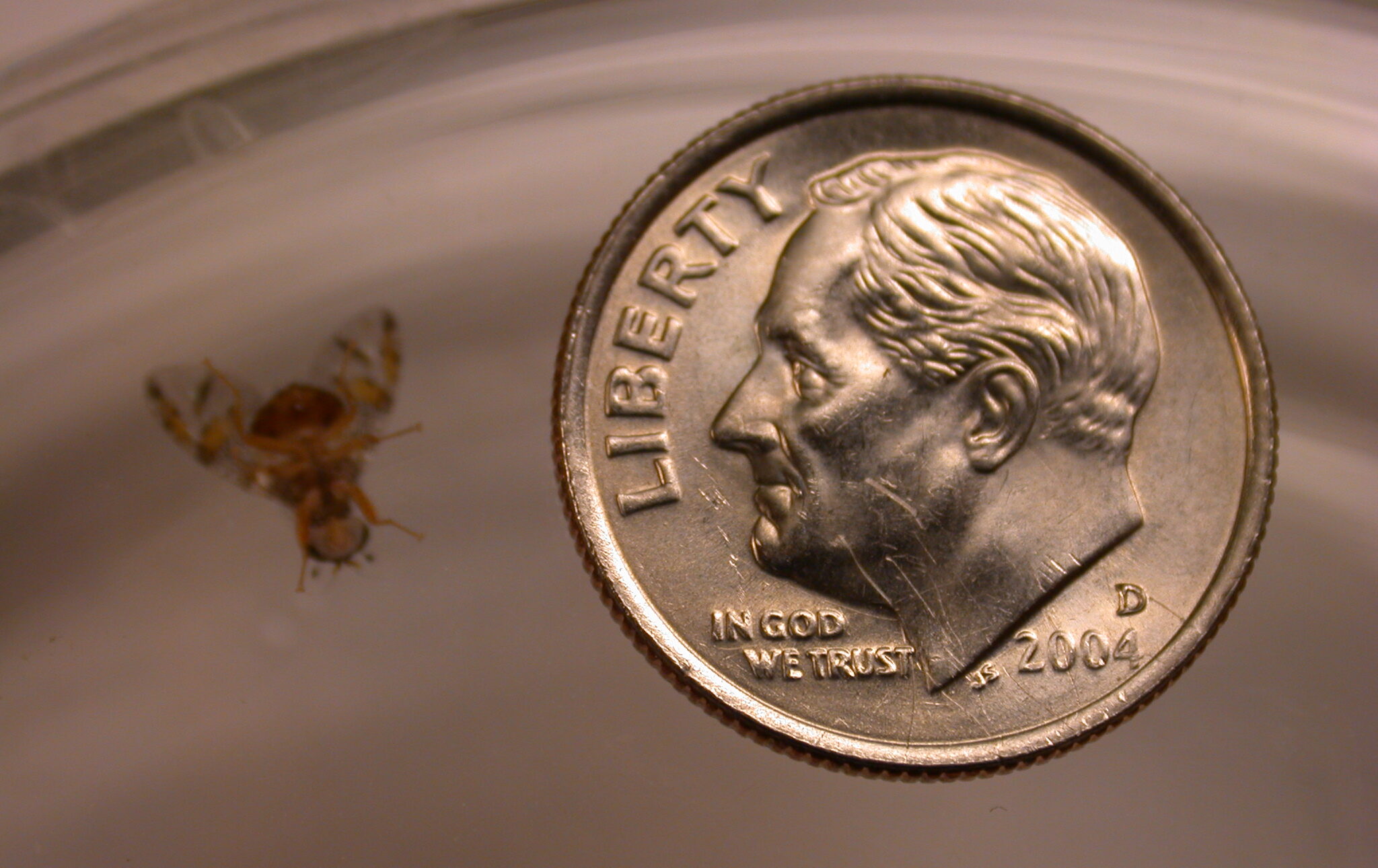
This is a big problem for the state, whose agricultural industry is valued at $49 billion, comprising almost 70.000 farms, and growing over 400 specialty crops.
Although it was used recurrently as a complementary measure since 1975, SIT wasn’t the CDFA’s primary method to manage medfly outbreaks until 1990. A series of complications prevented the program from having a continued supply of adequate resources, which in turn hindered the method’s efficacy.
However, the establishment of a medfly rearing facility in Waimanalo, Hawai’i, as well as another operated by the agency in conjunction with the USDA in Los Alamitos, CA, changed the outlook, giving the program the overwhelming success rate it enjoys today.
The science behind SIT
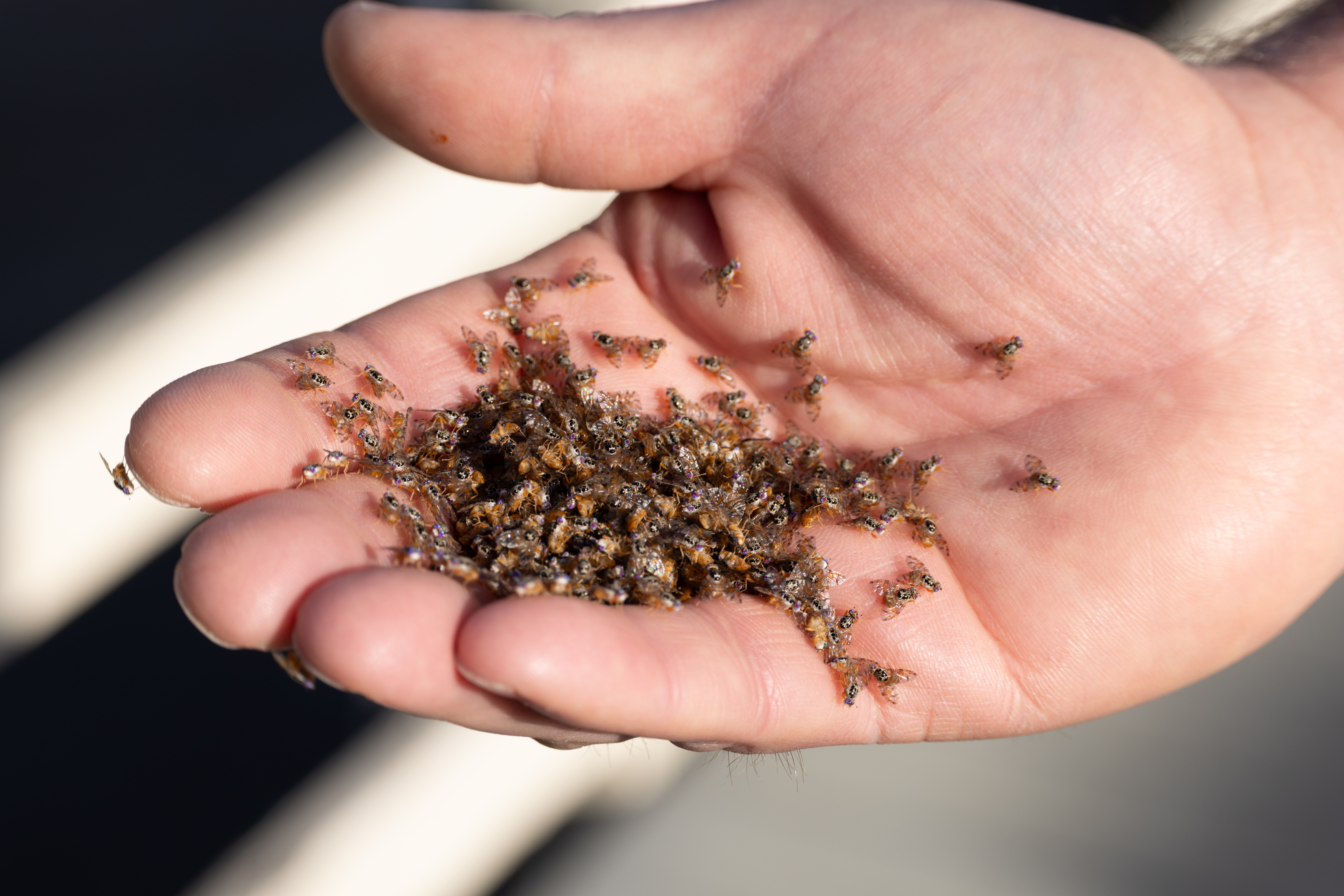
The CDFA uses hundreds of thousands of sterile male medflies specimens to keep medflies out of the state.
Victoria Hornbaker, Director for Plant Health and Pest Prevention Services at the CDFA, explains that as part of their preventive program, the agency releases a batch of sterile male medflies on a weekly basis (in the order of 62,500 to 125,000 insects per square mile) to create mating disruption.
“The sterile insect technique is really great at overwhelming the system and basically breeding out with the sterility,” says Hornbaker. “These sterile males don't realize they're sterile. So they're going to mate with the wild females, and then they won't have any offspring.”
The CDFA expert explains that the lifecycle of medflies is temperature-driven, with warmer climates resulting in a shorter hatch-to-maturity period. Rearing facilities can determine the sex of pupae by controlling the temperature, ensuring that all eggs hatch as males.
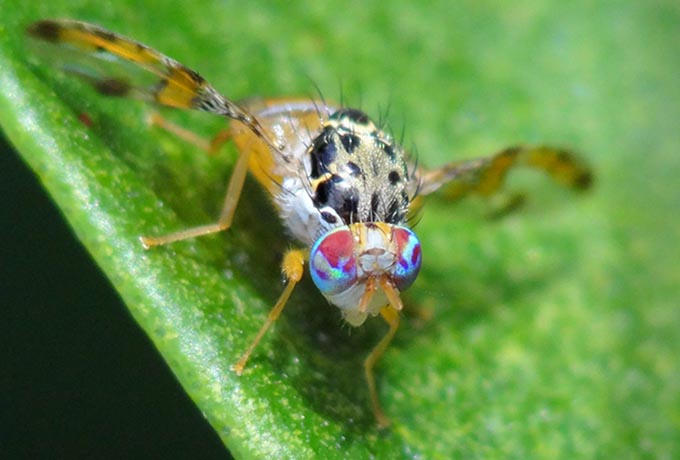
After that, the Ceratitis capitata specimens are irradiated to render them sterile, and then they are shipped to Los Alamitos to rear and load them onto airplanes for release throughout the LA basin.
When there’s an infestation, such as the one currently happening in Santa Clara County or the recently eradicated outbreak in Alameda County, the agency diverts some of the flies to the affected areas and releases them as a containment measure.
“This technique falls really nicely in line with where California is going in the sustainable pest management realm, where we're using alternative methods to pesticides,” Hornbaker says.
Additional measures in medfly containment efforts
Releasing sterile Ceratitis capitatas into the wild is only part of what the CDFA constantly does to prevent and eradicate medfly outbreaks.
In areas affected by the pest, the state agency conducts fruit strippings, where they enter the hot zone and remove all backyard fruit and vegetables within a 100-meter radius of where a medfly was detected. Hornbaker says the produce is then double-bagged and disposed of by deep burial.
“That's really been very successful for us also in breaking that life cycle,” she says. “Because if the female has laid her eggs in that fruit, we take the fruit and the larvae are not going to pupate, meaning they’re not going to become adults and breed more flies.”
The CDFA also places bait stations in affected areas and uses organic pesticides on the foliage in and around the site where medflies were found. Additionally, the agency also places areas under quarantine, where the CDFA instructs home gardeners not to move homegrown produce from their property. If they need to dispose of it, they can do so by bagging and sealing the fruit and placing it in the garbage, rather than with the green waste.
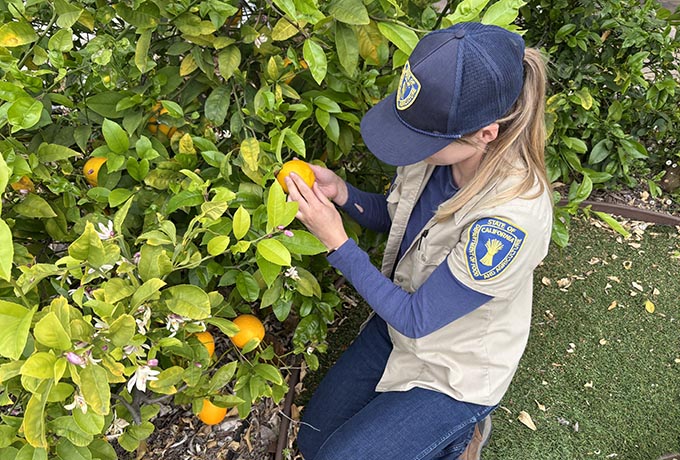
“It's really like a combination of technologies,” Hornbaker says. “All of those things are key in this process for us to achieve eradication.”
As to the duration of the quarantine periods, Hornbaker says it depends on the temperature. The standard is to wait through three medfly lifecycles after the last detection before determining if an infestation has been eradicated. This means that the time equivalent to three generations of medflies hatching, maturing, and laying their own eggs must pass before a quarantine is over.
In warm weather, each of these periods can last a month; during the colder months, it can extend up to four months.
The climate change factor
Global warming is posing a challenge for medfly containment, Hornbaker says. As the insect’s lifecycle is determined by temperature, patterns have slowly begun to shift.
“We're finding invasive pests in parts of California that we've never found an invasive pest in before. And it's a head-scratcher,” she says.
The CDFA expert explains there’s a human aspect to consider, the possibility of people traveling in and out of the state with infested fruit. But even in that case, there are still certain areas where Ceratitis capitata and other pests shouldn’t be able to survive—and yet they do.
“It changes the susceptibility of those invasive pests and allows them to establish in more areas of California,” she says.
The problem is not significant enough to warrant reassessing the entire fruit fly response strategy yet, Hornbaker says. However, it has had important consequences. She notes that back in 2023, the state dealt with a multiple fruit fly infestation that proved more difficult to eradicate than what the agency expected. Especially because two of the species involved, the Tau and Queensland fruit flies, were a first for California.
“That created additional challenges because we didn't have lures that worked well for them. We didn't have a good treatment program,” Hornbaker recalls. “We were able to achieve eradication, but it was very labor-intensive.”
This is one of the reasons why the agency is continually seeking innovations in pest eradication. Their research team, Hornbaker says, is in constant contact with universities worldwide and the USDA to address new and emerging challenges.
“If there's something that we can do better, we're going to have those discussions with our partners and we're going to try it,” she concludes.
* All images courtesy of the CDFA
Related stories
California imposes quarantine in Santa Clara County over medfly infestation
Medfly eradicated from Alameda County
University of Florida study enlists local residents to fight the spread of citrus greening disease











Subscribe to our newsletter