


Tests detecting industry-disruptive blueberry viruses started failing. Now we know why




It’s been a headscratcher for the past five years. Tests used for decades to study two major blueberry viruses, known as scorch and shock, stopped being as reliable as they once were, failing to provide accurate results even for clearly symptomatic plants.


This became an issue for Canadian agriculture. With an industry valued at $630 million, the berry is the Big White North’s main fruit export, and 90 percent of them come from British Columbia.
Fortunately, Genome BC funded research stemming from a partnership between the BC Blueberry Council, Simon Fraser University (SFU), and Phyto Diagnostics Company Ltd., solved the riddle.
The research team led by Jim Mattsson and Eric Gerbrandt showed that both blueberry viruses have evolved, which is why older PCR tests were not detecting them.
The elusive shock and scorch
Blueberry shock virus and Blueberry scorch virus are not dangerous to humans, but have definitely hurt British Columbia’s blueberry farmers. Gerbrandt, project co-lead and Research Director at the BC Blueberry Council, called the ailments the “two most economically important blueberry viruses in the Pacific Northwest.”
Blueberry shock virus spreads by pollen, which means it can’t be prevented from spreading. However, the disease usually moves slowly, and once detected, fields quickly recover. Growers fight the infection by prioritizing varieties that are slower to become infected over others.
Blueberry scorch virus, on the other hand, spreads via insects called aphids that feed on sap. Just like Shock, this disease typically moves slowly, but unlike it, Gerbrandt says, the outlook is far from good.
“It’s a terminal condition, where the plants will get some blighting in one year, a little bit more the next year, and progressively, the yield of infected plants goes down,” he explains.
To make things worse, despite the polar opposite outcomes, the symptoms for these blueberry viruses are very similar, making them harder to differentiate.
The only way to determine if the plants are infected with one or the other is by using diagnostic tools such as ELISA and PCR tests, which have been the main detection approaches since the 90s.
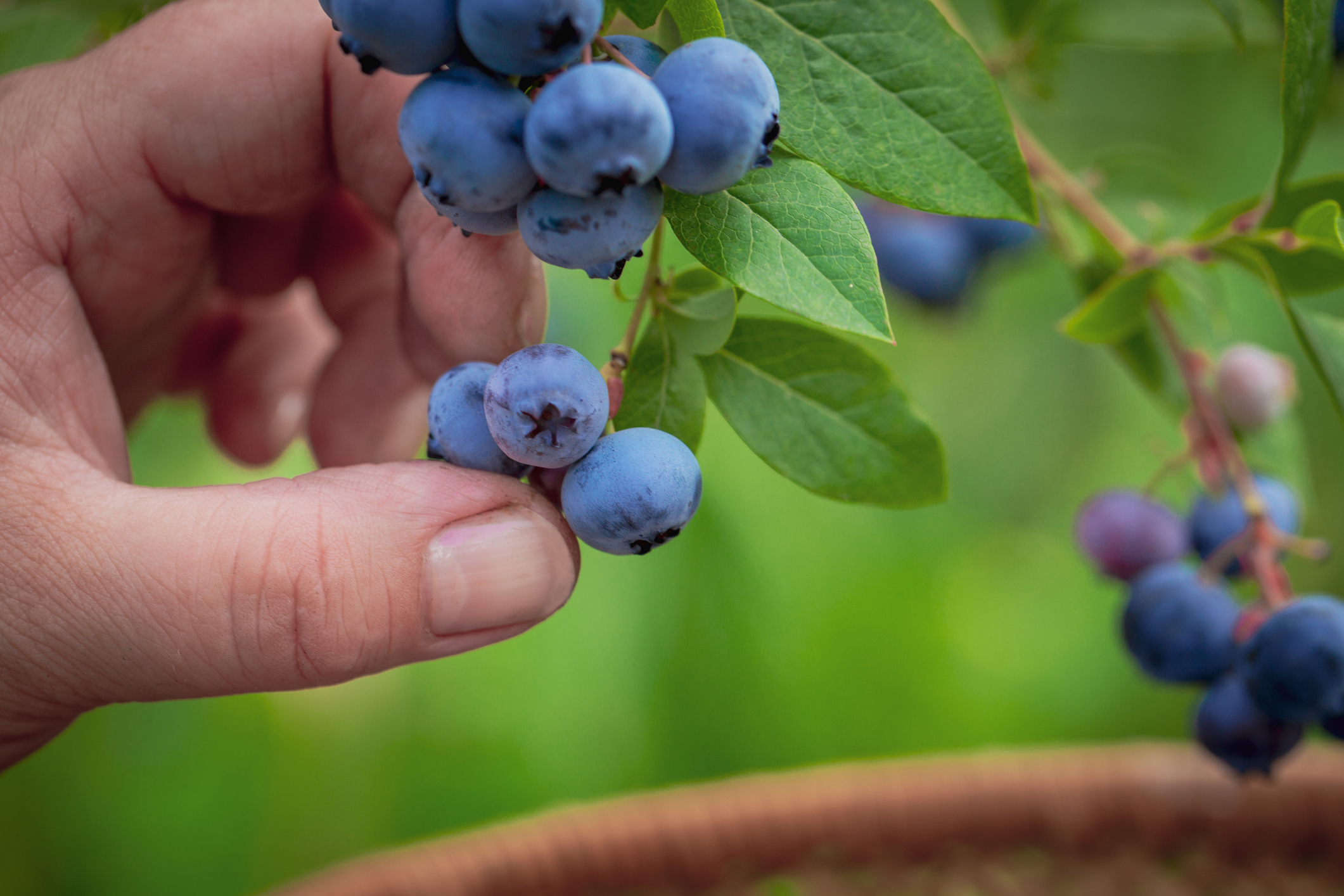
Faulty tests, evolving blueberry viruses
Around 2020, Gerbrandt says growers saw “a real dramatic increase” in the number of plants with virus symptoms across British Columbia. Surprisingly, the researcher recalls, at the same time, some of the PCR-tested samples taken by researchers from those plants were coming back from the lab negative.
“We didn't know if there was a new virus, new strains of the existing viruses, or if samples were being taken from plants without virus infection,” he says. “And there were a lot of hypotheses.”
Gerbrandt’s research team did an extensive survey of dozens of blueberry fields across the Fraser Valley and collected over 400 samples for genome sequencing.
“Once that data comes back, you use bioinformatic tools to compare the samples’ sequences against references from the scientific literature to determine whether what you've sequenced is the same as what was found previously,” Gerbrandt explains.
After years of research and sampling, some pieces of the puzzle began to come together—scorch and shock viruses had evolved into new variants that conventional PCR tests were unable to detect.
Viruses evolve, and so does disease prevention and control
Just like everything in nature, Gerbrandt says, blueberry viruses change over time.
“It's an adaptive response for their own well-being. They want to continue to infect,” he says.
Unfortunately, in this case, better survival abilities for a blueberry virus can translate into enhanced virulence and tough-to-control outbreaks. However, knowing these new variants is the key to better treatment and detection.
“We’re designing new primers so that we have better PCR assays for lab purposes,” Gerbrandt says.
The research director says more studies are needed, as the current data do not provide any information on whether these shock and scorch variants are more symptomatic or cause worse disease symptoms. However, he finds this is a good reminder of the dynamic nature of agriculture.
“The nature of it is that viruses evolve, and it's a constantly moving target, not just for the researchers, but also for the growers that are trying to manage their fields,” he concludes.
Related stories:
US blueberries are now cleared for the South African market
Global blueberry industry bets on quality and growth toward 2027










Subscribe to our newsletter