







Chile secures Mexican market access for its oranges


Written and reported by Camila Gutierrez | Lee esta noticia en Español


Until now, Mexico had been importing fresh oranges exclusively from the United States. This 2025 season, Mexico's forecast for fresh orange imports is 21,000 MT, unchanged from last year's due to steady fruit imports from the North American country.
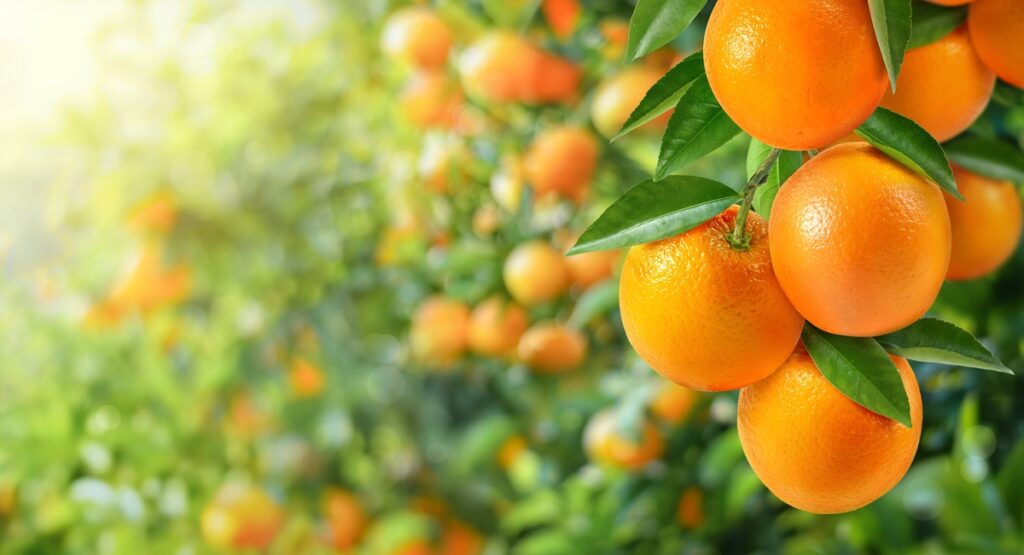
But the US is no longer the only supplier in town. During a ministerial visit to Mexico led by Chile’s Minister of Agriculture, Ignacia Fernández, the Chilean fruit sector announced it reached a new milestone: Mexico has opened its market to Chilean oranges.
Chile’s agricultural authorities highlighted that the market opening increases its competitiveness as an off-season supplier, and drives growth in the agricultural sector, generating more employment in regions such as Metropolitana and O’Higgins.
The agencies added that Mexico represents a strategic opportunity for Chile, and access consolidates the country's position as a key partner in Latin America.
During the visit, Minister Fernández and Mexico’s Secretary of Agriculture and Rural Development, Julio Berdegué Sacristán, signed a General Technical-Scientific Cooperation Agreement and a Specific Agreement on Plant Health. The agreements aim to accelerate joint projects, facilitate agri-food trade, and strengthen sanitary safety.
Between January and August 2025, Chilean orange exports worldwide reached $83 million, 5% lower than the same period last year due to falling prices in the US, despite an increase in export volumes of 12%. In 2024, Chile’s orange-growing area expanded to a total of 7,201 hectares, with notable varieties including Fukumoto, Lane Late, and Cara Cara.
In the same year, Mexico consolidated its position as the main destination for Chilean agriculture exports in Latin America and the fourth-largest globally.
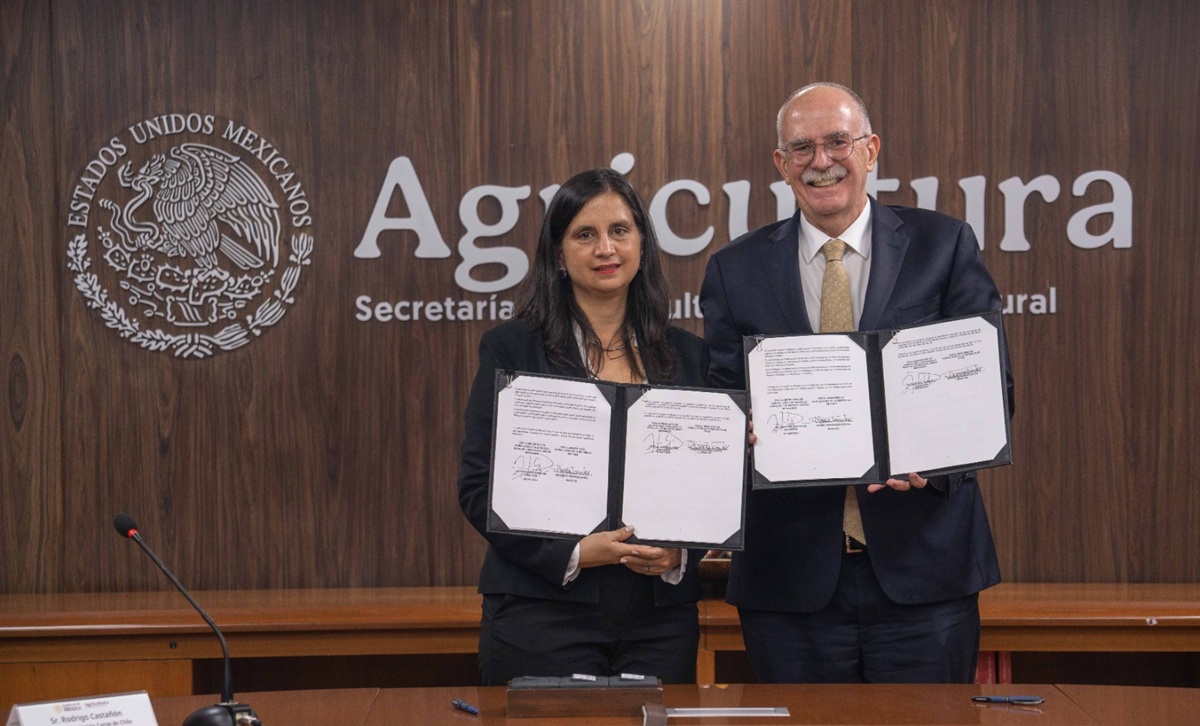
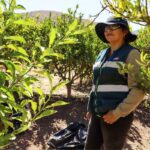
Photo courtesy of Chile's Ministry of Agriculture - MINAGRI.
Agricultural cooperation between Chile and Mexico
During the visit, Minister Fernández and Mexico’s Secretary of Agriculture and Rural Development, Julio Berdegué Sacristán, signed a General Technical-Scientific Cooperation Agreement and a Specific Agreement on Plant Health. The agreements aim to accelerate joint projects, facilitate agri-food trade, and strengthen sanitary safety.
The agreements include collaboration in animal and plant health, science and technology, water efficiency, family farming, sustainable production systems, climate change, and pesticide management. They also provide for technical work between Senasica, SAG, and INIA on pest management, smart traps for Mediterranean fruit fly, and alternatives to methyl bromide.
Both delegations reviewed current sanitary protocols and confirmed the continuation of pilot risk mitigation plans for table grapes and kiwis, which will be jointly evaluated in 2026.
Chile reiterated its interest in expanding access for Mexican mangoes and advancing the approval of meat establishments. Mexican representatives emphasized the importance diversifying and balancing trade. The implementation of electronic certification for plant and livestock products was also highlighted as a tangible benefit for exporters and importers in both countries.
Secretary Berdegué and Minister Fernández reaffirmed their commitment to strengthening bilateral cooperation, prioritizing sustainable and resilient livestock, efficient water management, and inclusive rural development, with special attention to small producers, rural women, and sustainable food systems.
The delegations were accompanied by technical teams from both countries, including Senasica, INIFAP, SAG, INIA, and representatives from the Chilean private sector.
Related stories:
Chilean citrus exports to increase 11% this season as promotions in US grow
Mexican orange production could be almost cut in half by drought






Subscribe to our newsletter