








How Milei's policies and global trends are reshaping Argentina's citrus export landscape




By TopInfo


Argentina is emerging from a long and complicated period for fruit production, largely due to local policies that negatively impacted the domestic market and other social conflicts. The sector suffered under a heavy tax burden, as well as high costs and a lack of profitability, resulting in a shrinking sector and a drop in exports.
President Javier Milei's government sought to bring about an abrupt change aimed at normalizing the economy, dropping inflation, and shrinking the State. The resulting stability and lower inflation provided a level of predictability, enabling companies to organize and plan ahead.
However, the long-awaited reactivation of the Argentine economy is taking longer than expected, primarily due to substantial public debt, years of imbalances, and a general lack of resources.
The rise and fall of the lemon industry in Argentina
The evolution of the citrus industry is a clear example of the ups and downs of Argentine politics and economy.
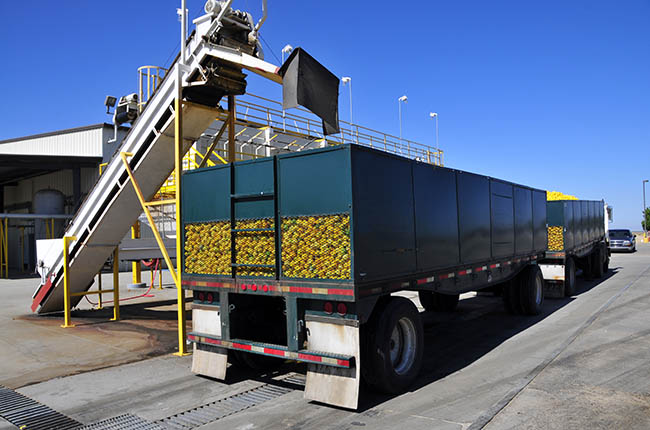
Years of crisis led to a reduction of cultivated areas and a drop in exports. But the domestic economy was not solely responsible, as global trends also had an impact—especially in the case of lemons. This category has suffered from alternating periods of glory and misfortune, with recent years falling into the latter category.
The expansion in the Argentine lemon industry led to oversupply and a price collapse, which significantly impacted the economy of the Tucumán province, the world's leading producer and exporter of lemons. Faced with this downturn, plantations were eliminated, establishments closed, and strategies were redesigned.
Due to the reduction in surface area, production also fell, directly impacting the export of fresh lemons. The lowest point was 2024, when Argentina exported only 170,000 tons of fresh lemons.
In 2025, the decline in citrus production in the Northern Hemisphere led to a recovery in southern exports, with shipments primarily going to Europe and Russia. Fortunately, this market shift offset the decline in exports to the United States, which had shrunk as a result of the Trump Administration's trade policy.
Experts project exports in 2025 to be around 215,000 tons, up 26 percent compared to the previous year. However, this is far from the levels the industry experienced between 2015 and 2022, when about 250,000 tons of lemons were exported.
In contrast to fresh exports, Argentina remained the leader in the industry. Production in the processed lemon market has remained steady, with around 1.4 million tons in recent years. For 2025, this category is projected to increase output.
Another victim of a tumultuous economy
Sweet citrus suffered even more under the negative policies of recent years.
High internal costs, the absence of trade agreements, high tariffs, and a lack of varietal renewal led to a decline in interest in Argentine mandarins from foreign markets. As a result, Argentina lost its importance as an international supplier in this sector.
With minimal exports to Russia, Canada, and Southeast Asia, mandarin production devoted itself to domestic demand, with the fruit being one of the most abundant and affordable ones for Argentines.
Over the last two years, Brazil has become an increasingly attractive destination; however, the European market has been lost due to a lack of competitiveness, and the US market remains closed to Argentine mandarins.
Climatic adversities, including excessive rain, hail, and frost, are also challenging the current season, repeating the unfortunate legacy of 2023 and 2019.
Unsurprisingly, all these elements are keeping exports at low levels with 24,000 tons—behind historical levels, which usually fluctuate between 30,000 and 50,000 tons.
Argentine oranges keep on keeping on
In the case of oranges, the situation differs between processed and fresh. The industry is flourishing due to the sharp decline in production by the two largest orange juice producers, Brazil and the United States. Prices are attractive, which has led to increased volumes.
In the case of the fresh market, only six percent of production is exported, and most Argentine oranges stay in the domestic market.
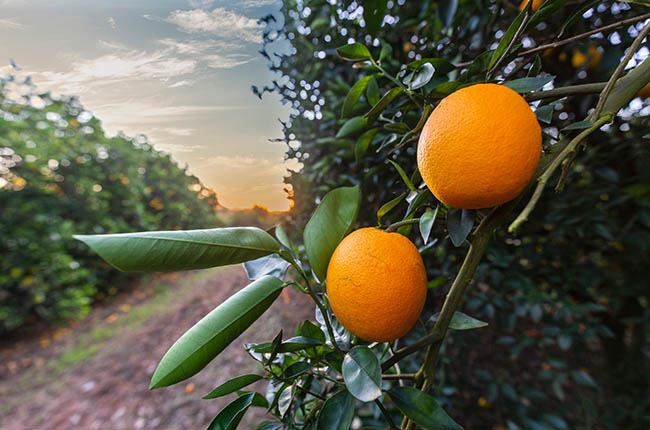
In 2025, exports are expected to be approximately 75,000 tons and will be distributed to two different destinations. On the one hand, there is the European Union, which receives about 20,000 tons annually.
The other destination is Paraguay, where volumes fluctuate significantly, ranging from 6,000 to 40,000 tons per year. Argentina's neighbor buys inferior qualities in a fairly informal business, which is reflected in the very low prices registered by customs.
All other markets are rather smaller, sending limited volumes and little impact.
Argentina on the rebound
Argentina is expected to export over 310,000 tons of fresh citrus this season, marking a notable recovery from 2024 and 2023, when volumes were below 300,000 tons.
However, there is still a long way to go before the country can return to the once-easy range of 350,000-400,000 tons seen only a few years ago.
The Argentine economy has normalized, but much remains to be done, including investing in infrastructure and varietal renewal, as well as lowering production costs. Improving the labor system, international negotiations, and tariff reductions are also pending tasks.
Thanks to the boost that Milei received in the last election, the government's plan will go even deeper, this time focusing on labor and tax reform. This will benefit the fruit sector, whose development is hindered by the complex labor system and the high tax burden.
Related stories
Groundbreaking cherry harvest in Argentina's Jujuy Valley creates new market opportunity





Subscribe to our newsletter