








Why Chilean cherries might need more than good quality to thrive in China this season



Written and reported Macarena Bravo | Lee esta noticia en español


The 2024/25 season taught Chilean cherry growers one important lesson: quality always comes first.
The motto has become a tenet among local producers, but just as the fruit arrives in China in good condition, exporters are facing an unfavorable market, with falling prices and overall difficulty.
For Javier Saavedra, Commercial Manager of Chilean ag service company QIMA Produce, the current situation is the result of an unprecedented combination of factors.
“Chinese domestic consumption is, without a doubt, one of the most relevant factors,” he said.
The executive explained that, in an extraordinary move, the Chinese Government explicitly urged its people not to give bulk products as gifts for the Lunar New Year, at both the private and corporate levels, as well as at the governmental level. These include items such as fruits, meats, and liquors, and are now prohibited.
This directive effectively wiped out an important part of the demand that historically sustained the Chilean cherry sales in the country.
“In China, when the Government gives a signal, it is respected,” Saavedra adds.
A slow economy and some fake news
As if this weren’t bad enough, this cultural and regulatory change is compounded by a slower economic context, with a declining consumption that starkly contrasts what the country was only a few years ago.
“China was synonymous with active consumption. Today, there is a noticeable generalized decline: rents have decreased, restaurants are not full, and spending is much more contained,” Saavedra notes.
Diego Navarro, Qima’s Asia Operations Manager, explains that when this economic impact occurs, imported products are the first to suffer: “The Chinese consumer turns to local products, which are cheaper and more familiar.”
This explains why categories such as apples—with high local production and long shelf life—pears, and lychees are currently hogging a large part of the demand, displacing imported products like Chilean cherries.
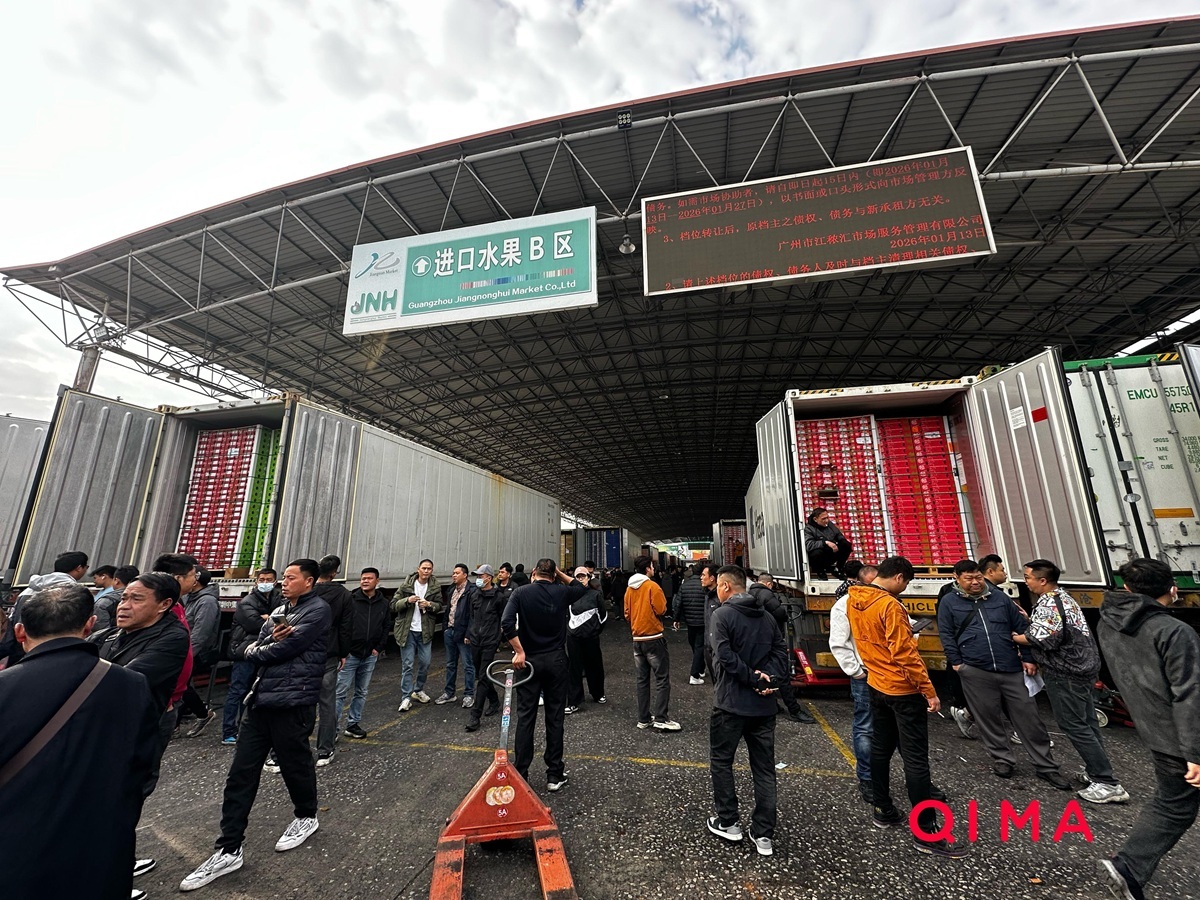
At the wholesale level, things are not much better, and both Saavedra and Navarro say the number of buyers they usually see at this time of year is simply not there.
“If there is one word that defines this season, it is uncertainty. No one has total clarity about what is happening,” Navarro says.
Adding to the sector's complex situation is the impact of social media and the spread of false information questioning the safety of Chilean cherries on some Chinese platforms.
“There is talk that the fruit is contaminated with traces of fungicides. Even people who are not linked to the fruit world are repeating that rumor,” Saavedra noted.
This debunked information had already made the rounds last season, apparently leaving a mark on consumer perception and causing significant reputational damage.
To store or not to store
Importers have not made things easier for themselves either, as some have opted for storing the fruit in hopes of better market conditions closer to the Lunar New Year. This, in turn, has led to even higher pressure on prices and a sharper slowdown in Chilean cherry sales.
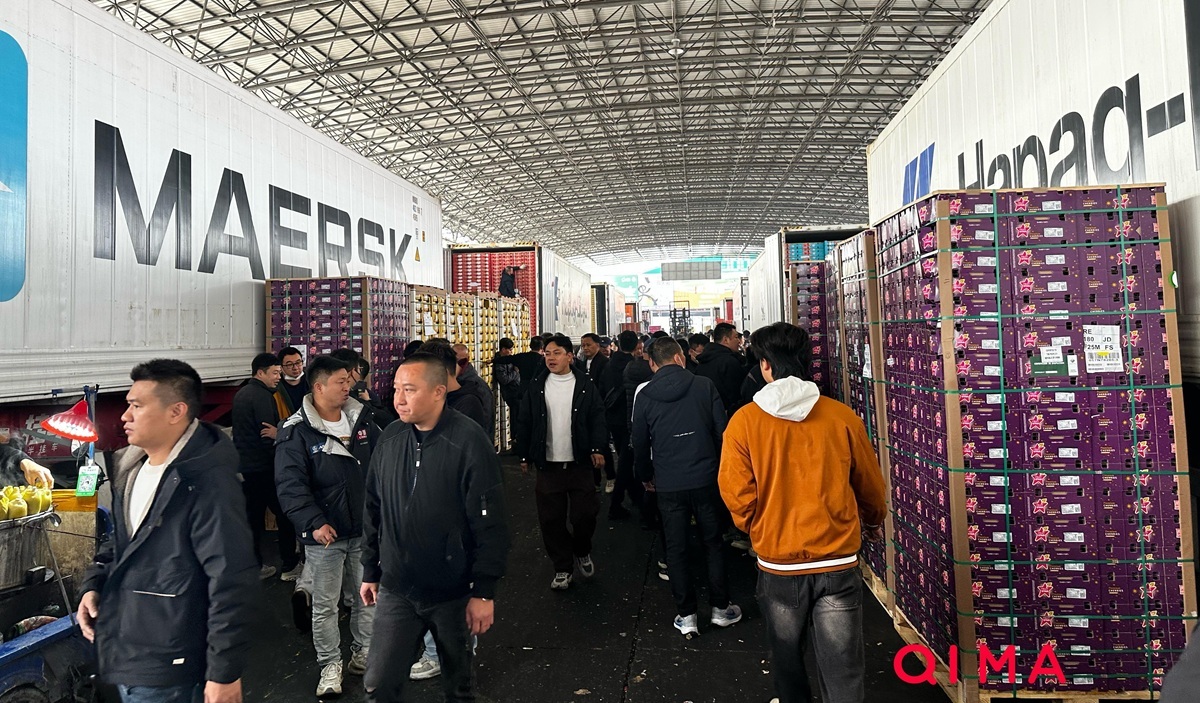
According to various industry sources, there are currently between 2,000 and 2,500 containers of Chilean cherries in cold storage, with some estimates even higher.
As a consequence, as of January 26, the fruit for sale had an average life of 40 days from the packaging date, said Navarro. Last week, sales were slow, according to the executive, with a daily average of only 30 percent of the lot leaving the building. The remainder would go on sale the following day for a lower price.
Saavedra pointed out that the price difference between freshly arrived fruit and stored fruit ranges from 10 to 20 yuan.
Market pressure is not unique to cherries. The Qima expert says it has also been seen in blueberries, grapes, and other imported fruits, which have faced low prices and slower turnover.
“It is not something against the cherry. But being a premium product, highly visible, and with a lot of media exposure, all eyes are on it,” he said
A market turn for the better
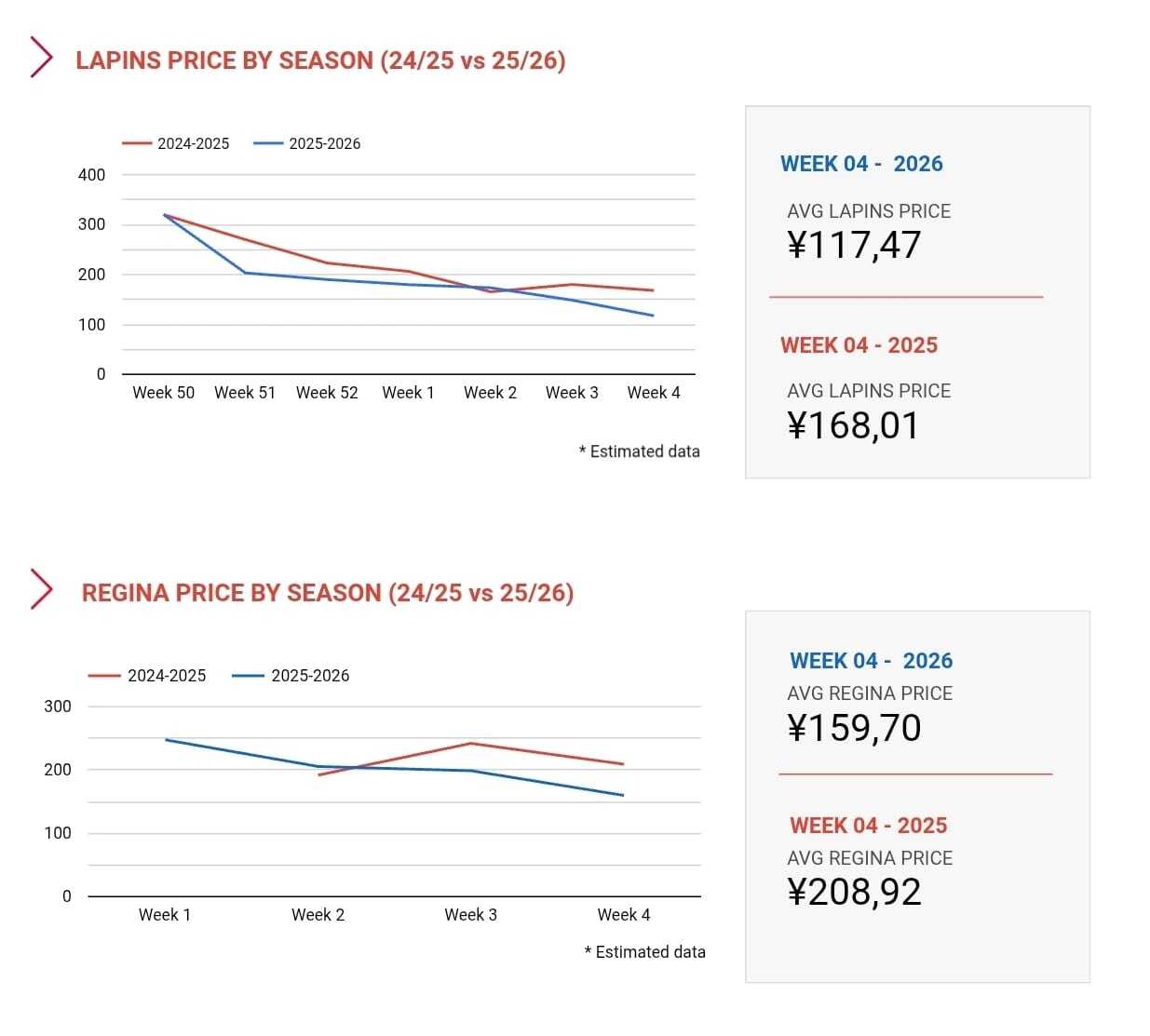
Despite the grim outlook, signs of a slight improvement began to appear in recent days. On Monday, January 26, Regina prices rose by about 20 yuan, while Lapins increased by around 10 yuan, depending on the brand and quality.
Daily sales rates also improved, going from barely 30 percent of the available lot to almost 70 percent.
Navarro says the comeback has been driven by the arrival of the last large-volume vessels carrying Chilean cherries, such as the Humboldt Express (1,003 containers), Atacama (593 containers), and the Buenos Aires Express (567 containers).
In the season’s final stretch before the Lunar New Year, arrival volumes will be lower. From here on out, and until the last arrival on February 8, ships will not carry more than 200 containers, which should gradually lead to better prices. However, major rebounds are not in the cards.
“Chinese domestic consumption is weak, and no significant change is expected, at least in the next three years,” said Saavedra. “The Chilean cherry industry will have to adapt to a new reality, where the Chinese market will remain key, but no longer as predictable as it once was.”
*In-text images and graphic QIMA
Related stories
Beyond China: Chilean cherries arrive in the US and Europe amid market expansion
Agronometrics in Charts: Chile's cherry season expects smaller yield but better fruit
Copefrut puts quality first as Chilean cherry season hits midpoint







Subscribe to our newsletter