








Guidelines with a grain of salt—and a lot more produce



The recently updated United States Dietary Guidelines have brought renewed interest to what Americans are putting on their plates. As federal nutrition policy emphasizes whole foods, the International Fresh Produce Association (IFPA) celebrated the announcement.


However, the organization’s VP of Health and Nutrition, Mollie Van Lieu, says the document presents both opportunity and uncertainty for the fresh produce industry.
Speaking with FreshFruitPortal.com, Van Lieu notes that, while fruits and vegetables have remained central to dietary guidance for decades, the industry now faces a familiar trial: translating recommendations into behavior change.
“The challenge has always been that people don't follow the dietary guidelines,” she says.
The updated guidelines, released earlier this year, move away from the long-standing food pyramid imagery and build on the MyPlate framework introduced in 2011 by the Obama Administration. While consumer awareness of the initiative remained limited, Van Lieu notes that its core message—filling half the plate with fruits and vegetables—shaped industry messaging for years.
Now, she says, the strongest opening for produce may come from the federal government’s explicit call to reduce consumption of ultra-processed foods.
“Anywhere from like 60 to 90 percent of our diets are ultra-processed foods,” Van Lieu says. “So we really have to get those down, if we want to increase fruit and vegetable consumption.”
New guidelines: Whole foods, real barriers
Van Lieu emphasizes that most consumers already understand the health value of fruits and vegetables. However, the more persistent obstacles, she points out, relate to affordability, perishability, and preparation—especially for vegetables.
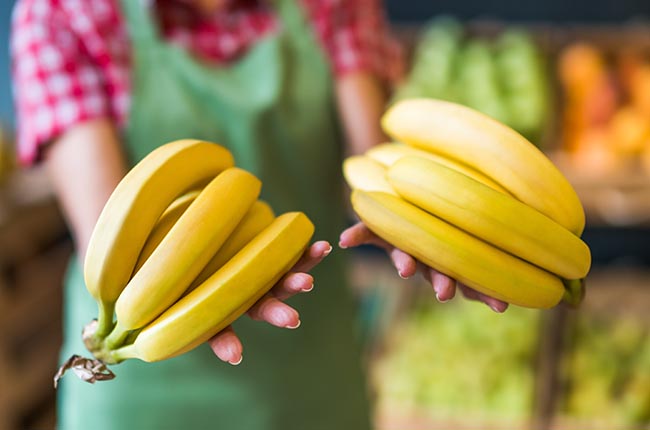
“Bananas are the cheapest thing in the grocery store, right?” she says. “But that's not what people always think about when they think about fresh produce.”
She adds that cost perceptions often overlap with concerns about waste and uncertainty around preparation. As a result, she sees growing opportunity for value-added produce, including fresh-cut and bagged items, particularly as consumers balance time constraints with interest in eating more whole foods.
“There’s no greater whole food than fruits and vegetables,” Van Lieu stresses, adding that rising meat prices may further elevate produce’s value proposition as consumers attempt to follow whole-food-based diets.
From school lunches to shopping carts
From a policy standpoint, Van Lieu explains that IFPA will focus closely on how the new guidelines influence federal nutrition programs, including school meals and procurement standards.
While fruits and vegetables remain integral, the removal of formal vegetable subgroups could affect variety requirements and purchasing decisions. She also flags the need to monitor how the guidelines’ increased visibility of protein could shape federal spending priorities.
“Something we have to watch out for is, if there is a priority to buy more meat, perhaps more than fruits and vegetables,” Van Lieu says, noting that meat-based proteins typically cost more than produce.
Affordability remains a central theme, particularly for lower-income groups. Van Lieu points to recent gains in the WIC program, where IFPA supported expanding fruit and vegetable benefits.
“Before it was $9 a month for a kid,” she says. “And as we know, that does not go far at all.”
Beyond federal programs, Van Lieu says IFPA aims to equip growers, retailers, and marketers with better consumer data and culturally relevant insights to reach households struggling with grocery costs.
“This is a marathon,” she says, noting that dietary guidelines update every five years. “We’re a big, diverse country. So it can't always be just one singular message.”
Asked to distill the guidelines into a single takeaway amid widespread media noise, Van Lieu offered a simple directive: “Every time you eat, have a fruit or a vegetable. That fits into every diet, and every culture.”
*Images are referential
Related stories
IFPA responds to MAHA report; Urges focus on fruit and vegetable access to improve health











Subscribe to our newsletter