








South African pome fruit season kicks off early with promising quality, despite hail and logistics issues
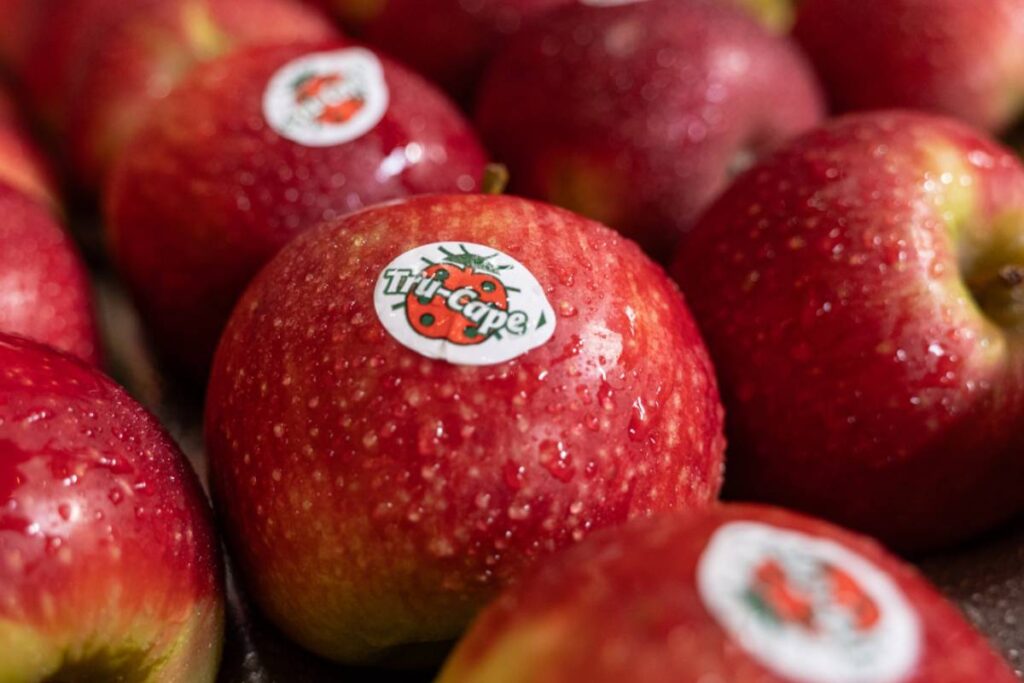



The first apples and pears are coming off the trees earlier than expected in South Africa, says pome fruit producer and distributor, Tru-Cape.


While early indications point to quality pome fruit, factors such as potential hail damage, exchange-rate volatility, and other variable conditions will continue to influence outcomes, setting the stage for a season shaped by opportunity and uncertainty.
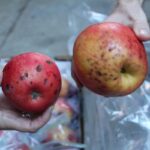
The Langkloof was severely affected by a hailstorm on February 5, followed by further hail damage in the Koue Bokkeveld on February 8.
“It is with concern that we take note of the hail damage reported in the Langkloof and the Koue Bokkeveld. However, the full extent of the impact on the apple and pear crop is still being assessed,” said Roelf Pienaar, Managing Director at Tru-Cape Fruit.
Pome fruit season jumped the gun
Depending on the variety, the season is on average seven to ten days earlier than usual, according to Calla du Toit, Procurement Director at Tru-Cape Fruit Marketing: “We picked the first BigBucks Gala in the Ceres region on 26 January, which is exactly ten days earlier than last season.”
Harvesting of Rosemarie, a blushed summer pear variety, started on December 23, approximately two to three weeks earlier than the industry norm.
“It was only the second time in the past 25 years that I can remember we started harvesting before Christmas,” Du Toit added.
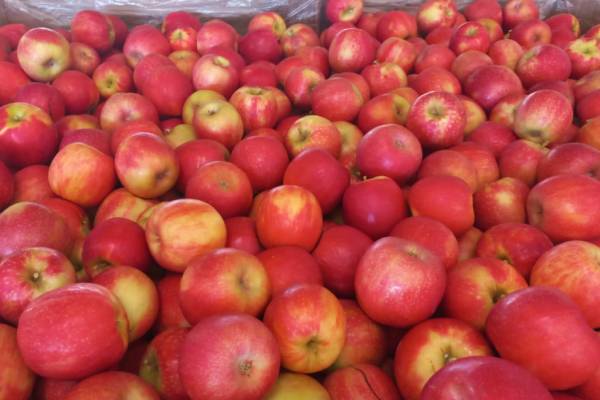
In the EGVV region (Elgin, Grabouw, Villiersdorp, and Vyeboom), summer pears are about ten to twelve days earlier than usual, while apples are approximately seven to ten days ahead of the normal pattern, according to Graeme Krige, Technical Advisor at Two-a-Day.
“We expect a good-volume crop in the EGVV, with clean pome fruit that is relatively free of pests and disease,” said Krige. “Later varieties are expected to catch up as the season progresses, with ripening likely to return to a more normal pattern.”
Warm and dry conditions during the growing season played a significant role in the earlier harvesting dates.
“Normally, we experience one or two cooler weeks with some rainfall that slows down ripening, but November and December consisted of consistently sunny weather, without any cooler periods to delay ripening,” Du Toit explained.
He believes these conditions had a positive impact on pome fruit quality. Despite a windy season, there have been fewer wind marks on the fruit than expected.
However, Krige noted that warm temperatures in spring and early summer shortened the growing season, which had an impact on pome fruit size.
Demand looks promising
The earlier start to the season allows Tru-Cape to capitalize on opportunities in international markets and extend its marketing window at the beginning of the season.
“We cannot complain about demand for apples and pears,” said Du Toit. “A significant portion of our Rosemarie pears is destined for the Middle East, where there are currently good opportunities. We are also seeing promising prospects in India, Russia, and China. New Zealand’s Royal Gala is expected to arrive later than usual, which creates opportunities for us in the Far East.”
In Europe and the United Kingdom, the South African apple season is expected to start slightly later due to carry-over European stock.
“We follow a diversification strategy and aim to spread the crop across a range of markets,” he said. “Our own stock levels are well balanced, and I believe we will transition smoothly between carry-over and current-season pome fruit to avoid shortages on supermarket shelves. However, the earlier start to the season does require us to pack carry-over stock more quickly.”
Exchange rate and port efficiency
Du Toit identified logistics, geopolitics, and a stronger rand as the main challenges for the season.
“Logistics remain the biggest challenge for the average producer,” he added. “You can have an excellent crop, but it means little if you cannot export it.”
Productivity at the Port of Cape Town must improve, the expert explained, saying the industry would like to see the point of entry recover more quickly after being windbound.
The rand's strength is another concern for export pome fruit producers.
“When the exchange rate strengthens, we benefit from lower shipping, fuel, and input costs, but the overall impact on producer income remains negative,” Du Toit said. “We recognize that currency cycles are unavoidable, so we focus on what we can control: producing high-quality pome fruit.”
Du Toit is optimistic about new varieties entering the market and the increasing volumes of summer pears.
“There have been several upgrades at both the Two-a-Day and Ceres Fruit Growers packhouses, which better position us to fully utilise the opportunities we believe lie ahead.”
*All images courtesy of Tru Cape.
Related stories
South Africa's 2026 apple exports projected to climb five percent while pear volumes decline
South Africa projects stable table grape harvest at 79.4M cartons









Subscribe to our newsletter