








Argentina Exports 2025: Pears and lemons are still in the lead




This article was originally published in Spanish in TopInfo on March 5, 2026.


By Betina Ernst
Last year, Argentina's fresh fruit exports were higher than in the previous three years, although still below historical levels.
Total exports reached 770,000 tons, reaching $604 million. In terms of volume, this represents a seven percent increase compared with 2024 and an eight percent increase versus the last three years’ average. In terms of value, the increase represented a growth of 13 percent and 19 percent, respectively.
The sharpest decline in fresh fruit exports occurred in 2022 and 2023, corresponding to the final years of the Kirchner administration, when economic instability and extreme inflation dominated the Argentine economy.
The administration of President Javier Milei, in turn, has stabilized and reorganized the economy, reduced inflation, and provided greater predictability. This has benefited the fruit sector and led to a rise in exports.
However, the recovery has been weaker than expected, in part due to the difficult legacy of years of economic crisis and deterioration, but also because fruit production is not a priority for the current government.
The administration is focusing on other sectors within the Argentinian economy, such as large-scale agriculture and mining. Regional economies remain in the background and continue to face very complex conditions and a lack of competitiveness.
The so-called “Argentine cost” remains very high, reducing the competitiveness of local products. The tax burden exceeds that of other countries and, despite promises, it has not yet been eased.
The situation has been compounded by deteriorated infrastructure. In a country as vast as Argentina, with transport distances to ports often longer than those of its competitors, the poor condition of the country’s road network poses a serious challenge.
Furthermore, labor reform has not yet materialized, and foreign trade, hit by a lack of trade agreements and relatively high tariffs, is another factor limiting export growth.
This explains why the country’s two flagship fruits, pears and lemons, have kept an active presence in global trade thanks to their competitive advantages. Both fruits have found ideal growing conditions in Argentina, allowing for efficient production and very high-quality fruit.
Production volumes are high, ranking among the top in the world. Their industries also benefit from large-scale production, and together, they account for around 70 percent of Argentina’s fresh fruit exports for many years.
The situation is different for other fruit categories: They also produce high-quality fruit, often superior to that of other countries, but they do not have the same competitive edge as lemons and pears. As a result, their trade has not fully developed, and most of their production remains in the domestic market, while a small portion is processed by the industry.
Argentine fruit industry: The breakdown
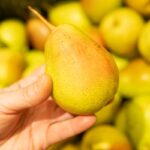
Pears
In the case of pears, 336,000 tons were exported in 2025, representing a slight two percent drop from 2024 but an overall higher volume than the previous three years.
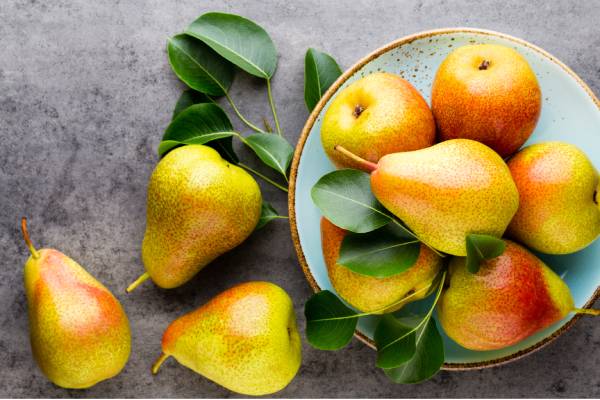
Latin America continues to strengthen its leadership, receiving more than 50 percent of total exports. In particular, the Brazilian market values Argentine pears and purchases the largest volumes. Shipments have also expanded to Mexico and Peru, and to a lesser extent to Paraguay, Ecuador, and Colombia.
Among overseas destinations, the main markets, in order of importance, are the US, Russia, and the European Union. The latter was, many years ago, the main buyer of Argentine pears, but due to the expansion of its own production and changes in varietal preferences, it has significantly reduced its purchases.
Lemons
After the collapse of fresh exports in 2024, the industry experienced a partial recovery. In 2025, exports reached 217,000 tons, which, though still below the historical level of 250,000 tons, represented a 27 percent increase compared to 2024.
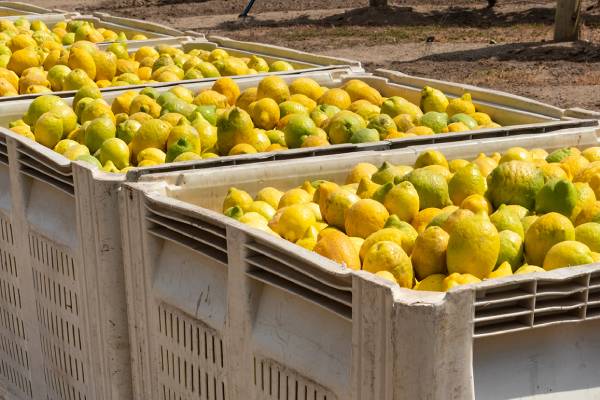
Europe once again accounted for the largest share of exports, with a 46 percent market share, followed by Eastern Europe. After importing record volumes in 2023 and 2024, the US recorded a decline, in part due to changes in its foreign policy, totaling only 49,000 tons.
Unlike most other fruits, Latin America is a secondary destination for Argentine lemons.
Apples
Last year was a good one for Argentine apples, as exports once again exceeded 90,000 tons, after three years in which the industry barely reached 70,000 tons.
Brazil is clearly the main market, followed by other neighboring countries such as Paraguay and Bolivia. Overseas shipments are limited and mainly demand the Pink Lady variety and organic apples.
Oranges
With 91,500 tons in 2025, Argentine oranges also bounced back, reaching levels similar to those prior to 2021.
More than half of the volume is shipped to Latin America. Within the region, Paraguay is the main buyer, while Brazil has also been gaining increasing importance. Europe receives around one-third of the shipments, maintaining a very stable trade for many years.
Easy peelers
It was not a good year for this category, as production was severely affected by extreme weather events.
Most of the crop was destined for the domestic market, with only limited volumes shipped to Russia, Brazil, Canada, and other smaller destinations.
Cherries
After a successful 2024/25 campaign, the Argentine cherry industry was affected by adverse weather, leading to a significant production decline and reduced exportable volumes. In 2025, 5,800 tons were shipped, a stark contrast to the 8,700 tons exported in 2024.
Related stories
Argentina accelerates efforts to access US sweet citrus market
Agronometrics in Charts: Argentine agroexports hit $42.2B export surge




Subscribe to our newsletter