







University of Florida freeze-defying avocados prove their worth by surviving recent cold snap
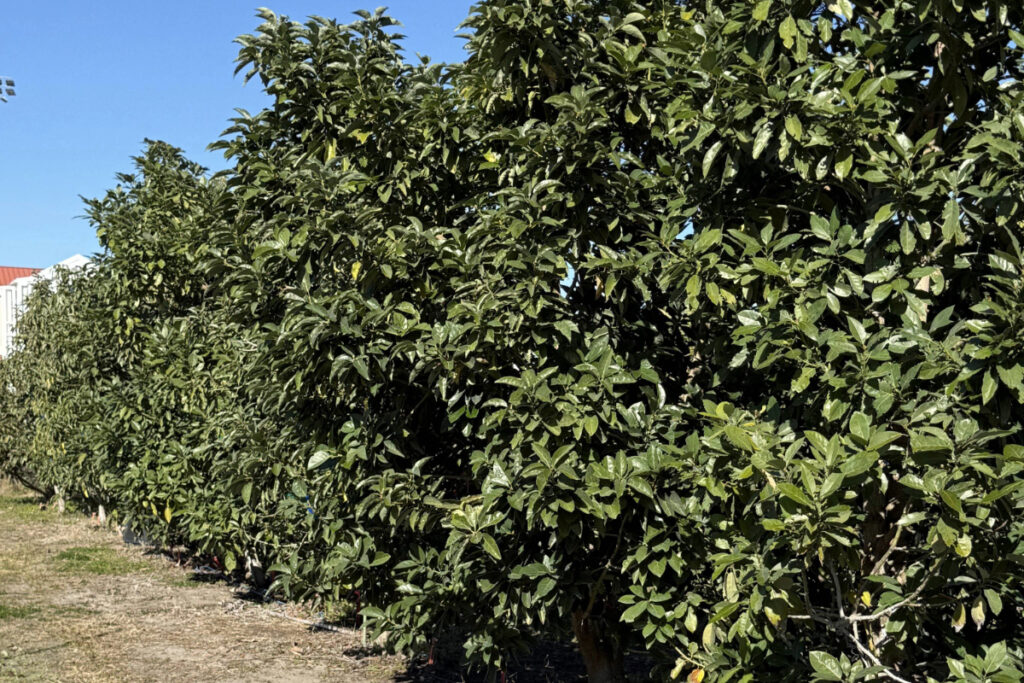



University of Florida (UF) tree fruit breeding experts have been working for over 20 years to develop a cold- and anthracnose-resistant avocado for North-Central Florida growers. The goal is to create a Mexican Hass hybrid that withstands the region’s freezing temperatures and resists the fungal disease, while allowing for commercial growth.


Their lineup of plants faced its first real cold-hardiness challenge in December 2022, when an Arctic blast delivered Florida’s coldest Christmas in three decades.
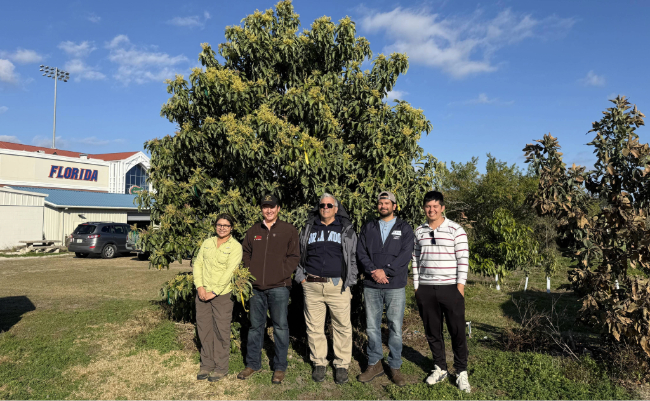
University of Florida (UF) tree-fruit breeding experts
However, the cold snap that hit the Sunshine State in January 2026, bringing freezing temperatures down as low as 17 degrees Fahrenheit, put the project to the test.
The university’s cold-hardy lines selected four years ago faced their biggest challenge to date—and some of them passed with flying colors.
A silver lining in Florida’s recent extreme cold weather
Freezing weather, such as the one recorded in Florida in February was disastrous for many. Some blueberry growers in the state saw 100 percent losses due to an unprecedented dip in temperatures.
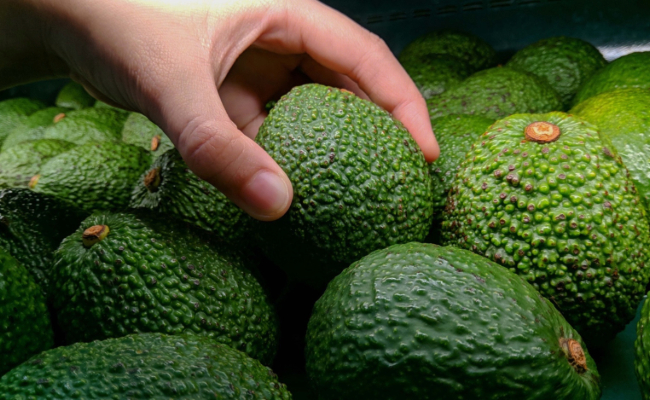
“To open avocado production up north, you need avocados that are cold resistant, and West Indian Guatemalan hybrids that are grown in South Florida are cold tender,” said Jose Chaparro, associate professor of horticultural sciences and a tree fruit breeding expert at the University of Florida.
He explained that this year was a good opportunity to assess the material's cold tolerance. After the cold snap, Chaparro says, breeders classified their avocado plants into cold-resistant tiers, categorizing them as highly susceptible, moderately or medium-resistant, or highly resistant.
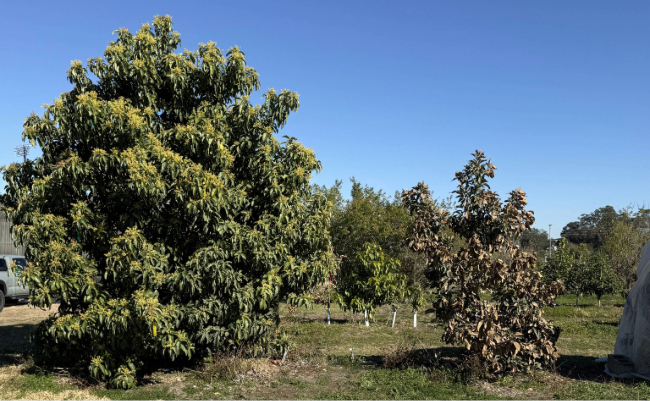
“The susceptible ones froze to the ground, and it'll take about three years for those trees to come back. The intermediate ones will probably take one to two years before we see flowers and fruit again,” he explained.
However, the resistant ones presented frozen flowers, which, the expert says, later reflushed, and they are now producing inflorescences again.
Chaparro is encouraged by the results, but notes the journey is just beginning. The team needs at least six years of data before market release, and the next step is testing the avocados on various rootstocks to ensure consistent quality and yield.
“We have material that has high oil content, produces large fruit size, is cold-resistant, and Anthracnose-tolerant,” he adds. “But, it doesn’t matter how good the variety is, if it doesn't yield, so we need to make sure our selections perform well.”
The team is also eager to boost the avocado’s nutty flavor. Their star survivor is a hybrid of Mexican Hass and the West Indian variety, already familiar to Florida growers.
In fact, he projects that 20 years or more down the line, one of these two varieties will prevail over other specimens.
“West Indian gives you large fruit size and a thicker, flexible peel, which is very good for post-harvest life and doesn’t crack when it rains, and it’s a good barrier to Anthracnose. It's also easier to peel the skin from the flesh as well.”
Related stories:
USDA allows for earlier shipping of Beta avocados
Peru reigns supreme in table grape and avocado exports—but not without challenges



Subscribe to our newsletter