








Agronometrics in Charts: Possible "Super El Niño" raises concerns across fresh produce markets




Each week, the series ‘Agronometrics In Charts’ examines a different horticultural commodity, focusing on a specific origin or topic and visualizing the trade market factors driving change. Check out our entire archive.


Climate concerns are once again returning to the forefront of South America’s export fruit industry as forecasts point to the possible development of a Super El Niño event later this year.
According to the National Oceanic and Atmospheric Administration (NOAA), there is an 82 percent probability that El Niño conditions could develop between May and July 2026 and persist through the end of the year. Atmospheric scientists cited by BBC's Science Focus have warned that the event could potentially become one of the strongest El Niño episodes on record.

For Chilean and Peruvian blueberry exporters, the risks extend beyond immediate field damage. Heavy rainfall, temperature anomalies, and extreme weather events could affect fruit firmness, post-harvest life, and overall fruit condition, factors that play a critical role in export markets where value is often determined after arrival.
The potential impact comes as both countries continue to play major roles in global fresh fruit exports. Peru has continued expanding its blueberry industry under relatively stable growing conditions in recent years, while Chile remains a major exporter of blueberries, cherries, grapes, and stone fruit.
Any climate-related disruptions affecting fruit quality, logistics, or supply continuity could therefore have wider implications for international fresh produce markets.
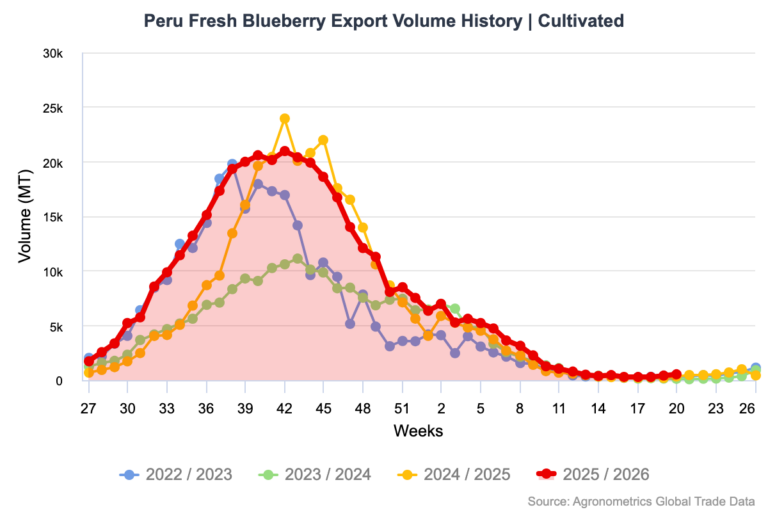
Source: USDA Market News via Agronometrics.
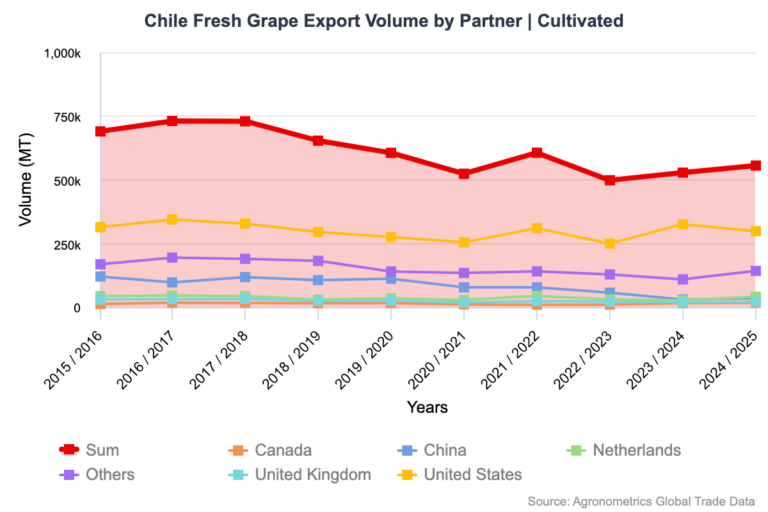
Source: USDA Market News via Agronometrics.
*Photos are referential. | Graphs courtesy of Agronometrics.
Related stories
Brazil’s orange output is set to rise in 2025/26, but La Niña and El Niño threaten weather stability











Subscribe to our newsletter