








FAO warns Hormuz disruptions could deepen food crisis




Severe disruptions in the Strait of Hormuz could soon escalate into a broader global food security crisis, warned the Food and Agriculture Organization (FAO). The entity is advising swift action from governments and industry stakeholders.


Speaking at a special event on the Middle East crisis during Rome Nutrition Week 2026, FAO Director-General QU Dongyu said that supply chain disruptions have already affected the movement of oil, liquefied natural gas, sulfur, and fertilizers, thereby increasing production costs across global agrifood systems.

Photo by ©️FAO/Giuseppe Carotenuto.
"The decisions we make now will determine whether this remains a manageable shock or evolves into a deeper global food security crisis in 2026 and 2027, and beyond," Qu told attendees.
FAO said higher energy prices continue to push up agricultural input costs globally, particularly fertilizer prices, which in turn place upward pressure on seed costs. Import-dependent countries face rising bills while inflation weakens consumer purchasing power.
"What we are witnessing today is not only a geopolitical crisis; it is a systemic shock to the global agrifood system," Qu said.
The organization noted that many countries in Africa and Asia already face overlapping pressures from debt, climate events, conflict, and constrained public finances.
FAO stresses fertilizer concerns
The organization warned that disruptions to fertilizer availability could affect both crop yields and nutritional quality in the coming growing seasons.
"This week, as we mark Rome Nutrition Week 2026, we must remember that food security will be guaranteed only when nutritious food is available, accessible, and affordable," Qu said.
According to Qu, reduced access to fertilizer may lower protein content and micronutrient density in staple crops while also tightening supplies of fresh produce.
"When soils are degraded due to lack of inputs, the fruits and vegetables that form the foundation of healthy diets become scarcer and more expensive," he said.
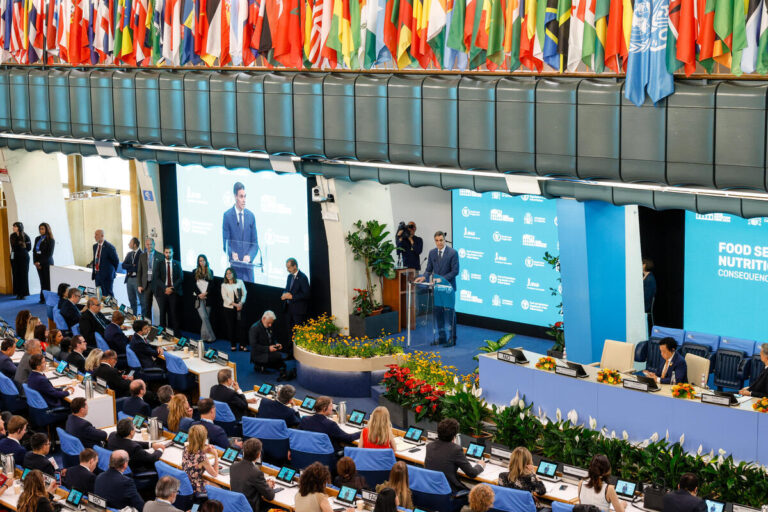
Photo by ©️FAO/Giuseppe Carotenuto.
FAO said the most significant impacts may emerge later as growers reduce planted acreage or fertilizer applications because of higher costs and tighter supplies.
The agency urged governments to avoid export restrictions on fertilizers and other agricultural inputs, warning that such measures could intensify shortages and market instability. FAO also encouraged countries to support alternative production strategies, including intercropping, improved nitrogen efficiency, and crops less dependent on synthetic fertilizers.
"We must act early before humanitarian and economic costs rise," the Director-General said.
FAO said it has expanded monitoring and coordination efforts through mechanisms including the Agricultural Market Information System (AMIS), while also mobilizing technical support in response to the crisis.
The organization also called for additional liquidity support from international financial institutions to help growers and import-dependent countries finance the next production cycle.
*All images courtesy of FAO.
Related stories
Strait of Hormuz closure squeezes US farmers with soaring fertilizer costs










Subscribe to our newsletter