FAO calls for immediate action as Strait of Hormuz crisis squeezes farmers’ margins and raises food prices

 Add Fresh Fruit Portal to Google
During the 180th Session of the Food and Agriculture Organization of the United Nations (FAO) Council on Tuesday, Director-General QU Dongyu emphasized the profound impact of the ongoing crisis in the Gulf region on agrifood systems.
The representative called for a coordinated policy response and outlined the FAO's proactive measures to address the situation.
“Peace and stability are prerequisites for food security, and the right to food is a basic human right,” he said in his address.
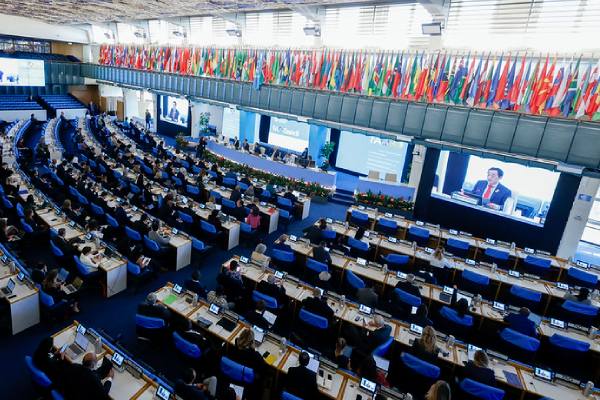
©FAO/Alessandra Benedetti
Qu emphasized that the closure of the Strait of Hormuz and other key maritime routes is sending shockwaves through global agrifood systems, resulting in significant disruptions to global energy, fertilizer, and agrifood inputs.
The Director-General pointed out that the fertilizer market is experiencing immediate shocks, with prices of Middle Eastern granular urea rising nearly 20 percent within a week. By mid-April, urea prices increased by 52 percent in the United States and 60 percent in Brazil.
An estimated 1.5 to 3 million tons of fertilizer trade per month have been delayed, jeopardizing agricultural productivity.
FAO raises the flag for agrifood systems
Qu highlighted four primary channels through which the conflict is impacting agrifood systems, starting with disruptions to food imports. The representative explained that Gulf countries rely on imports for 70 to 90 percent of their staple food supply, forcing shipments to incur higher costs and take longer routes to reach their destinations.

©FAO/Alessandra Benedetti
Likewise, Qu mentioned rising energy prices, which directly increase the cost of living and food prices for consumers. Higher production costs and consumer price sensitivity immediately shrink farmers’ margins, the representative said—rising energy and fertilizer costs are squeezing farmers’ profits, potentially lowering future crop yields.
The situation is compounded, the analysis continued, with lower remittance flows, which may cause households in South Asia, Southeast Asia, and Africa to face income reductions due to economic pressures in Gulf economies.
“The crop calendar is central to understanding the urgency of the fertilizer crisis,” the Director-General said. “Fertilizer applications must align precisely with planting windows that cannot be rescheduled without permanent yield losses.”
Countries heavily reliant on imports, including Bangladesh, which imports 53 percent of its fertilizers from the Gulf, face extreme risk. Iran, which depends on wheat and maize imports, is under severe strain.
FAO's analysis reveals that overlapping shocks from the crisis could escalate food price inflation and deepen hunger. In Lebanon, approximately 874,000 people face acute food insecurity, while over 17 million in Yemen experience high levels of food insecurity.
A call for a coordinated action
The Director-General of FAO urged a coordinated policy response, highlighting that immediate measures over the next 90 days would include: developing alternative trade routes, enhancing market monitoring, avoiding export restrictions on energy and fertilizers, and providing financial support for farmers.

©FAO/Alessandra Benedetti
In the medium term, the leader said focus should be on diversifying import sources and supporting vulnerable countries through emergency food aid, while long-term strategies should prioritize sustainable agriculture and renewable energy investments.
“We have the technical expertise; what we need now are the resources to act, in line with our mandate, before this closure has a catastrophic impact on our agrifood systems and on food security globally,” the Director-General said, adding that “history judges organizations not by the crises they predicted, but by the suffering they prevented.”
*All images by ©FAO/Alessandra Benedetti.
Related stories
FAO warns of severe global food security risks from disruption to Strait of Hormuz
Agronometrics in Charts: Strait of Hormuz disruption sends fertilizer prices skyrocketing 30 percent