Chemical ecology opens new alternatives to control native insects in organic blueberries
 Add Fresh Fruit Portal to Google
Writing and reporting by Macarena Bravo. | Lee este artículo en Español.
It’s no secret that global consumers are increasingly seeking healthier, more environmentally friendly foods. In line with this trend, organic production has grown exponentially.
In the search for gentler alternatives to address pests and diseases, chemical ecology has emerged as an innovative tool. The interdisciplinary field leverages the natural communication between plants and insects to develop more sustainable management strategies.
Against this backdrop, Ricardo Ceballos, lead researcher at the Chemical Ecology Laboratory at Chile’s Institute for Agricultural Research (INIA), is working alongside blueberry producer and exporter Agrícola Cato to assess alternatives for controlling and monitoring native insects that are becoming significant pests in commercial blueberry orchards.
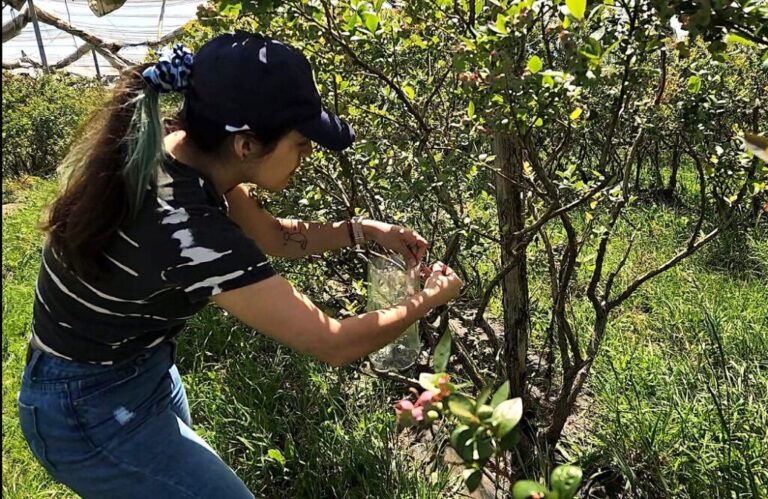
"Chemical signals predominate in nature; we seek to understand that language between insects and plants," Ceballos explained to FreshFruitPortal.com.
The researcher explained that chemical ecology uses compounds naturally present in the environment, known as semiochemicals, such as pheromones, attractants, and repellents, to shape the behavior of insects and other animals.
"Strategies based on chemical ecology do not generate resistance because they do not kill the organisms. Furthermore, they use substances that already exist in nature and have natural biodegradation pathways," Ceballos said.
Chemical ecology, climate change, and new pests
The researcher noted that climate change has driven fruit farming to shift toward more southern regions, altering agricultural ecosystems.
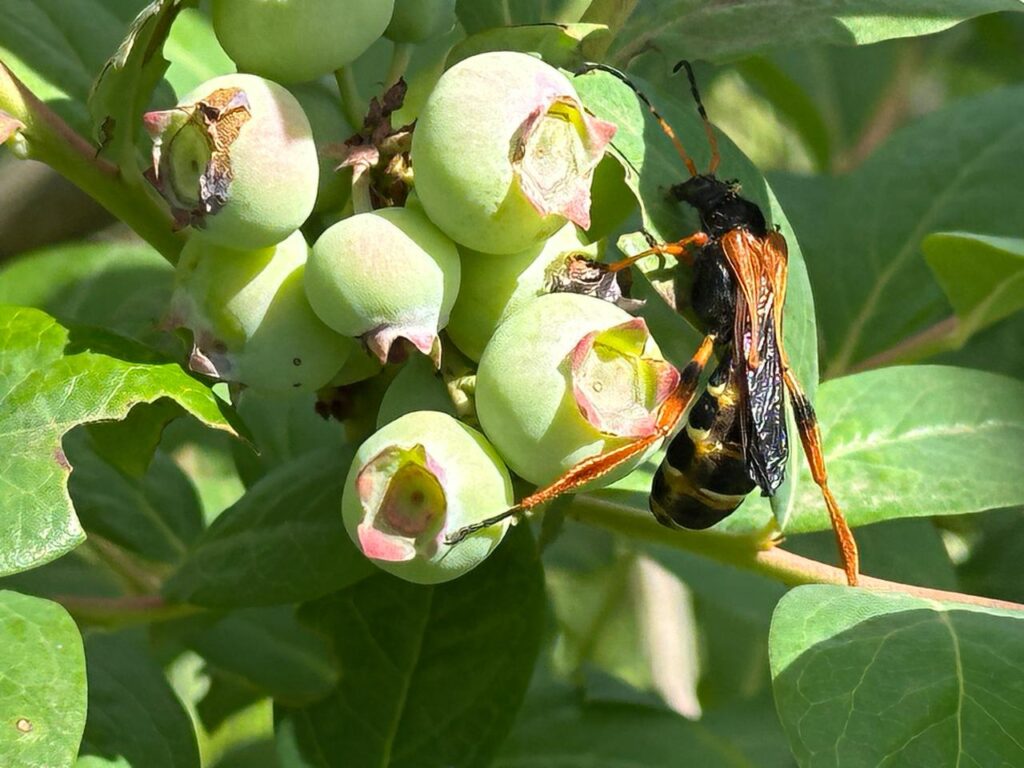
He detailed that this has caused insects that historically did not represent an economic problem to emerge as agricultural pests. Among them, Leptoglossus chilensis stands out. Known as the leaf-footed bug, the species currently causes concern in both blueberries and European hazelnuts.
"Many of these native species found a food source in the new crops that did not exist for them before. Today, we see that some have adapted very well and are causing significant damage," he noted.
Organic fruit production
The research aims to incorporate tools that meet the demanding standards of organic agriculture and establish scientific foundations for developing long-term technological solutions.
Ceballos detailed that this season, they will conduct the first field trials to evaluate two strategies simultaneously: identifying attractant compounds to develop trap-based monitoring systems and evaluating repellent substances to deter insects from approaching the plants.
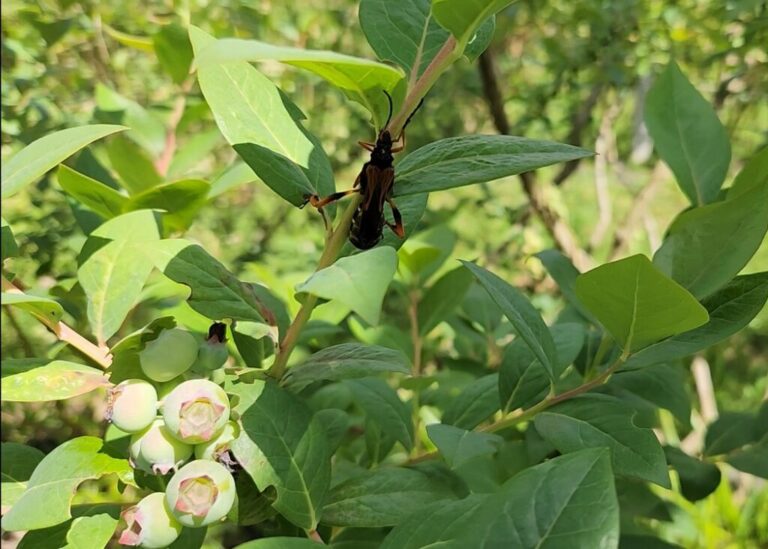
"Today, there is no specific monitoring system for this species. Detection depends on manual inspection by field workers. Our goal is to advance toward tools that let us know when the pest is present so we can make timely management decisions," he explained.
Research outlook
The study is in its initial stage, and early results should be available toward the end of the life cycle of Leptoglossus chilensis, between April and May of 2027.
Ceballos indicated that the research will be carried out in both organic blueberry and European hazelnut orchards in the Ñuble Region, one of the country's main production areas for both species.
The efforts aim to reduce monitoring costs, improve the timing of management decisions, and expand the availability of tools compatible with organic production systems in the future.
"Invasive species arriving from other countries usually come with a lot of scientific information. With our native species, the opposite happens: if we don't study them, nobody will. That is why it is so important to generate knowledge that allows us to anticipate the problems emerging in Chilean agriculture," Ceballos concluded.
*All photos courtesy of INIA.
Related stories
The biological revolution: Global biopesticide market set to reach $12.65 billion by 2031