Peru: Agrocitrus warns that El Niño could reduce Tahiti lime production by up to 40 percent
 Add Fresh Fruit Portal to Google
El Niño could reduce Tahiti lime production in Peru by between 30 percent and 40 percent in the next campaign, according to projections from local producer Agrocitrus.
The company’s General Manager, David Maticorena, told FreshFruitPortal.com the revised projection is the result of high temperatures recorded in the north of the country. Compounding the situation, technical reports indicate a high probability that El Niño will persist at a level ranging from moderate to extreme, resulting in higher-than-normal rainfall for the season.
"Lemon trees require cold hours to accumulate reserves and achieve adequate flowering. When that cold does not occur, production begins to be affected," he explained.
The main effects of the weather phenomenon should be felt in the next commercial season, whose export window extends between December 2026 and May 2027.

El Niño-proof limes
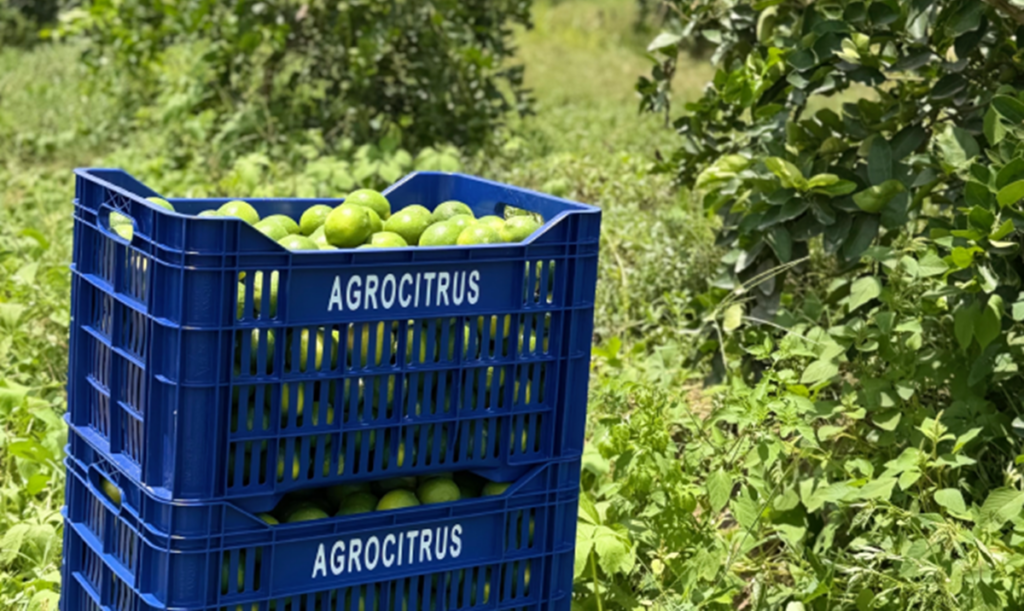
Ahead of the storm, Agrocitrus is preparing by working closely with its associated producers, who account for a large share of the company's marketed volume.
Measures include more intensive agronomic management and improved drainage systems to withstand potential floods. Additionally, the company is developing a preventive program to apply fungicides and reduce the incidence of diseases such as Phytophthora, a fungus that thrives in excess humidity.
"The advantage of the lemon is that it is a fairly noble crop. With good agronomic treatment and preventive measures, it is possible to mitigate part of the impact. Today, we are permanently monitoring flowering, because it will be decisive in defining the final volume of production," he noted.
The executive noted that Agrocitrus provides continuous technical support to its associated producers. Their teams, he said, periodically visit fields to assess crops and offer recommendations to reduce risks in the months leading up to heavy rain.
Navigating weather challenges
Beyond production, Maticorena says his company’s biggest hurdles will be in the post-harvest stage and in export logistics.
Heavy rains forecast for northern Peru could hinder transport from the fields to packing plants and, subsequently, to shipping ports. At the same time, excess humidity increases the risk of diseases affecting fruit quality during storage and transport.
"We shouldn't just worry about producing more fruit. We must also ensure that it arrives in optimal condition at international markets. Post-harvest processes will be much more demanding and will require greater technical sophistication," he stated.
Despite the climate projections, Agrocitrus says it is already working with its clients abroad to ensure commercial commitments are met.

The company has prioritized commercial programs with regular clients and maintains supply agreements for its main destinations. The United States remains its biggest market for Tahiti limes, favored by the commercial window that opens when the Mexican supply decreases.
Maticorena said Central America accounts for about 35 percent of the firm's exports in the lime category, while Chile remains a strategic market due to its proximity.
"The most important thing for our clients is to have a continuous supply and quality fruit, regardless of the price fluctuations that may occur," he stated.
The Agrocitrus executive added that the challenges posed by abnormal weather are an opportunity to demonstrate the level of development reached by Peruvian agro-exports.
"The sector has grown and become more technical. Today we have better tools to face these types of events. It is an opportunity to show that we are capable of maintaining quality, fulfilling our commitments, and continuing to supply international markets even under complex climatic conditions," he concluded.
*All images courtesy of Agrocitrus.
Related stories
Hawai’i lime growers are closer than ever to ship Persian lime to the US
Opinion | The Latin American neighbors want good fruit
Global lemon and lime production to dip in 2025/26 as EU and Türkiye face yield losses