
NZ: "There are no silver bullets" in organic apple farming, says Bostock exec


One of New Zealand's top organic apple producers may not yet be able to match conventional yields, but is also in the convenient position that it cannot keep up with growing demand either.

Speaking with Fresh Fruit Portal, Bostock New Zealand director David Brasell said the company had an investment plan that mostly involved the replacement of old varieties and trees, as well as opening up some new production ground.
"Organic production in New Zealand is growing, not in huge leaps and bounds, but growing steadily and our own business is probably growing most of that," he said.
"We’re seeing increasing demand for our apples around the world and we’re currently not able to meet that demand.
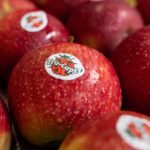
"In our replacement program we’re moving away from things like the standard Fuji towards the high-color strains, and it's the same with Pink Lady, planting the high-color Pink Lady varieties - really these days it's about yield and the markets are demanding a high color standard," he said.
Brasell emphasized most of the new varieties released to the industry were higher yielding, but greater output could also be achieved through improved farming practices.
"With the dwarfing and semi-dwarfing rootstocks, and intensive plantings, we’re getting higher yields anyway just as a symptom of the newer growing practices that have been developed and have been in place the last few years," he said.
"We’re not matching conventional yields and that’s mainly around fertilizers to a great extent - nitrogen fertilizer. Conventional growers can use that but as organic growers we can’t, so therefore we are at a disadvantage for yield."
He said Bostock New Zealand had a team on the ground doing growing practice reviews and trying new developments, and meanwhile science, technologies and growing methods from around the world continued to aid production.
"Conventional growers, to their credit, are improving as well. Everybody’s stepping up," he said.
"I guess it’s a gradual learning process – there are no silver bullets, there’s no one thing that changes the world. We have some particular pests, native pests, in New Zealand that are hard to control and we’ve developed new methods of controlling them.
"Every year we refine that and improve it a little bit, and in terms of the organic fungicides we do use, the time we use them, how they’re used, and that can have a big effect on yields."
Without the same "toolbox" that's available to conventional growers, organic farmers like Bostock New Zealand need to find a balance from what nature throws at them.
"Every year it’s different – a particular pest might do better one year, or there might be rains in the spring. We have to adapt," he says, adding the group also uses mulch from cropping and compost as much as possible to keep organic matter in the soil and keep micro-nutrients in balance."
Market outlook
Even though Bostock has a strong business in North America - for example with the Diva apple variety that garners "comments from individual consumers emailing us and saying they love it" - much of the varietal replacement has been focused on apples tailored to the palates of Asia.
"We shouldn’t fall into the trap of talking about Asia, we should be talking about individual countries," he said.
"We’ve got a really strong business for organics in Taiwan, we’ve got business in Singapore, a growing business in some of the other South East Asian countries, and we’ve got a developing business in mainland China.
"So right across Asia we’re seeing growth in organics – we’re seeing concerns about food safety, particularly children’s health has come to the forefront as those economies become stronger and people become wealthy and can afford to make those decisions."
He said there had been rapid growth in the mainland Chinese market over the last couple of years.
"They’ve had their own certifications so we’ve had to get certifiers from China down here to check that what we’re doing does meet their organic standard, and it does – we’re one of only two produce businesses in New Zealand certified for China.
"That was a significant hurdle - we’re over that now and we’ve got both online retail and bricks-and-mortar stores taking our organic fruit," he said, confirming organics were obtaining a premium over conventional produce in the market.
The newest varieties
Bostock New Zealand is a major shareholder in pome fruit variety management group Fruitcraft, which is also partly owned by Freshmax and Mr Apple.
Brasell was upbeat about the recent release of Dazzle, as well as several others that are soon to be out of the blocks.
"With Dazzle our intention is to make it available to the wider industry, so it’s not going to be a tightly held club like a lot of the new varieties," he said.
"It’s going to be available to the New Zealand industry to grow and have critical mass. We think it’s an exciting new variety and we want to see it have critical mass beyond the owners of the variety.
"Another one we have is Premier Star which is new to the market and not yet available in organic - we've got some available conventionally," he said.
Bostock only grows organic fruit but does source some conventional apples from other growers. In any case, the cultivar discussion relates more to Fruitcraft than to Bostock specifically.
"We’ve got another couple where we’re still working on brand name, which at this have only got numbers. We’ve got two more that are coming to market as we speak," he said.
"We’re just sitting down here in New Zealand in our little corner, happily 'organicking' away - the markets are receiving the fruits well. It’s been a good season, we had a little bit of rain that slowed us down at harvest but we’re catching up now."
Photo: Fruitcraft




Subscribe to our newsletter