
University of Maryland researchers develop apples resistant to climate change


University of Maryland researchers have developed two new apple varieties designed to withstand some effects of climate change, inspired by changes in Maryland’s weather.

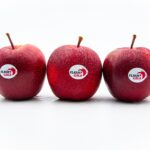
The two apples, a yellow one called MD-TAP1 and a red one called MD-TAP2, are heat-resistant, easy to grow and harvest, and show improved resistance to diseases triggered by warmer temperatures.
MD-TAP1's parent is GoldRush, and MD-TAP2's parent is Fuji, explained researcher and Emeritus Professor Chris Walsh. Gala was used as the initial pollen parent for its heat-tolerant features. “Even though Gala matures in August, they take the heat, they stay firm, and they’re flavorful,” Walsh said.
Walsh’s project began with the need for an apple that could thrive in a warmer climate, as he noticed that apple varieties from most U.S. breeding programs were developed for cooler weather.
“At some point, folks in this area were growing primarily Red Delicious and Golden Delicious—those were the backbone of the Mid-Atlantic region,” Walsh said. “But after Alar was pulled from the industry, people couldn’t sell Red Delicious apples. A lot also had to do with consumer preferences.”
As the apple industry faced these changes, Walsh’s team began searching for new varieties suitable for Maryland’s warmer summers. The project’s focus eventually shifted to creating apples that could adapt to climate change, expanding the requirements for the fruit.
Pruning, a costly and labor-intensive task for apple growers, is simplified with these new apples. Both varieties are bred to grow in a compact shape that Walsh described as “the tree that fits in your mind’s eye,” meaning a central, upright trunk, a narrow canopy, and well-spaced limbs “so that you’re not constantly having to cut limbs out that are competing with one another.”
The apples also show tolerance to fire blight, a bacterial disease common in apples and pears.
Currently, four nurseries are evaluating MD-TAP1 and MD-TAP2 for future growth and sale, though it will likely be about five years before they appear in supermarkets. “Before you see them in the supermarket, it’s at least five years away,” Walsh noted.
The ultimate goal, he explained, is to provide heat-resistant, flavorful apples that ease labor demands for growers and resist bacterial disease. First and foremost, however, is creating an apple that is both easy to produce and market-ready.
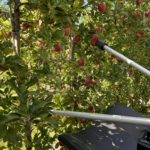
Photo courtesy of University of Maryland



Subscribe to our newsletter