

Michigan asparagus industry enjoys strong season despite challenging early year weather
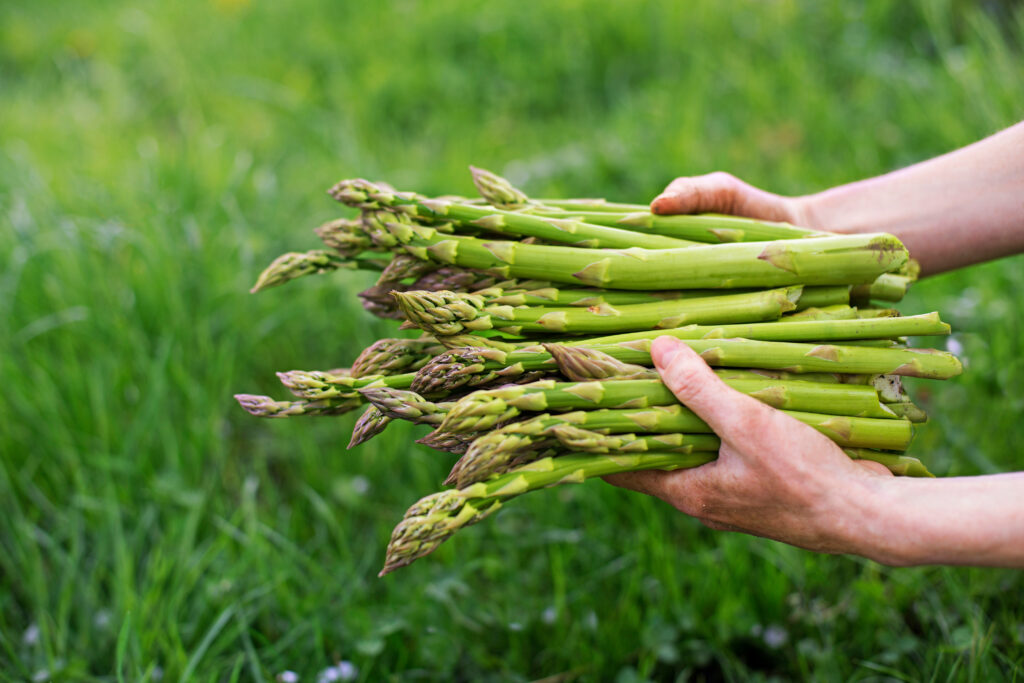

The Michigan asparagus industry experienced a notably successful season in 2025, despite challenging weather conditions early in the year. Michigan Asparagus Advisory Board (MAAB) Executive Director Jamie Clover Adams confirmed that the harvest volumes surpassed expectations, attributing the success to both good crop management and favorable weather patterns.

“Our growers grow for both the fresh market and for the processed market,” she told FreshFruitPortal.com. “That gives growers flexibility to gauge market demand and move product accordingly. We had a very strong processing season this year, which also contributed to the overall positive outcome.”
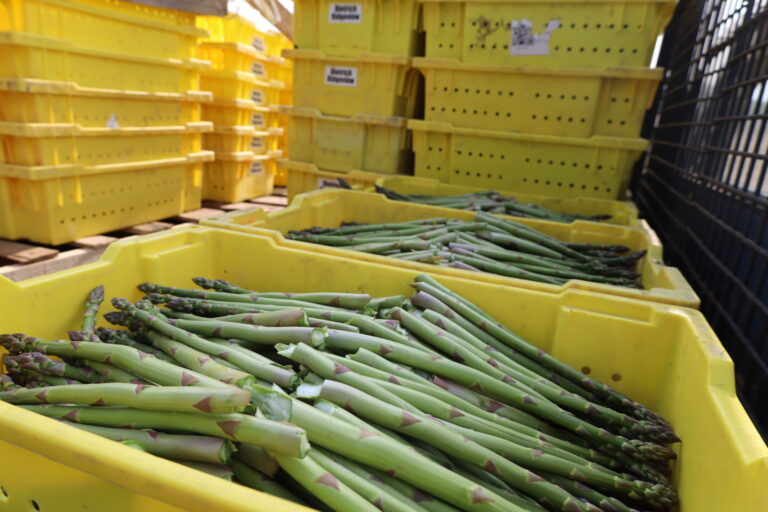
She noted that the sector has continued to consolidate itself, with fewer small farms and more larger operations, although overall volume remains stable. She credited the industry's resilience to growers’ practices that prioritize crop health, including careful disease management and maintaining quality yields based on the previous year's efforts.
Despite an initial cold period that hampered early growth, once warmer temperatures arrived, growers’ efforts paid off. Clover Adams stated, “It was a little challenging at the beginning because we were so cold and didn't get the heat units for the plant to grow. But I do think once the heat units came, the work that the growers did the year before really paid off.”
Michigan asparagus predominantly serves domestic markets, especially in the Midwest and parts of the South. The industry continues to see strong demand, driven by consumer appreciation for Michigan’s fresh, locally sourced products. “People really look forward to Michigan asparagus first thing in the spring,” Clover Adams said. “It’s the new year, it's the first vegetable of the season in Michigan, and that creates anticipation.”
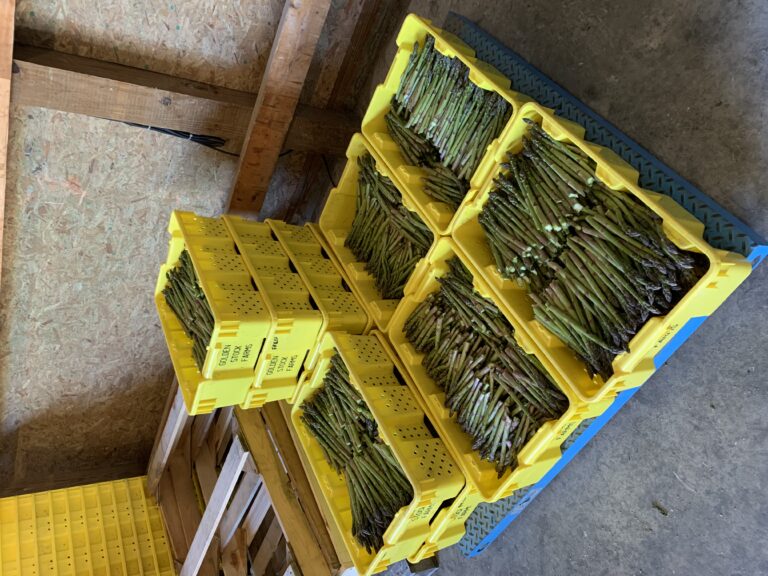
The industry's focus on quality and shelf life benefits consumers as well. Clover Adams highlighted that Michigan asparagus can be stored longer at home, making it a convenient choice for health-conscious shoppers. Approximately 60% of the crop is sold fresh, with the remaining 40% processed.
In terms of innovation, growers are increasingly adopting technologies aimed at sustainability and crop efficiency. One key development is the EnviroWeather system, developed with Michigan State University, which provides real-time weather data and disease risk assessments via field sensors. This allows growers to apply crop protection products more judiciously, reducing chemical use and enhancing sustainability.
“Growers can see real-time data and decide when to spray, which helps us use crop protection more wisely,” she said.
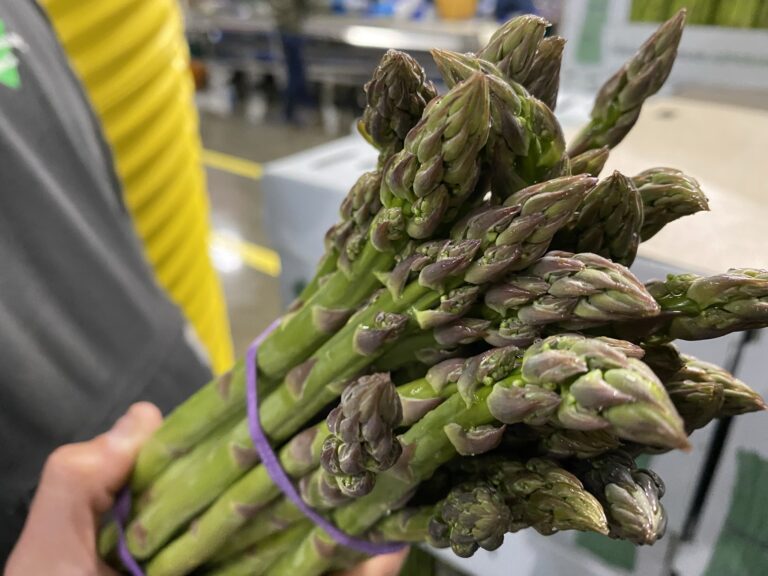
Looking ahead, Clover Adams identified opportunities for growth in the foodservice sector, where increasing consumer exposure to Michigan asparagus could bolster demand. She highlighted the appeal of asparagus in restaurants, noting that “when people try your product, their eyes get big and they go, wow, that’s so good.” She also pointed to evolving packaging options, with more retail outlets adopting bagged formats over traditional bundles to facilitate impulse purchases.
Upcoming marketing efforts, typically decided in December, aim to boost visibility and consumer interest, with collaborations expected between growers and retailers. “We always try to show the retailers that we’re doing things to try to get people to buy,” Clover Adams said.
*All photos courtesy of the Michigan Asparagus Advisory Board.
Related articles:
2025 Michigan asparagus season underway









Subscribe to our newsletter