
University of Florida study enlists local residents to fight the spread of citrus greening disease
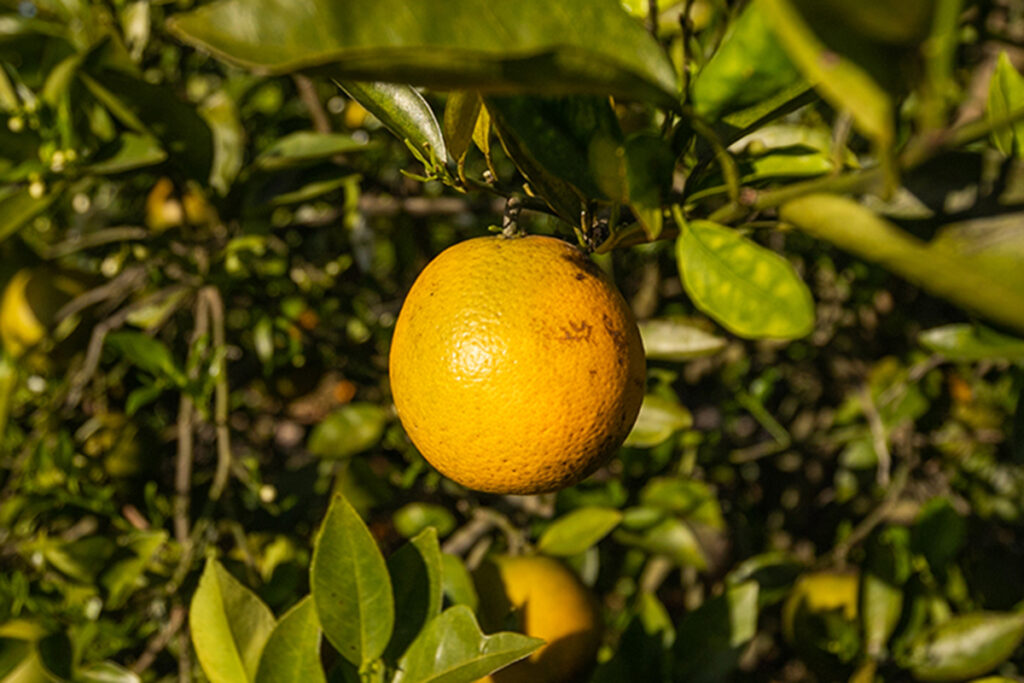



Containing the spread of huanglongbing (HLB), also known as citrus greening disease, is a task that, in the state of Florida, falls not only into the hands of industry leaders and scientists, but residents also play a key role.


In a recent study published in the journal HortTechnology, a group of researchers from the University of Florida (UF) worked with North Florida residents to train them on how to prevent the spread of citrus greening disease and what to do when identifying infected trees.
In association with UF Extension offices across the state, scientists from the university’s Department of Entomology and Nematology, as well as the Institute of Food and Agricultural Sciences, conducted a series of workshops to educate homeowners about the disease and its primary vector, the Asian citrus psyllid.
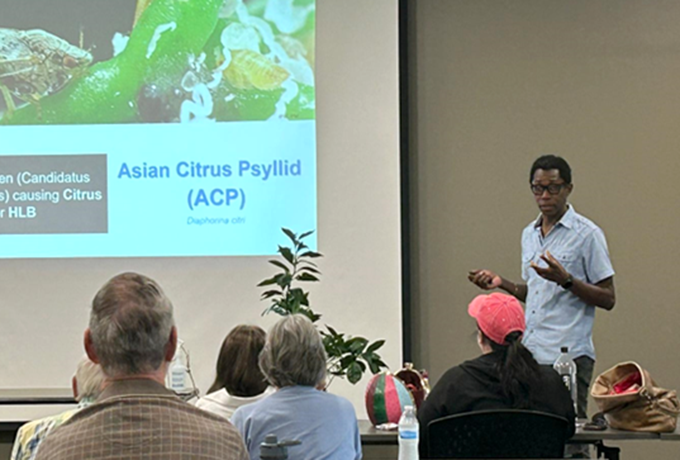
Photo courtesy of UF/IFAS and Xavier Martini
Xavier Martini, an Associate Professor in Entomology at UF, explained that the main objective was to educate Floridians about the disease, while also assessing residents’ willingness to take preventive action against HLB.
“A lot of people appreciated that they get the information about taking care of citrus, but also about what citrus greening is, what the issue with it is, and what to do with their trees,” he told FreshFruitPortal.com.
At the end of the workshops, a total of 71 Florida homeowners took a survey to measure the impact of the outreach initiative. The grand majority (93 percent) reported having increased knowledge about how the disease is transmitted, and 89 percent agreed to remove infected trees.
On the flip side, only around a third said they’d be willing to adopt preventive measures such as tree covers and reflective mulch.
Citrus greening disease—a threat to Florida agriculture
Citrus greening disease is no joke in the Sunshine State. The bacteria spread primarily through a bug called the Asian citrus psyllid, which proliferates in warm weather and specifically attacks citrus. As a result, infected trees will cease to bear good fruit and eventually die.
“There's been a huge impact on the citrus industry in Florida,” explains Martini. “Because of the disease, we have the total production of citrus that’s been decreased by 90 percent in a little less than two decades.”
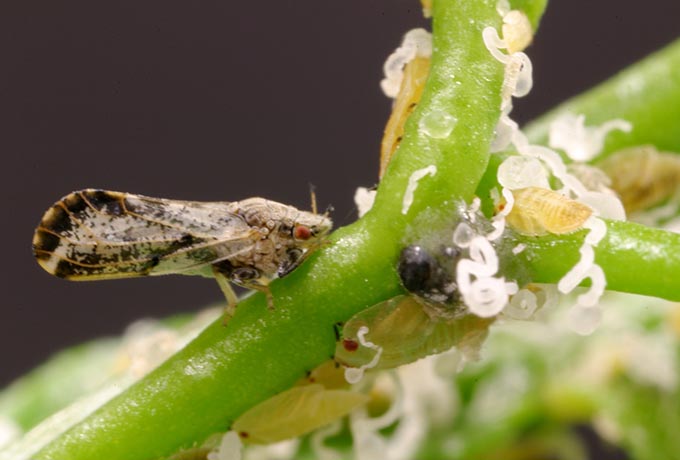
Photo courtesy of UF/IFAS
Southern and Central Florida, with their warmer climates, have been hit the worst. Northern Florida has been mostly spared from such dramatic numbers due to its milder weather and the reduced citrus-planted acreage resulting from the ever-expanding real estate industry.
However, HLB cases are still present in the area and have been reported as far north as Georgia, according to Martini. The landscape might be even grimmer, as climate change is moving colder winters further north.
The crucial prevention role of residents
In any other state, the nearly knock-out hit HLB has inflicted on Florida’s citrus growers could be considered an industry problem. However, the impact on the state’s economy has been significant, making residents highly receptive to outreach efforts both from educational institutions and the local government.
But between Floridians and their citrus, there’s a lot more than a financial relationship: “A lot of Florida residents like their citrus and have them in their backyard—it's a cultural thing,” says Martini.
The problem is that homeowners don’t necessarily tend to their groves as a farmer would. That means no insecticides, no constant monitoring, and definitely no knowledge of how citrus greening disease or the insect that spreads it looks like.


This, Martini explains, becomes a problem, as residential citrus trees can easily become reservoirs for HLB. These infectious loci can transmit citrus greening disease to other homes or even commercial groves by traveling on fruit, clothes, and even the wind.
The importance of pretty
Even though Floridians surveyed in the University of Florida study said they’d be willing to take action against citrus greening disease and appreciated being educated on the matter, there are still a couple of hurdles authorities will need to overcome.
First of all, there’s a learning curve to being able to identify the Asian citrus psyllid correctly, says Martini. Most participants were able to pinpoint the bug when looking at a photograph or through a microscope, but had a harder time distinguishing it from other bugs in the wild. Martini and his team of undergraduate and postdoctoral students tried solving this problem by bringing dead specimens to the workshops, but they’re unsure how people will manage when inspecting their own backyard.
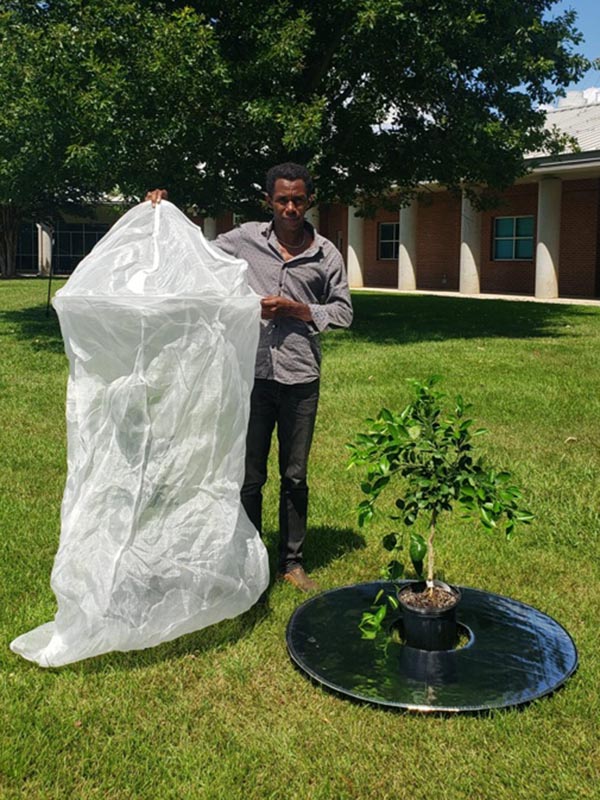
Romain Exilien is the lead author of the UF paper and conducted the workshops as part of his PhD. Above, he holds a tree bag, and the citrus on his left is surrounded by reflective mulch. Photo courtesy of UF/IFAS
Secondly, residents were not as enthusiastic about taking preventative measures such as netting (entirely covering trees in nets) or using reflective mulch. The reason is simple.
“They don't like it because it is anti-aesthetic,” Martini explains. “People like to have a citrus tree in their backyard, but they don't want it to be bagged.”
The “maybe” factor is also powerful. Martini says people have no problem with removing infected trees as they’re good as dead anyway. But netting them to prevent a disease that might potentially happen in the future and is not even as prevalent as it is in Central and Southern Florida—that’s a tougher sell.
“We’re asking a lot”
Some reticence is to be expected. After all, as Victoria Hornbaker, an HLB expert and Director of the Plant Health and Pest Prevention Services Division at the California Department of Food and Agriculture (CDFA), says, authorities are asking a lot from residents.
“We ask to come on their property to look at their citrus trees and look for Asian citrus psyllid, hang traps, cut fruit from their tree and leaves to see if they're infected with Huanglongbing or citrus greening,” she explains.
Still, Hornbaker agrees with Martini in that residents’ engagement with agricultural and health authorities is crucial to keep states’ crops pest-free.
“I'm very proud to say that we've had a very robust outreach and education program in California, and that has served us so well,” says Hornbaker, who notes that the CDFA has less than a 0.04 percent inspection refusal rate from local residents.
Meanwhile, Martini says there are no clear plans to continue with the educational workshops in Florida, but they’re responding and scheduling them as requests come in. The next one will take place in Seminole County, near Orlando.
Related stories
UF/IFAS explores new approach to combat citrus greening
South African citrus industry speaks out on new citrus greening accusations
Citrus greening study unlocks key genetic information and potential for faster varietal testing



Subscribe to our newsletter