








Peru's new agrarian promotion law aims to double exports and empower small growers


By Macarena Bravo | Lee esta noticia en Español

On September 11, Peru passed its new Agrarian Promotion Law, introducing significant changes to the local agricultural sector.
"This is a more powerful law than the previous one," said Gabriel Amaro, President of the Association of Agrarian Producer Guilds of Peru (AGAP), speaking with FreshFruitPortal.com. “It’ll be initially valid for ten years, extending its scope to the entire agricultural sector: agricultural, livestock, agro-industrial, and agro-export.”
Amaro says the new legislation has three fundamental focal points: restoring national and international investment, enhancing competitiveness and sustainability within the sector, and accelerating the integration of small growers into modern production chains.
An agrarian promotion law that expands production ranges
One of the central aspects of Peru’s new Agrarian Promotion Law is that it doesn’t modify current agricultural labor frameworks, including workers’ rights and legal protections.
Instead, Amaro says, the bill introduces structural incentives for growers to formalize labor practices, boost competitiveness, and enhance inclusion.
However, the AGAP exec is clear in that there is still work to be done: "The law mentions the promotion of technical education, research, and development, but does not develop them in depth."
Updating complementary regulations will be necessary in the future, he says, including the country’s cooperative law and agrarian family income law.
The great challenges of the agrarian promotion law
In Amaro's opinion, a persistent problem in Peruvian agriculture is the high level of informality, which affects more than 90 percent of the labor force. He says this is not the direct result of a lack of farmers’ will to reverse the situation, but rather an accumulation of deficient public policy.
"The new law recognizes this reality and proposes a systemic regulatory improvement as a solution,” he adds.
This regulatory improvement, he explains, takes the form of institutional reorganization within the Ministry of Agrarian Development and Irrigation, as well as other regional and local agencies.
The law also notably includes mechanisms that guarantee the legal security of agrarian property. This is especially relevant for small producers.
"The law develops articles to formalize the possession of land for agricultural purposes, which was an urgent request from the sector," says Amaro.
Inclusion of small producers and projection
Contrary to what some might think, Peru’s new agrarian promotion regulation is not designed only for large companies.
"The small producer is a key piece in this law," says the guild representative.
Tax-wise, those who invoice up to 30 UIT (Peru’s government-set reference tax unit equivalent to a little over $1,500) per year are exempt from income tax, and those between 30 and 150 UIT pay only 1.5 percent.
Amaro says that the new law promotes associativity, access to financing, incentives for larger companies to integrate small producers into their chains, and a boost to state purchases from small farmers. The executive points out that this will lead to robust industry growth.
"We hope to double Peruvian agricultural exports in the next 10 years, with ambitious profit goals aiming at $50 billion,” he says.
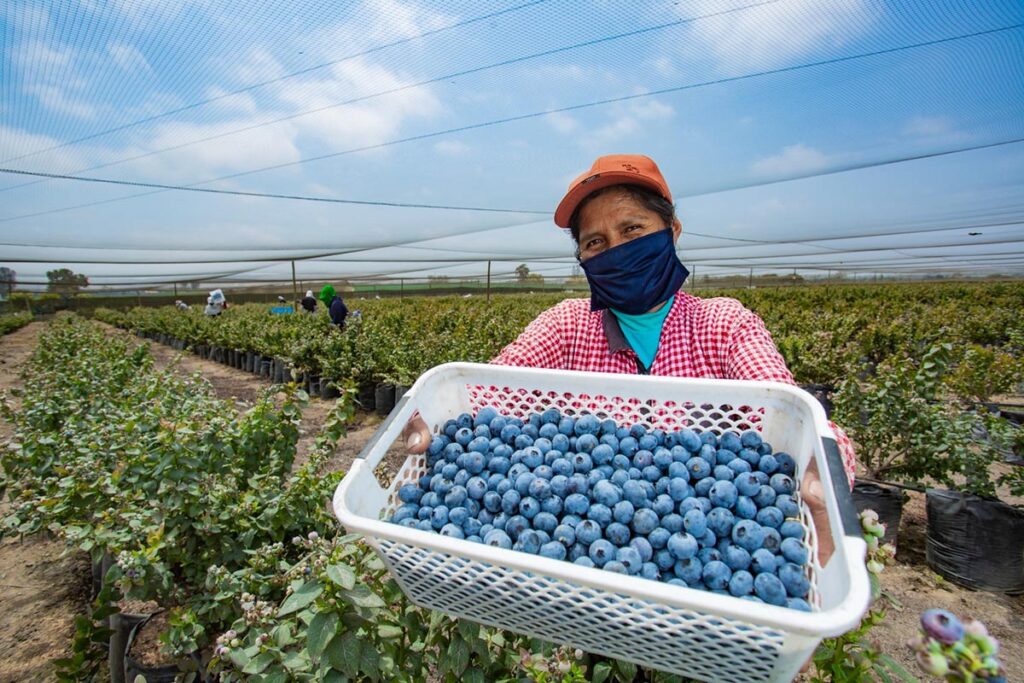
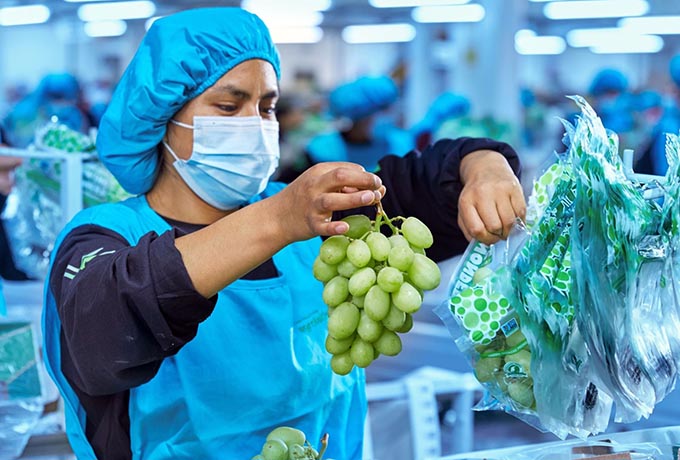
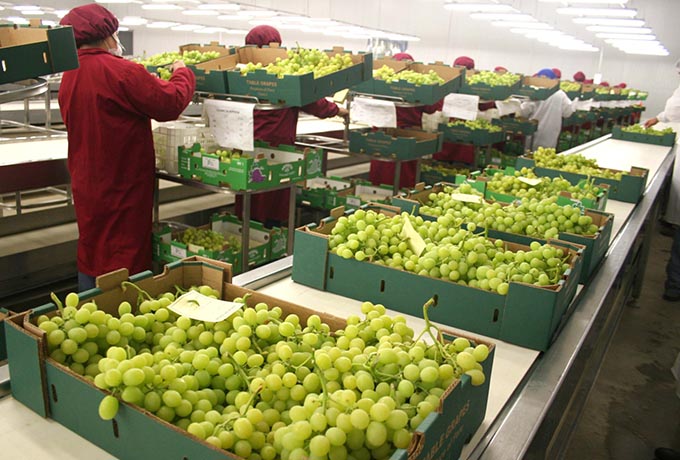
When asked about the growth potential of the Peruvian fruit industry, Amaro is clear: the categories with the best projections are blueberries, table grapes, ginger, avocados, and pecans, as well as emerging crops such as raspberries, kiwi, and persimmons.
"We are working intensely on opening new markets, especially in Asia," he added.
Monitoring of the agrarian promotion law
Gabriel Amaro states that AGAP plans to implement a continuous monitoring system to assess the law's impact, in addition to making evidence-based proposals for complementary regulations.
"Every year we will measure the effects and accompany the Government in this process," he says.
In the eyes of some, Peru’s upcoming 2026 presidential election may raise a question mark over the future of the new agrarian promotion law and the Andean nation’s booming agricultural sector.
However, Amaro is confident in his country’s solidity and the stability of its institutions even in times of crisis: "With this agrarian promotion law, Peru can resume sustained economic growth of more than five percent annually."
"Bet on Peru,” he says. “Agriculture has immense potential and we are on the right track."
Related stories
Peruvian government to unveil new measures to boost agro-exports




Subscribe to our newsletter