







Dried, not tired: Smaller California prune crop sparks big growth strategies
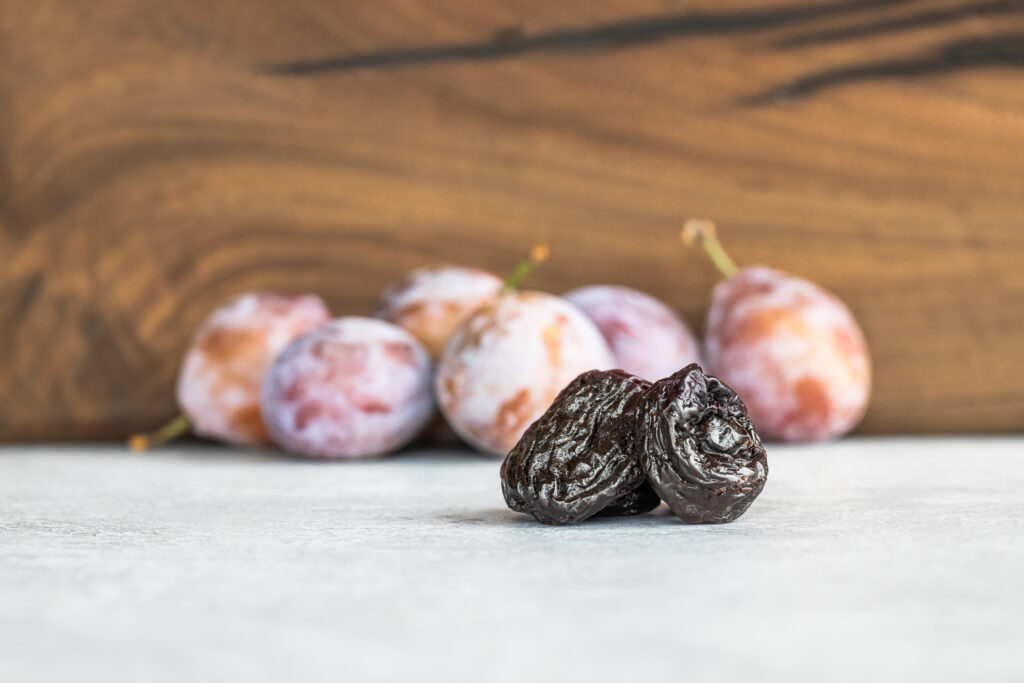



This year’s harvest may be slightly below average volumes, but the dip is not stopping the California Prune Board (CPB) from going all out with curated marketing strategies and varietal development. Last year’s production, as reported by handlers in September, reached 76,413 short tons, with 2025's coming in at an estimated 65,000 short tons.

As for supply constraints, Executive Director Donn Zea tells FreshFruitPortal.com that the sector relies on strategic inventory balance to address any shortfalls.
“Our crop is about 15 percent smaller in total tonnage than we would expect in an average crop. Last year, we came off a little above average,” he explains. “We have a large brand in Sunsweet, and we have a couple of larger handlers, Mariani being one of them.”
Despite being approximately 65,000 tons short, Zea is clear in saying the restraint is “not problematic,” as the industry is in a “position of balance.”
“We believe we are one of the few, if not the only, producers of prunes in the world that intentionally carry a certain amount of inventory for our year-round customers,” he says.
A finely tuned strategy
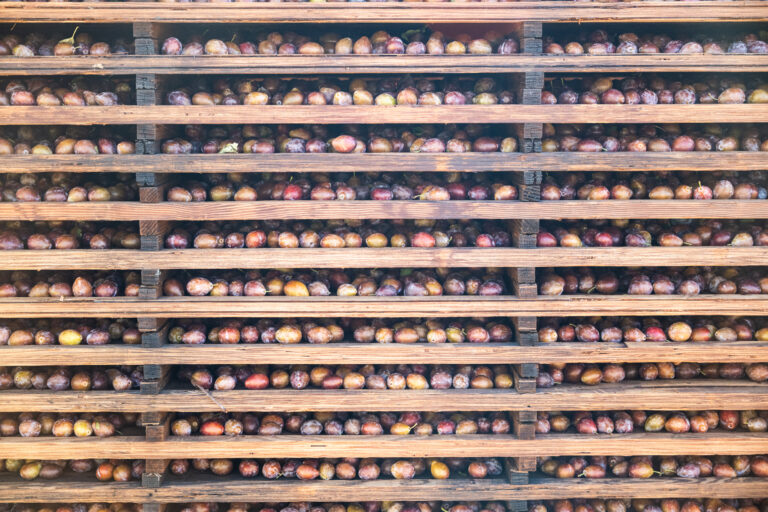
The CPB is committed to balancing supply with demand through strategic marketing and ongoing crop research. A roadmap, Zea says, that requires constant communication across the California prune supply chain.
“It's a constant dialogue in our committee system and at our full board level. We try to ensure that our acreage is not over-expanded, especially as older orchards become less productive,” he says.
The sector’s planting area remains around 36,000 to 38,000 acres, with ongoing replanting focused on replacing older trees with highly productive ones.
“We don't want people necessarily planting additional acres of prunes,” Zea stresses. “If you're going to get into the prune business, you'd better have a handler that is agreed to buy your product four or five years from now.”
The industry faces competition from countries like China, Uzbekistan, and South American producers, benefiting from lower input costs. Trade issues, particularly tariffs in Europe, remain a concern, but exports showed a slight year-over-year increase.
“Our product speaks for itself, but we need every opportunity to get prunes in people's mouths versus others,” he says.
On the topic of trade duties, Zea says that the California prune sector has a “split mind.”
“We were having to pay tariffs just about everywhere other than Japan and Korea, Mexico, and Canada, which are really important markets for us,” he explains. “But in Europe, our 9.6 percent tariff against others' zero tariff has taken its toll.”
This became an added impediment to what was already, in cases like Germany and the UK, a price-driven market. “So, if we can get better trade deals, then we're all for it,” says the executive.
Plum new prospects: New varieties and innovation
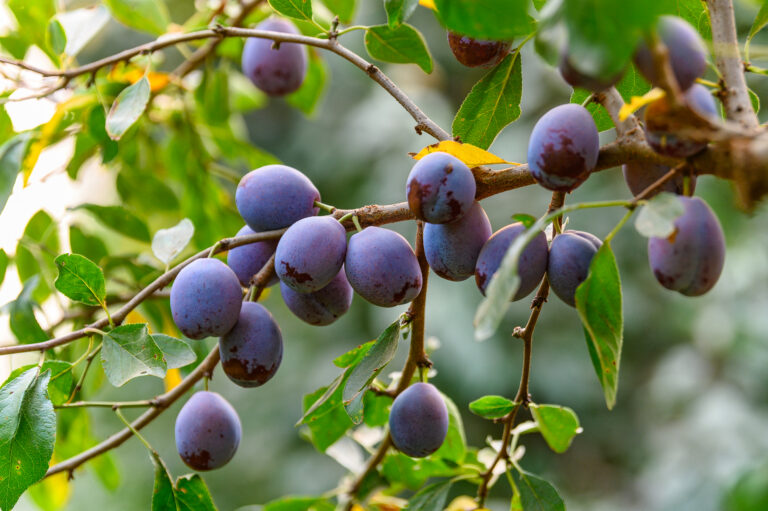
The board’s varietal development program, initiated in 1986, continues to produce new cultivars like the recently developed YOLO Gold.
“Our new selections are judged on a number of different things—flavor, color, crop production, and how they can help reduce costs,” Zea says.
The board spends somewhere between $300,000 and $500,000 a year just on crop research, according to Zea. Currently, growers are trialing about sixteen new varieties with the CBP’s support to manage potential risks.
Beyond new cultivar development, the industry relies on technology to continually improve margins for growers and their families.
“Our irrigation technology, just like the rest of California, is top of the line, and we see people making investments all the time in that area,” Zea says. Additionally, “ground cover and creating orchard microclimates” to improve efficiency are also among the state’s efforts.
“We're also doing dryer technology research for less energy use in the facility itself, as well as by letting them dry longer on the tree through our varietal development,” he adds.
Engaging consumers with the California prune quality
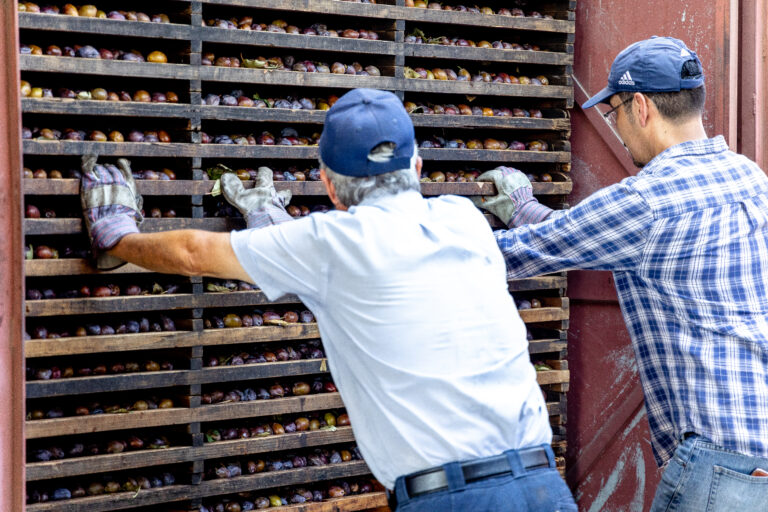
Promotion efforts are predominantly digital. Zea explains that the CPB uses social media, influencers, and targeted campaigns across markets. This is especially true for Japan, the state’s top export destination, where traditional media like television is supported with online content.
“Our messaging on health benefits and nutrition is embedded in every activation,” he states. The board seeks to expand awareness among younger audiences to broaden prune consumption beyond snacks, and incentivize their use in baking, sauces, and as ingredients in different preparations.
Zea acknowledges an ongoing “prune stigma,” mainly due to misconceptions about sugar content. But the perception challenge only fuels the CPB’s determination to combat prejudice with scientific evidence. Efforts include research into gut and bone health, as well as cardiometabolic impact.
“In every clinical trial, we're always looking at the various markers that would look at not only sugar content, but any kind of impact on people with glycemic issues, etc.,” the executive explains. “So we know that there is no negative impact with respect to the natural sugars in prunes as compared to something that might have added sugar.”
The California Prune Board holds multiple meetings throughout the year to educate consumers on the benefits of prune consumption, including an upcoming December nutrition conference.
*All photos courtesy of CPB | Photography by Alycia Moreno for CBP.
Related stories:
Prunes may support cardiovascular health




Subscribe to our newsletter