
Expert insights on how to build a successful premium Australian apple brand in China

This story was originally published on Apple and Pear Australia Limited (APAL)’s website on January 7, 2026.

APAL chatted with Jonathan Cox about the opportunities for Australian apple growers in China, his insights into Chinese consumer behavior, and the key to a successful marketing strategy to help capture space in a premium market.
Cox’s relationship with China began at the age of five, when his parents (volunteers and philanthropists) moved to Hong Kong. Since then, he has lived in China for over 10 years, studied at a Chinese university, and eventually created Stratforms, a company that launches, manages, and distributes brands and their products into the Chinese market.
Understanding the premium Chinese market
With China as the world’s number-one importer of fresh fruit, it’s easy to assume that the appetite for Australian apples and other produce is unlimited. But the situation on the ground is more complex.
The first thing to understand, says Cox, is that an imported Australian apple or pear sits firmly in the premium product space.
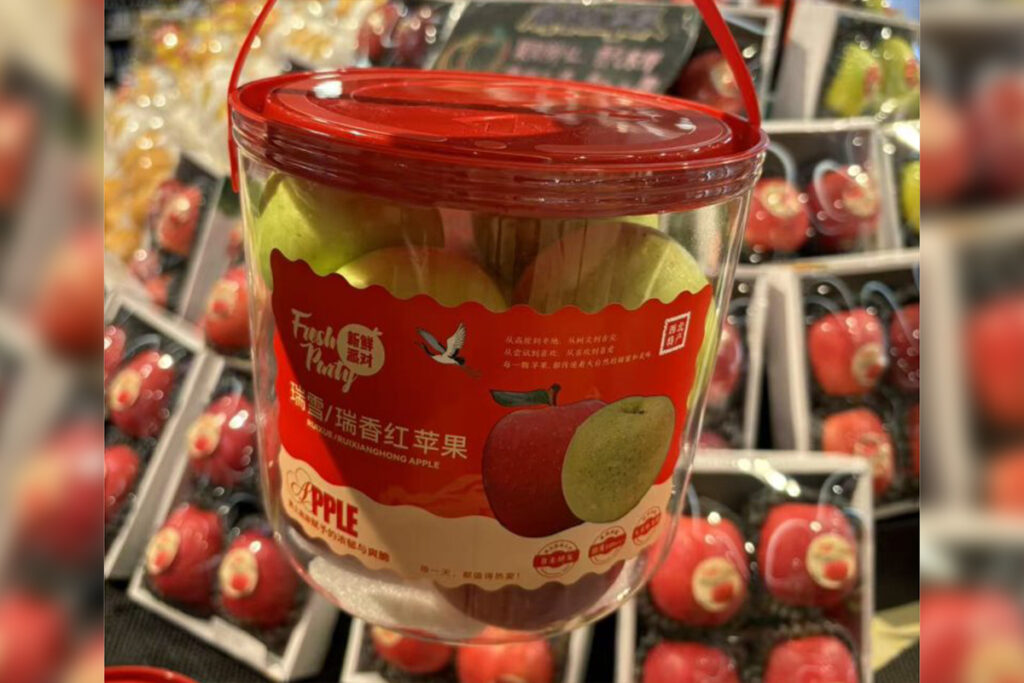
“Australian produce, in general, is highly regarded. We’re not a rice bowl—we’re a gourmet deli,” he explains. “But in the long term, this means we need to be sophisticated in maintaining our premium positioning with quality and branding.
The executive added that the size of the prize for Australian apples is significant, but success is not easy, and the country can expect competition from other markets, as well as a margin squeeze and investment needs.
Australian apples: Only the wealthy?
Only the wealthiest Chinese consumers are likely to buy premium Australian apples and fruit. Due to China’s vast population, the affluent segment of society is several times larger than its Australian counterpart, but does this mean the market potential is immense?
It’s complicated, says Cox.
“China is the most overestimated market in terms of potential consumers for your product. But it’s also the most underestimated in terms of understanding consumer complexity,” he says.
Cox cites a well-known Tasmanian cherry brand that retails in China at up to an eye-watering AUD $200 per kilo.
“They have worked hard to create something that high-end Chinese consumers want,” he explained. “The cherries that go to China are only 22 percent of the Australian yield: highly quality-controlled, large, juicy cherries are chosen so they can command that price point and position. If they sold cheap and cheerful cherries as an everyday purchase, there is no way they could sustain that premium figure and market position.”
The path from premium to staple
Beyond special occasions such as the Lunar New Year, the Holy Grail in China is for a premium product to become an everyday purchase for these target consumers.
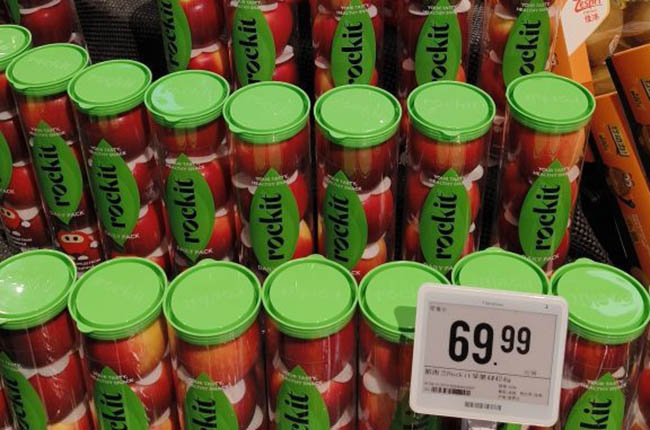
The executive mentions success stories with Zespri™ kiwifruit, Driscoll’s® berries, and New Zealand’s Rockit™ apples.
“Rockit is doing extremely well after a concentrated effort to create that brand,” Jonathan said. “It’s seen as a premium, healthy, everyday product, and extremely active in China, where it sells at ¥70, or about AUD $15 for a tube of four apples.”
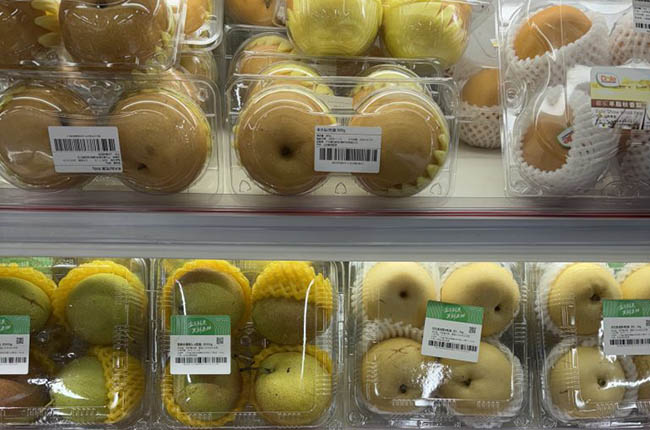
When it comes to provenance in the Chinese market, should growers build their brand around states or growing regions?
“In my experience,” Cox said, “Chinese consumers only want to know an apple is from Australia. They don’t understand or care about more detail than that and see no differentiation between our states or growing regions, but Australia itself is a strong, premium brand in the target market.”
However, it still pays to include a provenance story on a QR code. The executive explains that even though only between one and two percent of consumers scan QR codes, having them on the packaging of Australian apples and other products provides a higher level of confidence and seems to discourage counterfeiters.
“The rare scans go through WeChat, so the best approach is to create a mini website within the platform that explains the provenance, story, and variety, but again, Australian apples should be the headline,” he concludes.
The key to doing business with Chinese importers
Jonathan estimates there are only around 20 to 50 vetted importers of short-shelf-life fruit and vegetables in China, with significant crossover across industries and categories.
Due diligence might involve speaking with other exporting fruit industries (such as cherries), speaking with Austrade or state equivalents, or meeting with the biggest Chinese supermarkets to discover who they buy from.

“Chinese importers, on the whole, are genuine, pragmatic, business-minded, and honest,” he said. “Their pragmatism is the key to understanding how to work with them. You need to offer a good price for the value you’ve created. Be honest and trusting of them, and they will reciprocate that.”
Remember, however, that you are vying for the attention of Chinese importers and distributors.
“They’re not just sitting there waiting for Australian apples to show up. They will be importing from all around the world. Sometimes we can be insular in our thinking, which is why we need to focus on the message: what are we bringing to the table?” Cox adds.
Further to this point, relationships with importers and distributors need to be cultivated and consistent. This means ‘skipping a year’ would be a very poor strategy for Australian apple producers, even if domestic prices are good.
“I would say that if you’re trying to build a brand in China, withdrawing supply for a year would really blow a hole in your plan. Others would take up that space and form relationships,” the executive concludes.
Related stories
Australian summer fruit growers anticipate excellent season across all states
Australia Cherry Growers five-year trade plan puts quality over volume
First commercial shipment of Australian blueberries lands in Vietnam










Subscribe to our newsletter