






Researchers advance Argentinian blueberry genetics to develop local weather-adapted cultivars and boost competitiveness
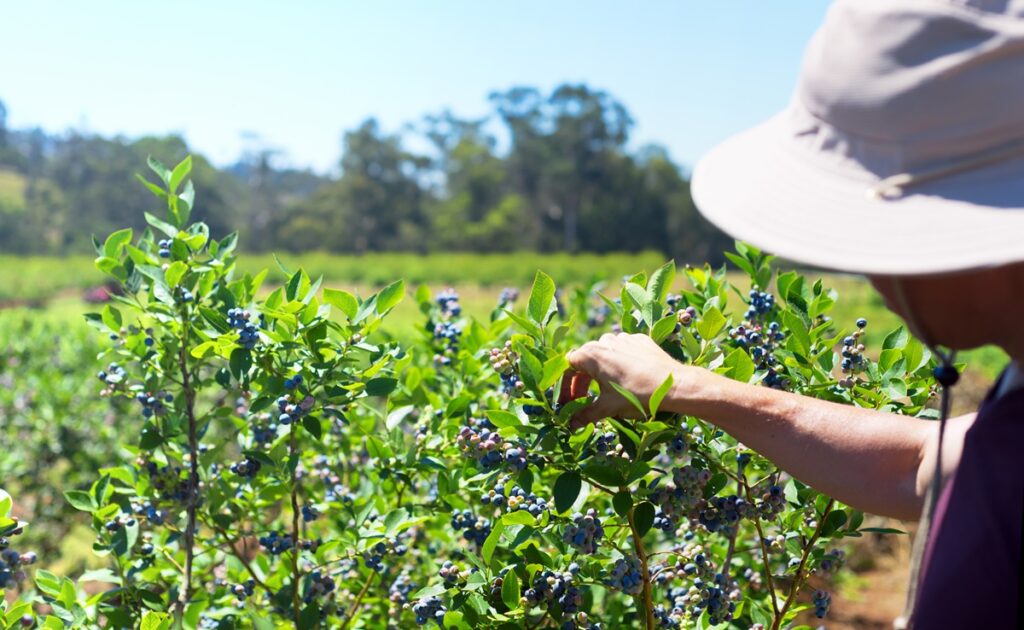

The National Institute of Agricultural Technology (INTA) in Concordia is advancing an Argentinian blueberry genetic enhancement program to identify and develop new varieties adapted to the agroclimatic conditions of the Argentine Northeast.

These efforts respond directly to the productive sector's demand for cultivars that combine early production, fruit quality, and good post-harvest life.
“The goal is to generate varietal alternatives that fit the conditions of our region and respond to the needs of the producer and the market,” said José Recalde, research fellow at INTA Concordia.
Argentinian blueberry genetics
Since 2021, the INTA Concordia Agricultural Experimental Station has crossed and selected genetic material to expand the varietal range of Argentinian blueberries adapted to local production systems.

In 2022, the program was strengthened by the incorporation of a doctoral scholarship co-financed by the country’s National Scientific and Technical Research Council (CONICET) and the Argentine-Uruguayan initiative, Salto Grande Mixed Technical Commission. The objective is to study the reproductive biology of the Argentinian blueberry and generate knowledge applicable to the improvement of the species.
So far, progenies have been obtained from locally established parents, selected for their productive and commercial potential. Within the framework of institutional projects and agreements with private companies, the team installed nearly 2,800 plants in the field for evaluation.
The process is developed collaboratively between the public and private sectors, with INTA producing progeny and seedlings, which are then planted in the fields of associated companies.

“The commitment of the private sector has been key, since producers actively participate in the maintenance and monitoring tasks of the plants,” Recalde emphasized.
Currently, the technical team has begun evaluating the first installed populations, with the aim of identifying outstanding individuals for their yield, fruit quality, and adaptation.
In the next stages, the work will focus on selecting and multiplying the most promising genotypes, incorporating more detailed evaluations on field behavior, production time, and fruit firmness.
*All images are referential.
Related stories
With record numbers, Argentina leads global peanut exports
Groundbreaking cherry harvest in Argentina's Jujuy Valley creates new market opportunity
How Milei's policies and global trends are reshaping Argentina's citrus export landscape





Subscribe to our newsletter