

Berry growers in North and Central Florida face the devastating effects of the latest cold snap
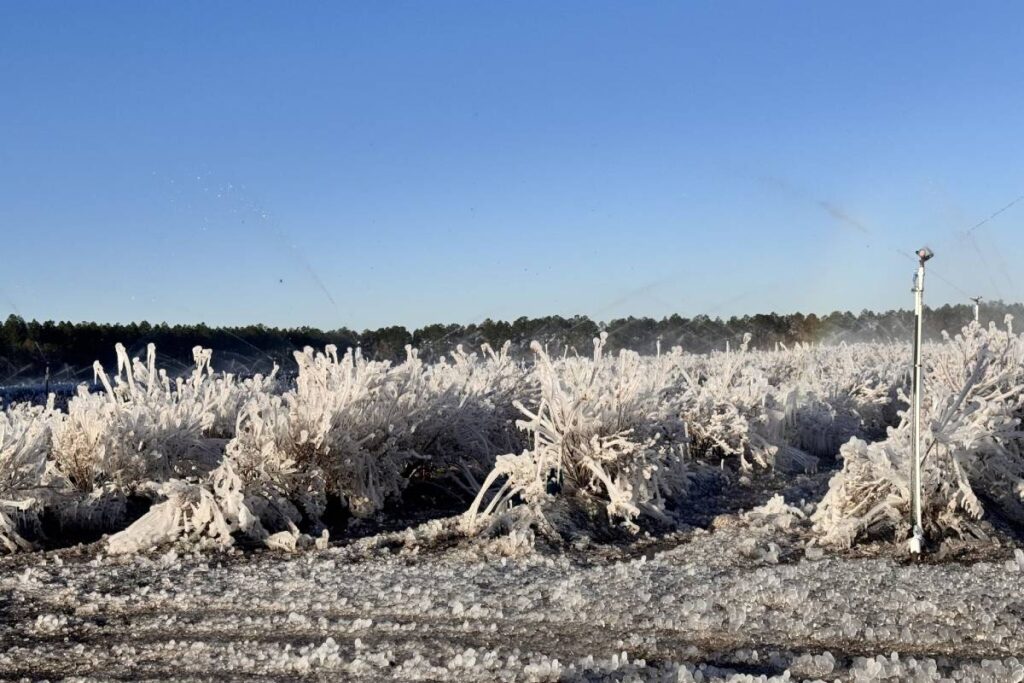

The persistent extreme weather front that has hit the East Coast and central states in the US for the past two weeks has heavily impacted the blueberry and strawberry industry in North and Central Florida.

Despite multiple preparations, freezing temperatures going down to 20 degrees Fahrenheit have hit berry fields in the area, covering them with ice and snow.
Damage has not yet been quantified, but this latest cold snap could heavily jeopardize not only this year’s crop, but the overall health of thousands of planted acres in the region.
Pre- and post-extreme cold weather preparations in Florida
As reported by Orlando local news outlet Fox 35, blueberry and strawberry growers in the state prepared their fields by using overhead irrigation, which is the industry standard freeze protection technique.
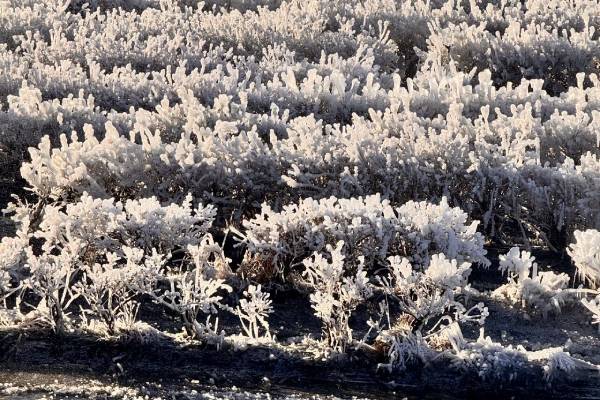
Photo by Florida Blueberry Growers Association via LinkedIn
The method uses the constant spraying of water over field rows to create a thermoprotective layer of ice that preserves the temperature of the plant and berry above freezing. This usually works—unless the air gets too cold, and the heft of the ice breaks leaves and branches, or even topples over the entire plant. This is what happened in Florida over the weekend.
“Growers are doing everything possible to protect crops, but with temperatures dipping below 20° in many areas, damage is not only expected, in some cases, it is already evident,” said past Florida Blueberry Growers Association President, Brittany H. Lee, on a LinkedIn post published by the organization.
In a statement posted to the social media site, the Florida Blueberry Growers Association (FBGA) said it’s watching closely the impacts of this week’s winter storm, and urged growers to assess and document any losses.
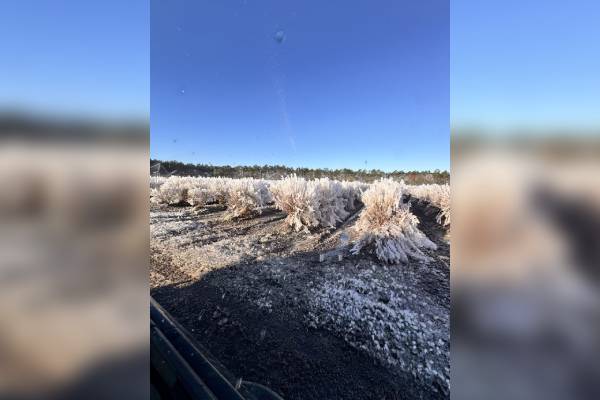
Photo by Florida Blueberry Growers Association via LinkedIn
“Preparing for potential federal assistance will be an important step. Our thoughts are with all growers navigating recovery and planning for the season ahead,” the post reads.
The North American Blueberry Council (NABC) sent a message of support to growers in Florida and Georgia: “To our growers: We know how much heart goes into every acre.” The organization also echoed the FBGA’s call to action so growers can “protect their eligibility for federal assistance programs.”
“It is critical that growers take clear photos and videos of damage as it occurs; contact their crop insurance agent immediately and continue working with them as the storm progresses to quantify losses; and contact their local FSA office right away to begin the application process for the Tree Assistance Program (TAP) and/or Emergency Conservation Program,” reads the statement.
The human toll of a cold snap
Kasey Cronquist, President at the US Highbush Blueberry Council (USHBC), also took to LinkedIn to share his thoughts on the impacts of this historic freeze.
“What I’m hearing [from growers in Florida and Georgia] is sobering. For some, this is shaping up to be one of the worst years they’ve ever experienced, and in certain cases, farms may have lost most or all of their crop,” he wrote.
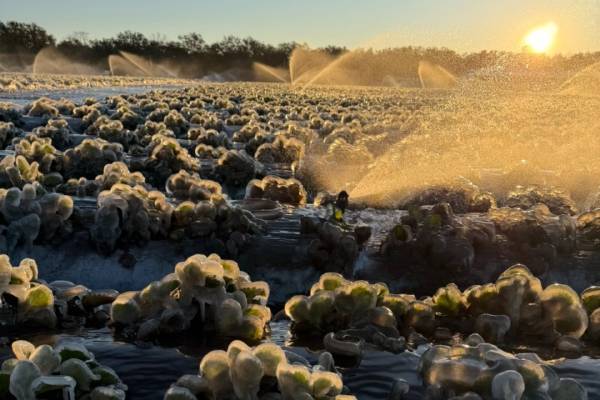
Photo by Southern Hill Farms via Facebook
The executive emphasized the human impact of this extreme weather event and said the NABC will help growers connect with resources and elevate their needs.
“Our thoughts and prayers are with the farmers and their teams on the ground right now. The road ahead won’t be easy,” Cronquist concluded.
“Freeze nights like this are physically exhausting and emotionally heavy. One wrong shift in temperature, wind, or timing can mean the loss of an entire crop, months of planning and care gone in a single night,” posted strawberry grower Southern Hill Farms in Clermont, Central Florida, on Facebook on Sunday, February 1.
The farm posted later on Tuesday, February 3, saying that the ice was beginning to melt: “While our crops will need time and care to recover, hope remains rooted in these fields.”
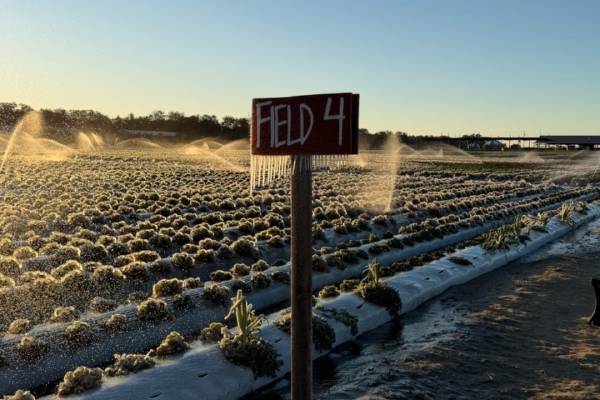
Photo by Southern Hill Farms via Facebook
The weather forecast is favorable for Central and North Florida residents, who should experience warmer temperatures from here on out, despite freezing warnings still being in effect across all counties. Nights will continue to be cold, but daytime temperatures should climb into the low to mid-60s and reach the 70s by the weekend.
*Images courtesy of Florida Blueberry Growers Association via LinkedIn, and Southern Hill Farms via Facebook.
Related stories






Subscribe to our newsletter