

Colombian banana growers demand "fair price" from European retail amid rising production costs

Written and reported by Camila Gutiérrez | Lee esta noticia en Español

During Fruit Logistica 2026, representatives of the Colombian banana sector analyzed the industry. During this event, executives warned about the sharp increase in production costs, the unprecedented impact of rains in the Urabá region, and the need for European supermarkets to recognize a "fair price" for the fruit.
In an interview with FreshFruitPortal.com, Emerson Aguirre, president of the Association of Colombian Banana Growers (AUGURA), noted that 2025 was a positive year in terms of production.
“We had favorable weather, especially in Urabá, with moderate rain and sunshine, which, along with better fertilization and farm management programs, allowed us to increase productivity by more than two digits,” he explained.
However, the outlook for 2026 is more challenging. Aguirre warned that the industry faces an increase of close to 26 percent in its costs, a result of inflation near six percent and a devaluation of the Colombian peso against the dollar of almost 20 percent.
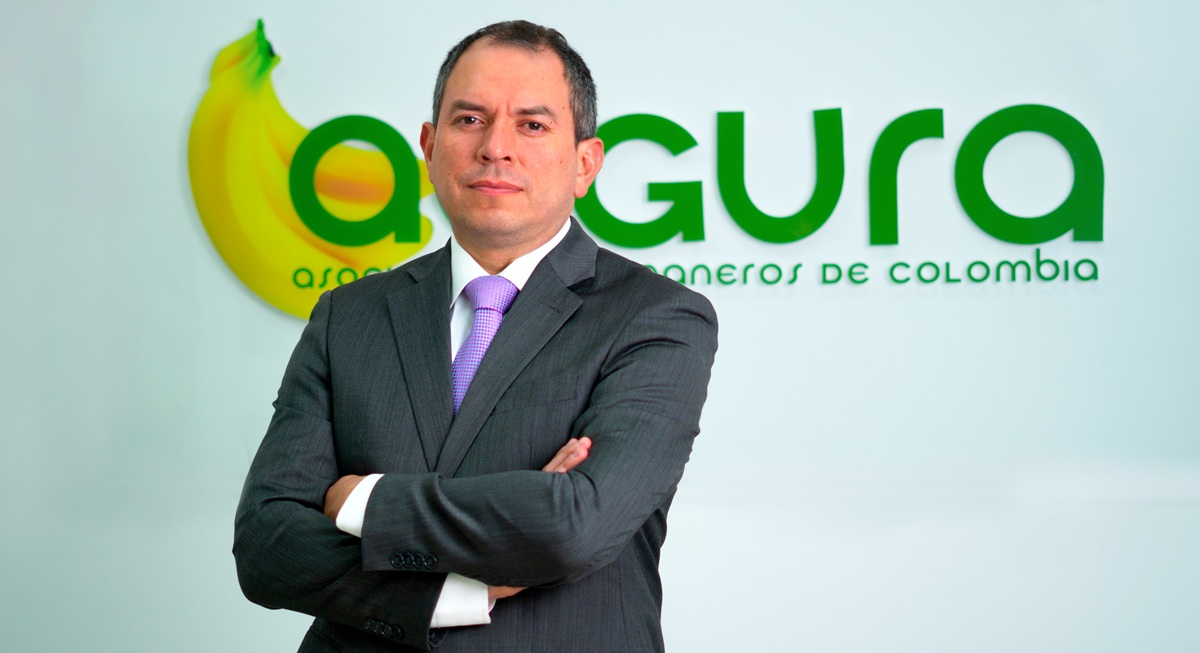
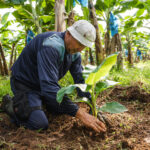
Photo courtesy of AUGURA
Adding to this economic pressure is the impact of record downpours in recent weeks in the areas of Urabá and Magdalena. Preliminary reports say nearly 3,000 acres are flooded. According to Aguirre's calculations, this could translate into an impact close to three million boxes of bananas.
“When we talk about 3,000 flooded acres, we are also talking about 1,200 direct and 6,000 indirect jobs on the line. It is the economic base of four municipalities,” emphasized the executive, adding that even the collapse of a bridge has affected regional logistics.
Aguirre indicated that the medium and long-term impact of the floods will depend on how long the plantations remained under water. Furthermore, he warned that the impossibility of carrying out aerial fumigations due to the intensity of the rains could lead to phytosanitary problems, such as an increase in foliar diseases.
Demanding co-responsibility from European retail
Europe remains the main destination for Colombian bananas, concentrating 62 percent of exports, mainly of the Cavendish variety. The United States accounts for 15 percent and the United Kingdom for 14 percent.
Aguirre assured that the tariff issue with the United States is resolved and reiterated that, although there are other markets, Europe will remain strategic due to similar environmental, social, and labor sustainability standards.
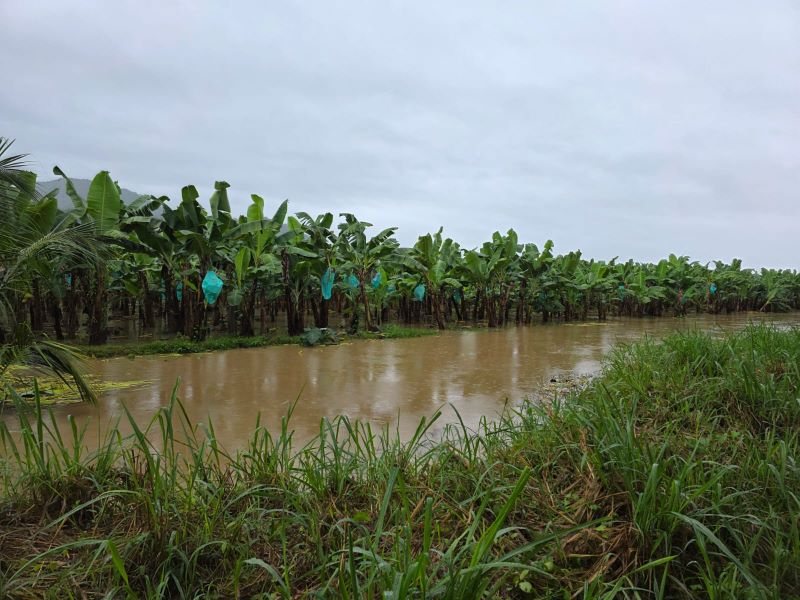
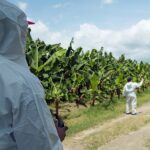
Photo courtesy of ASBAMA.
Asked how European support should translate for the banana industry in Colombia and other producing countries, the president of AUGURA was emphatic: “In two words: fair prices.”
The leader explained that retail demands ever higher standards (living wages, certifications, pollution control, traceability, and security) but doesn’t acknowledge their cost in the final price of a product.
“With bananas, something similar to buying a car happens: they want all the specifications, but they don't discuss how much that costs. That's why we need a price that truly recognizes these efforts,” he stated.
To protect the future of Colombian bananas in the European market, AUGURA and the Association of Banana Growers of Magdalena and La Guajira (ASBAMA), accompanied by the Colombian ambassador to Germany, Yadir Salazar Mejía, and ProColombia, presented a unified front where the message was clear: banana sustainability cannot fall solely on the producer and requires real co-responsibility from the entire chain.
AUGURA and ASBAMA insisted that moving towards a reliable and verifiable supply implies increasing compliance costs in terms of security, labor conditions, and environmental management. These, they pointed out, must be distributed more equitably to protect supply and trade stability.
“We cannot talk about sustainability if we do not make visible the real efforts and costs assumed by the Colombian producer,” Aguirre said during the meeting. “We have come to Berlin to build a common narrative where retail and European buyers assume their part in sustaining this responsible chain.”
The associations reiterated that Colombia can continue to consolidate its leadership in Europe under a simple premise: responsible bananas are not just declared, but financed.
Logistical security and the fight against drug trafficking
Another central point of the visit to Europe was logistical security. Colombia exports approximately 2.4 million tons of bananas annually, equivalent to about 100,000 containers.
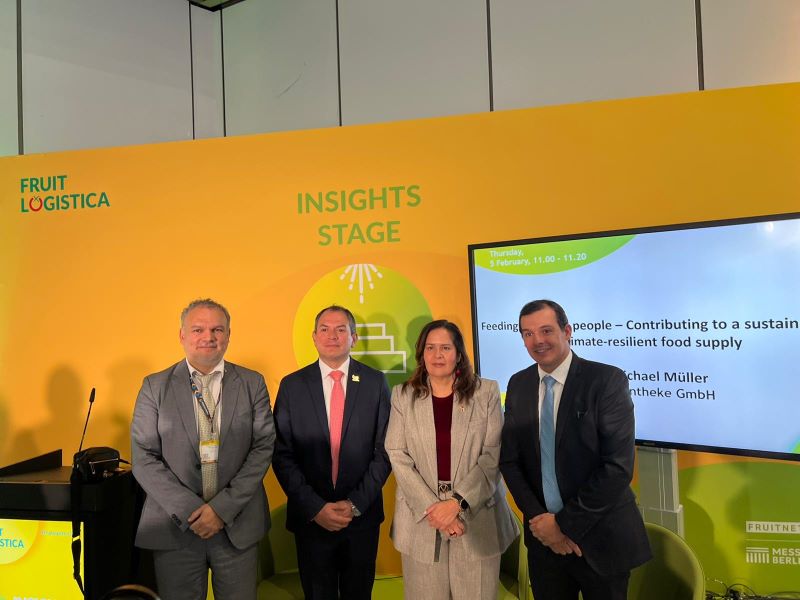
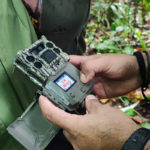
Photo courtesy of ASBAMA
Each one of those represents a potential risk of drug trafficking, which is why producers have invested over $10 million annually in security systems at farms and ports.
The sector has strengthened CCTV surveillance, biometric systems, and logistical controls, in addition to improvements in the ports of Santa Marta and Urabá. The entry into operation of Puerto Antioquia stands out, which will be the only one in Colombia with two AI-powered SCADEP systems.
In closing, Aguirre sent a direct message to the European market: “We do not need philanthropy. We need recognition of our efforts, and that translates into a fair price that reflects the true costs of production and the social contribution of bananas, which is a driver of peace and regional development.”
*Main image courtesy of ASBAMA.
Related stories
Fresh Del Monte: global banana shortage will require “substantial adjustments”
Ecuadorian banana exports soar past 377 million boxes, posting 3.5 percent growth in 2025





Subscribe to our newsletter