






“Our red bet came up”: Florida blueberry industry faces major losses after historic frost
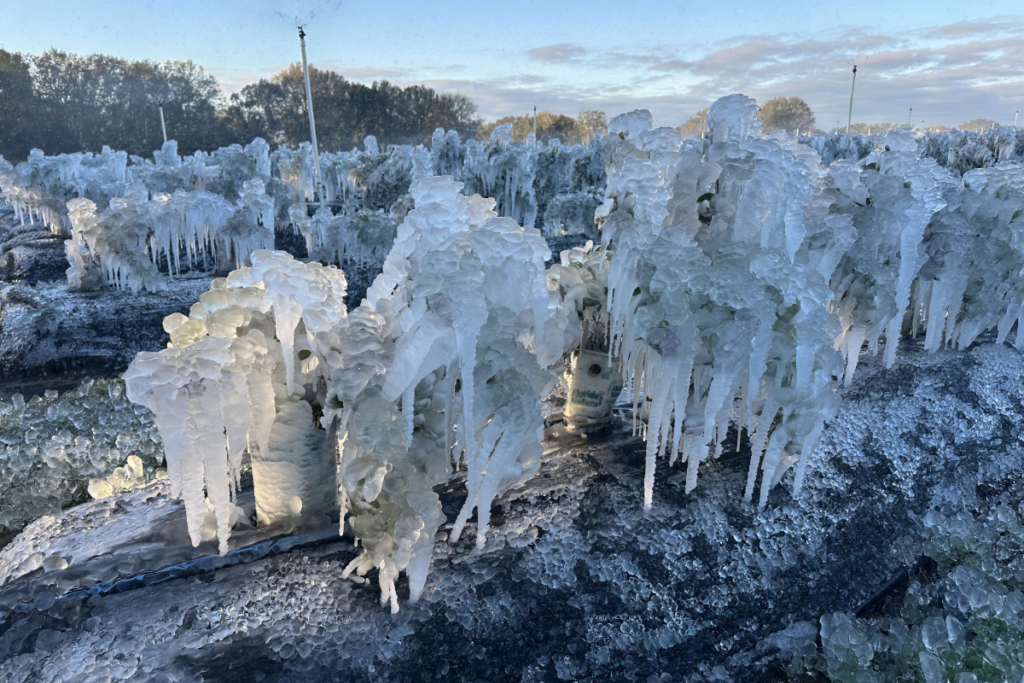

Over the weekend of January 31 and February 1, Central and North Florida, the regions where most state blueberries are grown, were hit by the coldest weather in decades.

In Miami, temperatures dipped to 35 degrees Fahrenheit on Sunday morning, the lowest since 2010. In Melbourne, Florida, thermometers dropped to 25, the lowest recorded in February since 1967. Parts of the state, including Tampa, Jacksonville, Melbourne, and Tallahassee, even saw snow.
North and Central Florida blueberry growers often experience temperatures in the upper 20s in January, so after receiving notice of the freezing weather, Florida blueberry farmers prepared as usual. However, this was no ordinary cold snap.
Florida blueberry: The hours before the storm
Austin Sigety, owner of the Tampa-based blueberry farm Frogmore Fresh, says Florida blueberry growers have always contended with weather disasters and pests. Still, the freezing temperatures caught them by surprise, leaving them with no real plan for protecting their produce appropriately.
As soon as Sigety heard the chilling forecast, he dispatched his team to the fields for a close inspection before launching any freeze protection efforts. The grower comes from a family of farmers and believes the best way to deal with these disasters is to make an educated decision.
“I wanted to take a very accurate census of what we had and in what stage things were in as a percentage, since there's science and research out there that says a really tight stage-three bud can handle upper teen temperatures in the right condition,” he explains.
Based on the field survey and an estimate of 22 degrees and 15-miles-per-hour winds, the team decided to freeze-protect 30 percent of the field—the parts of the farm where the forecast pointed to total crop loss. The choice was made banking on the hope that, if the temperature projection was off by as little as three degrees, most of the crop would be saved.
But this was still a risky bet. Because, on the contrary, if the forecast was right or worse, the freeze-protection would backfire.
“I knew the downside was, if it was as bad as they said, or worse, the protection is going to fail, and I'm going to cause pretty severe physical damage to the crops I freeze-protected,” Sigety said.
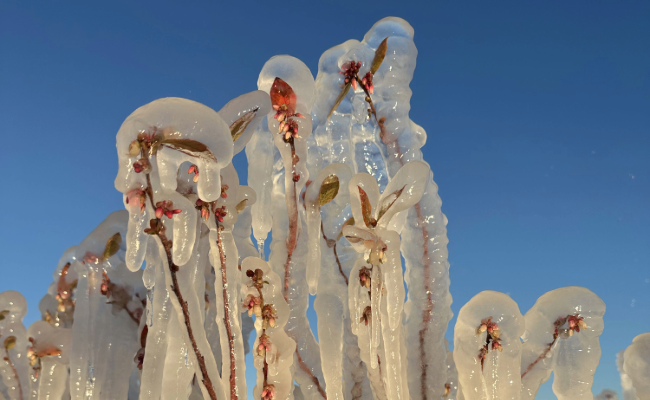
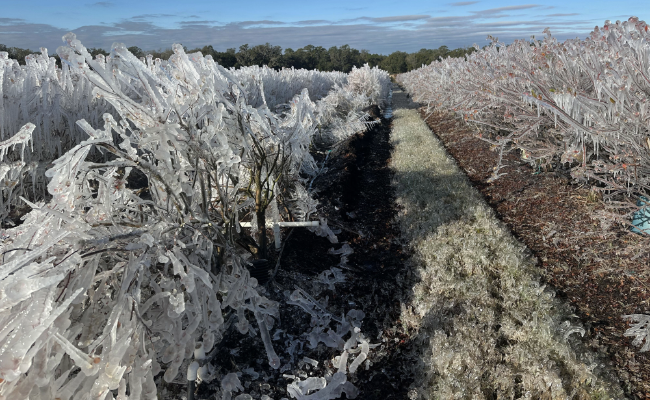
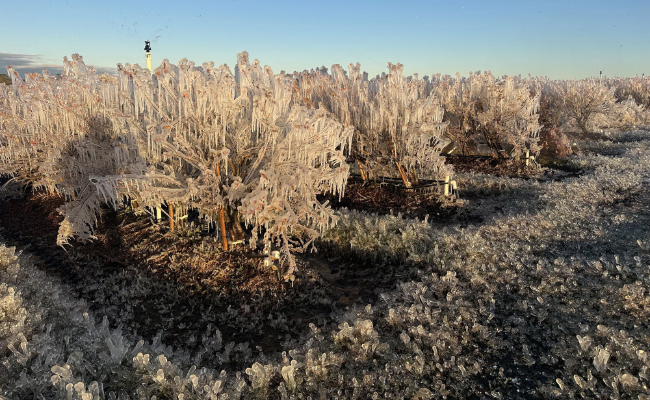
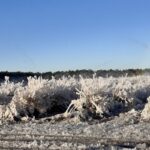
Freeze protection is the continuous overhead spraying of water on field rows to create a thermoprotective layer of ice that keeps the plant and berry temperature above freezing. This process is very meticulous and usually works—unless the air gets too cold. If the thermometer drops below 25 degrees, the heft of the ice breaks leaves and branches, and can even topple over the entire plant. This is what happened in Florida over the weekend.
The aftermath
Unfortunately, the weather proved even harsher than the forecast had anticipated, so come Sunday morning, Sigety and his team faced the tough reality.
“Our red bet came up, and the house won,” the farmer joked. “We ended with temperatures somewhere between 19 and 20 degrees, and when we started putting water out, we made ice immediately and had winds of 10 to 15 miles an hour with gusts of 20 miles an hour or more.”
Preliminary reports point to the loss of over 30 percent of Sigety’s bushes, a number, he confesses, might increase in the future. This is a significant loss for the Florida blueberry grower, since the plants are perennials and expected to produce for many years.
However, despite the devastating hit, the Florida blueberry grower says he’s among the lucky ones who still have some crops, as well as a shot at financially recovering this year.
“I know other farmers who are at 100 percent lost, they ran frost protection, and now their fields are pancaked, and they might not have a 2027 season,” he adds.
Florida blueberry growers have survived hurricanes and wild weather, Sigety says, but this kind of frost was never in the cards.
“We learned a lot in the last week, not just about the weather, but about how we need to change, maybe our thinking on how to do some of this stuff,” he says. “All of a sudden, this polar vortex gave us decision matrices that we hadn't had before.”
Sigety remains optimistic about the industry's future and plans to continue growing blueberries. He, like many farmers, is resilient and believes he will recover and adapt.
“I'm by no means discouraged or downtrodden about this—it's just something to get through,” he concludes. “And if you're smart about it, and you take advantage of the resources that are out there, two, three years from now, I 100 percent believe the farm will be better than it is today.”
Related stories:
Berry growers in North and Central Florida face the devastating effects of the latest cold snap







Subscribe to our newsletter