

The internet is hating on America’s most iconic apple


In a now viral episode of the internet talk show Subway Takes, Golden Globe-winning actor Sterling Brown didn’t spare words when he publicly declared his utter dislike for Red Delicious apples.

In the clip, which currently amasses over 316 thousand likes on Instagram and 6.5 million views on TikTok, the This is Us actor called the variety “gross,” uniting tens of thousands of Red Delicious haters online in claiming the apple’s name is misleading.
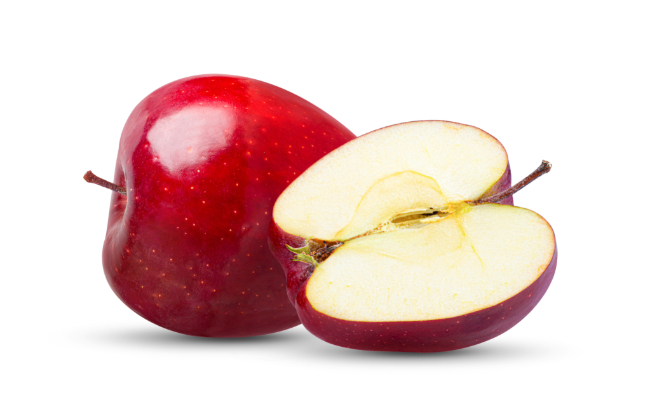
“I’m a child of the 80s, and in school, all they had were Red Delicious, Yellow Delicious, and Granny Smith, and they tried to act like this is supposed to be the crème de la crème, this red apple that crumbles in my mouth,” Brown said. “It’s mealy, it’s gross, it’s false advertising, and I didn’t appreciate it.”
While Subway Takes’ host, Kareem Rahma, often disagrees with his guests, in this episode, he strongly agreed with Brown’s dislike of Red Delicious.
“That’s because the cells in the apple are too small—they’re not juicy,” Rahma responded.
After a quick back-and-forth, Brown and Rahma concluded that not only was Red Delicious not juicy enough, but that Honey Crisp is a better fruit.
The conversation between Brown and Rahma went viral and sparked a heated online debate about which apple is the juiciest and best-tasting.
Red Delicious’s fall from grace
Some in the comments agree with Rahma and Brown’s Honey Crisp love, while others prefer varieties such as Pink Lady—famously Ozzy Osbourne’s favorite—, the Fuji, or the longer-lasting Honey Crisp-derived Cosmic Crisp.
Very few commenters, if any, defended Red Delicious as the tastiest apple variety out there.
Kathryn Grandy, Chief Marketing Officer at Proprietary Variety Management (PVM), a leading company that manages new fruit varieties, including the Cosmic Crisp, is not surprised by the online backlash against Red Delicious, saying the apple has fallen behind in flavor compared to more recent varieties on the market.
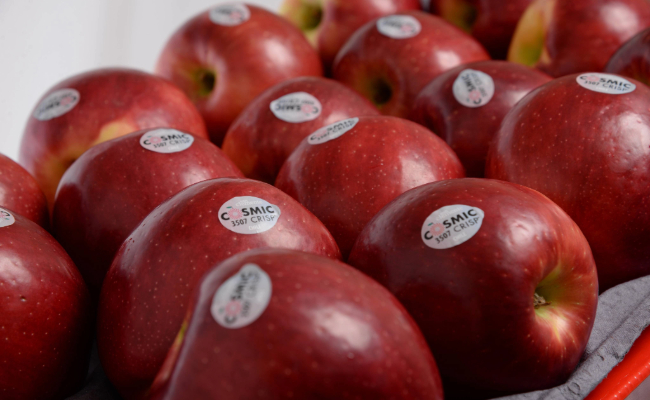
“A lot of people in the industry call it the new potato,” she says. “Texture is probably the number one thing people like in an apple—they like something they can bite into, that crisp crunch, and that immediate flavor and flood of juice, and if you look at the opposite, that's really Red Delicious.”
The now infamous variety originated in Iowa, but the apple became a favorite of the Washington State apple industry because of how hardy and cost-effective it is to grow, Grandy explains. She believes the state really was the one who developed and built the market for it.
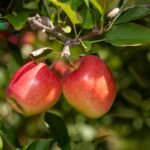
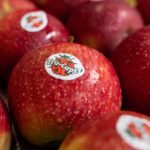
“If you look at Washington’s apple past advertising from 30 years ago, you’ll see the apple on it looks a lot like a Red Delicious,” she explains. “It's beautiful, solid red, and the bottom is very pronounced and shaped. Even the Washington Apple logo looks like a Red Delicious.”
With this reputation behind it, Red Delicious became the dominant apple in Washington State, peaking in the 80s when it represented three-quarters of the harvest. But the cultivar was never really popular among consumers, and as other varieties appeared, apple fans and growers quickly turned their backs on it.
By 2021, its popularity had rapidly depleted, and Red Delicious accounted for only 15 percent of Washington state’s apple output.
Despite long-standing negative consumer response and the arrival of more popular varieties, Red Delicious continues to be the apple offered to children in schools and remains among the top export varieties.
However, it’s not because of consumer preference abroad, but rather the fact that Red Delicious stores exceptionally well. Exporters can easily ship the variety to distant markets without worrying about any quality loss during transit.
Red Delicious is currently a staple of the US apple portfolio, reaching over 60 countries. A safe bet, but certainly not the tastiest one.
There’s a whole apple world out there waiting for you
Red Delicious enjoys few redeeming qualities, so why is it still chosen over other, more widely acclaimed apple varieties? Grandy and her colleague, Marlisa Garcia, Marketing Manager at PVM, point to Cosmic Crisp as a contrasting example.
The cultivar was bred for longevity without sacrificing flavor, and ever since its launch in 2019, it has amassed a devout following. Moreover, Cosmic Crisp is harvested at the same time as Red Delicious, in late October and early November.
Grandy said the financial aspect is Red Delicious’s biggest saving grace, as it is cheap to grow. However, Garcia said it is not only about numbers, as change takes time.
Right now, they explained, PVM is working to get Cosmic Crisps into schools in California and Tennessee, as some stores are pulling Red Delicious off their shelves. However, a few still hold on to the good ol’ times.
“It's kind of all over the map,” Garcia explained. “It has that nostalgic feel [to it]—there are people out there that eat it, and maybe it reminds them of their childhood, or maybe it's just their preference.”
Overall, the PVM execs expect this conversation, sparked by widespread disdain for an apple variety, to bring attention back to the category’s vast world and maybe introduce consumers to its wide offerings.
*Images are referential
Related stories:
Agronometrics in Charts: Rising costs and inventory shifts pressure US apple growers
U.S. apple season 2025 is coming in big—both in crops and challenges






Subscribe to our newsletter