








Severe storm damage threatens Moroccan blueberry growers, with losses expected to exceed 20 percent



This story was originally published on the International Blueberry Organization's website.

Moroccan blueberry growers are still gauging the impact of adverse weather on their crops, as powerful storms hit the south-western Souss-Massa region on February 26 and 27. The Chtouka Ait Baha area, home to much of the nation’s fresh fruit and vegetable sector, was severely affected.
Winds of up to 68 mph and flooding across the province damaged greenhouses in a region that has been pummeled by nine storms since January 16. The International Blueberry Organization (IBO) estimates that blueberry volumes may drop between 15 and 25 percent by week 9, with some areas decreasing as much as 50 percent.
IBO president Mario Steta said Moroccan blueberry growers are not alone, as successive weather events have plagued the 2025–26 worldwide.
“The amount of rain that fell hasn’t been seen in decades,” he said. “The storms that have passed over Portugal, Spain, and Morocco have resulted in flooding, much lower temperatures, and extremely low levels of light.”
The result, Steta explained, is reduced fruit volumes in the Moroccan blueberry industry, serious infrastructure damage, and isolated orchards that growers were unable to access for days on end.
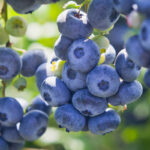
Moroccan blueberries after the storm
The numbers are telling—the Moroccan blueberry industry estimated a 13 percent increase in total volume compared to 2025, amounting to 95,000 kilos. By Week 9 a year ago, the tally had reached 21,000 kilos harvested, whereas by the same time this year, the total didn’t exceed 15,000 kilos, said Steta.
Low-light conditions and cold temperatures have also significantly impacted sizing, resulting in smaller fruit. This, Steta fears, could affect prices and lead to returns for growers.
Greg Murdoch, General Manager at South Morocco-based premium blueberry grower African Blue, said the company’s business had weathered the storm and came out the other side relatively unscathed. However, he knows others were not as lucky, and estimated that the impact on the industry as a whole could be significant.
“As an industry, I expect we’ll see more than a 20 percent reduction in export volumes from the north. Based on the damage I’ve seen at some sites, losses could exceed 50 percent in certain individual cases,” he said.
In his opinion, the capital investment for repairs was so high in some cases that smaller Moroccan blueberry growers are unlikely to recover.
Don't rain on Morocco's blueberry parade
Colin Fair, Chief Executive of market data intelligence specialist Agronometrics, underscored the country’s excitement over the category’s potential, which has driven significant growth and investment in newer, higher-performing genetics.
“The storms have clearly disrupted production, but they are not affecting everyone evenly,” he clarified. “Depending on their production region, some companies are still growing considerably, while others are seeing a significant reduction in real production despite growth expectations.”
According to Moroccan news outlet BarlamanToday, the Souss-Massa region accounts for close to 85 percent of the country’s fruit and vegetable exports, with over 24,000 hectares of greenhouse-based production, amounting to more than 2 million tons each year.
Related stories
Agronometrics in Charts: Driscoll’s on the essential need for Morocco’s shared blueberry data
Morocco's citrus production is on the rise with mandarins leading exports, USDA says








Subscribe to our newsletter