Weather abnormalities and quality issues bring California’s cherry season to an abrupt end
 Add Fresh Fruit Portal to Google
After an auspicious two-week head start, the 2025/26 California cherry season came to a dramatic end by late May. A combination of adverse weather events compressed crop timing, reduced yields, and triggered widespread quality problems, industry sources confirmed to FreshFruitPortal.com.
Final count is estimated at around 5.5 million 18-pound boxes shipped, according to Fred Kasak, cherry specialist at CDS Distributing. The projection sits well below initial expectations of 10 million boxes and far short of larger recent California crops.
Shipping and packing were “mostly done” by May 26, Kasak said, calling the season “really difficult”.
“Last year's crop in total was 4.8 million. In 2025 it was 9.5 million; in 2024, 10.4 million. This is a smaller-than-average crop, and there were a lot of problems,” the CDS Distributing representative said.
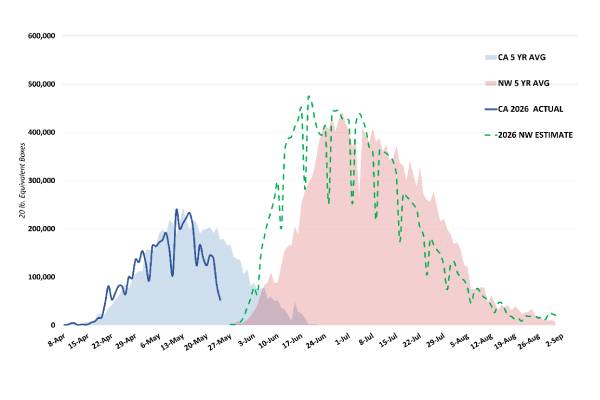
Chart courtesy of Northwest Cherries.
Historically, California cherry shipments continue into the third week of June, making the end of the 2026 campaign a record-early finish that has left growers, shippers and retailers reeling.
While total losses haven’t yet been quantified, the industry's ballpark estimate is roughly $250 to $300 million.
Weather triggers pervasive quality issues
March’s early heat accelerated crop development and compressed harvest windows across multiple production regions in California. Three subsequent rain events during May then damaged fruit in the field, reducing both harvested volume and packout rates, industry sources said.
Kasak noted that some fruit was lost even before harvest, while additional volume failed to meet packing standards after picking.
The CDS Distributing representative said the California cherry sector's advanced optical sorting systems helped identify and remove fruit featuring visible defects, but some quality issues ran much deeper. In certain cases, fruit appeared acceptable during packing but deteriorated rapidly afterward.
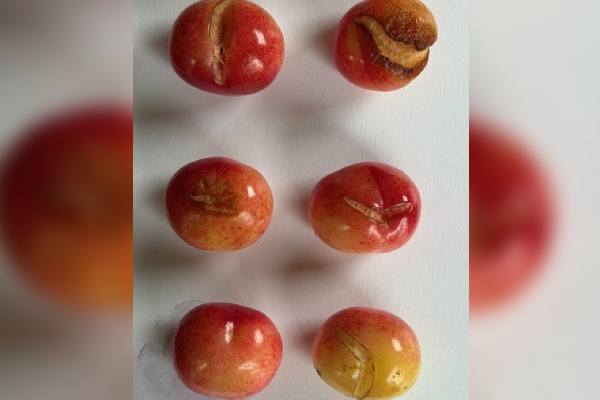
Photo courtesy of Fred Kasak | CDS Distributing
The weather-related issues affected all varieties, including Coral, Bing, Chelan, Hazel, and Rainier cherries, although specific problems varied depending on harvest timing. Primary quality issues included splitting, low firmness, and internal rot, but a recurring problem was unusually delicate skin that would come off at the touch despite the cherry otherwise looking normal.
Industry sources confirmed that the dire circumstances forced producers to pack sub-standard fruit, risking long-term reputational damage for state producers. As a result, some retailers are expected to request credit from the shippers for up to 25 percent of the product received, another industry source said, compounding the already dramatic financial impact of the season.
California supply chain fallout
Kasak also noted that growers experienced increased rejection rates and observed higher-than-normal shrinkage as the fragile fruit moved through distribution channels.
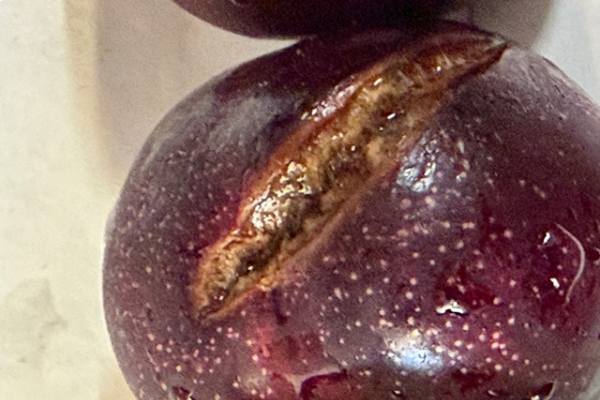
Photo courtesy of Fred Kasak | CDS Distributing
Approximately 4.3 million boxes remained in the domestic market, while fewer than one million were exported. About half of the shipped volume went to Canada, while traditional Asian destinations received comparatively small quantities due to the detrimental effect long transit times would have on the fruit.
The season's difficulties come at a time when growers and shippers continue to face rising costs for production, labor, and equipment. Kasak said the industry's long-term resilience will depend on how individual operations absorb consecutive years of financial pressure.
"I can't remember a season with as many challenges in the last 30 years," he said.
Despite the setbacks, Kasak noted that California cherry production has always been vulnerable to weather-related volatility.
"No matter what the situation is—whether it's rain, heat, too many, or too little—California cherries are a very challenging deal," he said.
Additional reporting by Sandra Gutierrez G.
*Uncredited photos are referential.
Related stories
Abnormal California heat disrupts 2026 harvest raising quality concerns